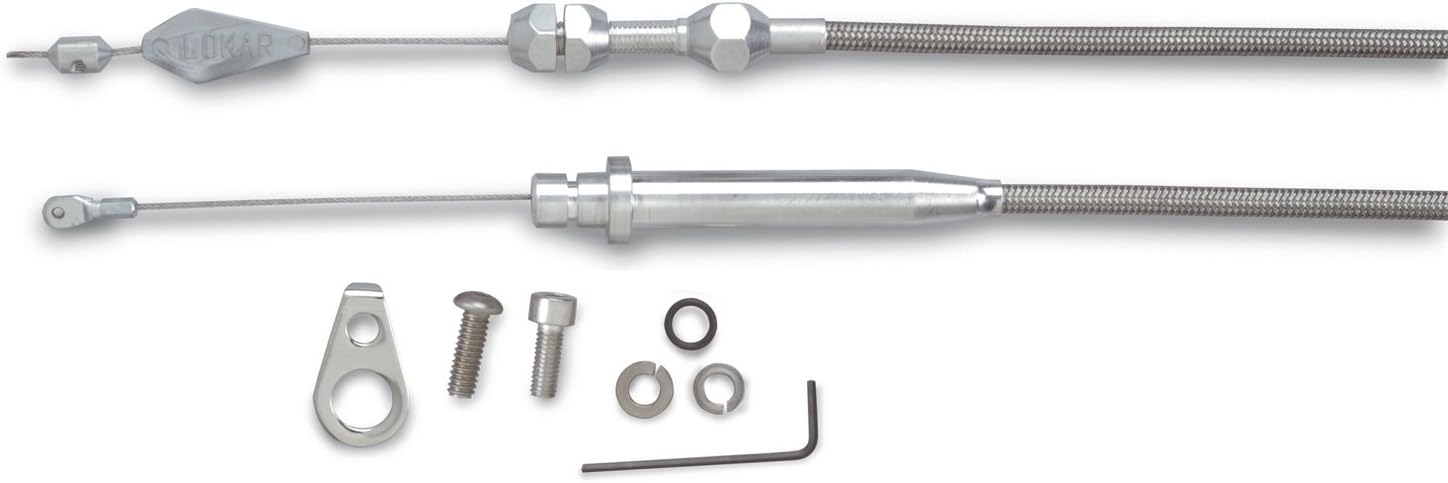
A 727 that upshifts at 15 mph like it is in a hurry to get to third, will not downshift when you stand on it, or lost its kickdown rod the day the big block got a tunnel ram, a blower or a different exhaust manifold, needs its throttle linkage fixed before anything else. The Lokar KD-2727HT is a braided, Teflon-lined, cut-to-fit replacement for the factory rod and bellcrank on the Chrysler A727 TorqueFlite, the heavy-duty three-speed used from the early 1960s through 1990 behind Mopar big blocks, Hemis, 360s and trucks, and in many Jeep applications. It is also the common answer when a 727 goes into a chassis it never came in.
What the kickdown linkage controls in a 727
Chrysler called it the throttle or kickdown lever, but it does three jobs. Turning the lever on the left side of the case rotates the valve body shaft that moves the throttle valve and, at the end of its travel, the kickdown valve. Throttle pressure from that valve works against governor pressure on the 1-2 and 2-3 shift valves, so more pedal means later shifts. It also feeds the regulator, so line pressure, and the clamping force on the front and rear clutches and both bands, rises with throttle. The factory pressure test shows the range: about 54 to 60 psi in Drive at 1,000 rpm, climbing to a 90 to 96 psi maximum when the lever is swept to kickdown. A disconnected or short-stroked lever leaves the unit at the bottom of that range no matter how hard the engine is pulling.
Signs the kickdown linkage is wrong
- Early, soft 1-2 and 2-3 shifts with no change when you add throttle
- No forced downshift at the floor, or a downshift that only comes at very low speed
- A slip or flare on the 2-3 shift under load, the pattern that burns front clutches
- Late, harsh shifts and a delayed kickdown release, which points to a cable or rod that is too tight
- Rod linkage that rubs, binds or will not install around an aftermarket intake, carburetor or engine mount
Confirming it before you buy
The factory 727 manual puts low fluid at the top of its no-upshift list, followed by throttle linkage adjustment and kickdown band adjustment, so check those three first. Raise the car and work the lever by hand: it should rest fully forward at idle, travel smoothly to its rear stop and have no wobble on the shaft. If you have a gauge, tee into the line pressure port and sweep the lever; pressure that will not rise toward the 90 psi range says the throttle circuit is not being stroked. The full test sequence, including governor and servo checks, is in our 727 diagnosis guide, which also explains why a 727 has no shift solenoids to blame.
Fitment
Built for the Chrysler A727 three-speed TorqueFlite in carbureted or throttle body applications. Lokar lists it with a 48 inch housing that you trim on install, made in the United States. The kit attaches to your existing kickdown lever, so reuse the factory lever and make sure it is tight on its shaft. The transmission end bracket mounts on the lower driver-side tail housing bolt. The small-case 904 uses the separate KD-2904HT, so confirm your case before ordering, or send us the year, engine and transmission number and we will check it. More parts for the unit are in our 727 TorqueFlite collection.
Install notes
- Plan on a Lokar carburetor or throttle body cable bracket with springs; the bracket is not in this kit. A kickdown mounting bracket is supplied for brackets that lack a kickdown hole.
- Route the housing first, then mark it one inch longer than the distance from the engine-end adjuster to the tail housing bracket.
- Braided housing gets cut with a cutoff wheel or fine-tooth hacksaw over a wrap of tape, inner wire removed, with the ferrule slid out of the way and kept on the housing.
- Adjust the throttle cable first. Then hold the throttle wide open, pull the kickdown wire snug so the case lever reaches full travel, and lock the end stop with the supplied Allen key.
- Recheck that nothing binds, that full throttle is still reachable, and that the cable has no slack at wide open. Trim the wire only after a road test, leaving about half an inch.
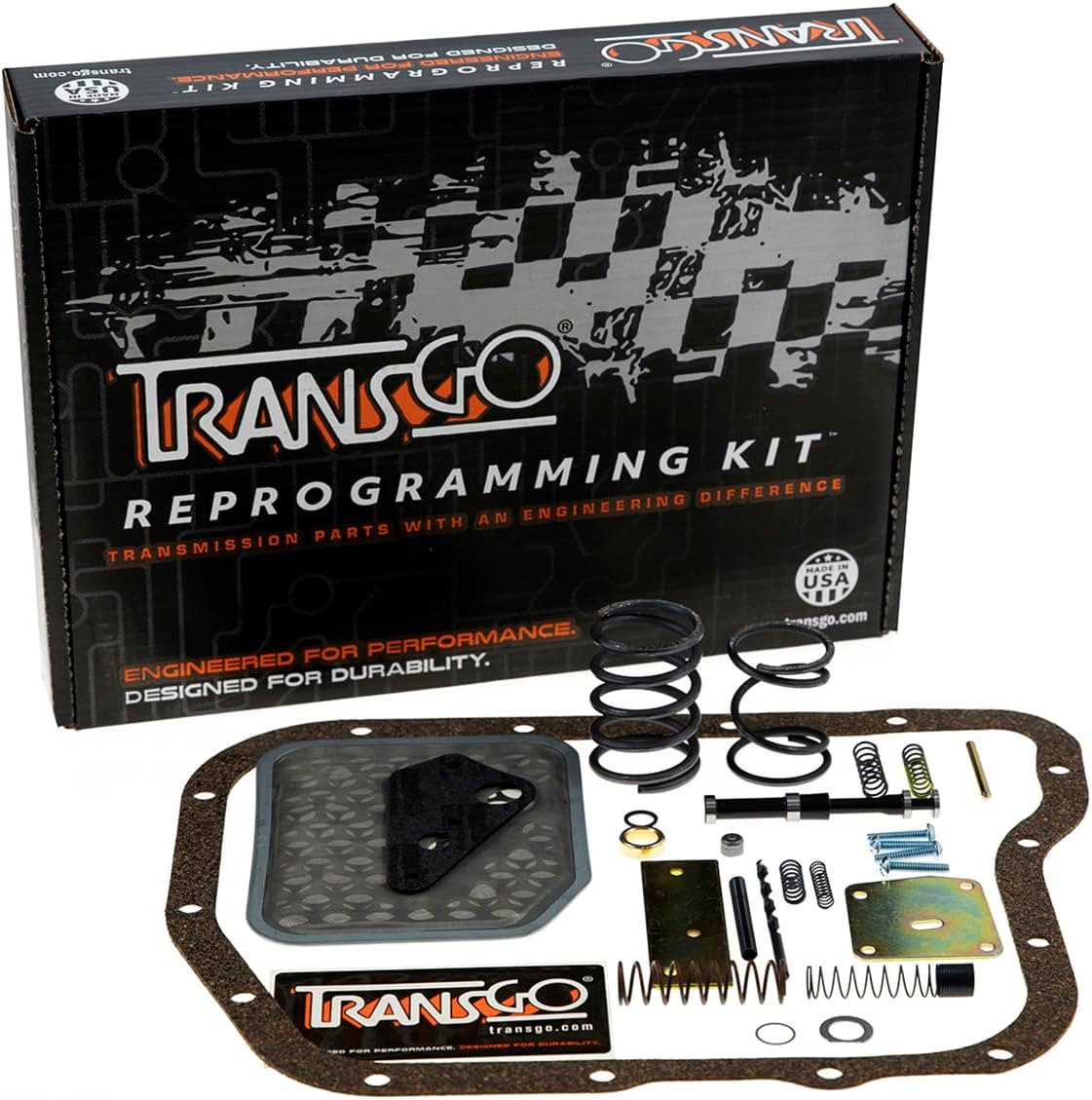
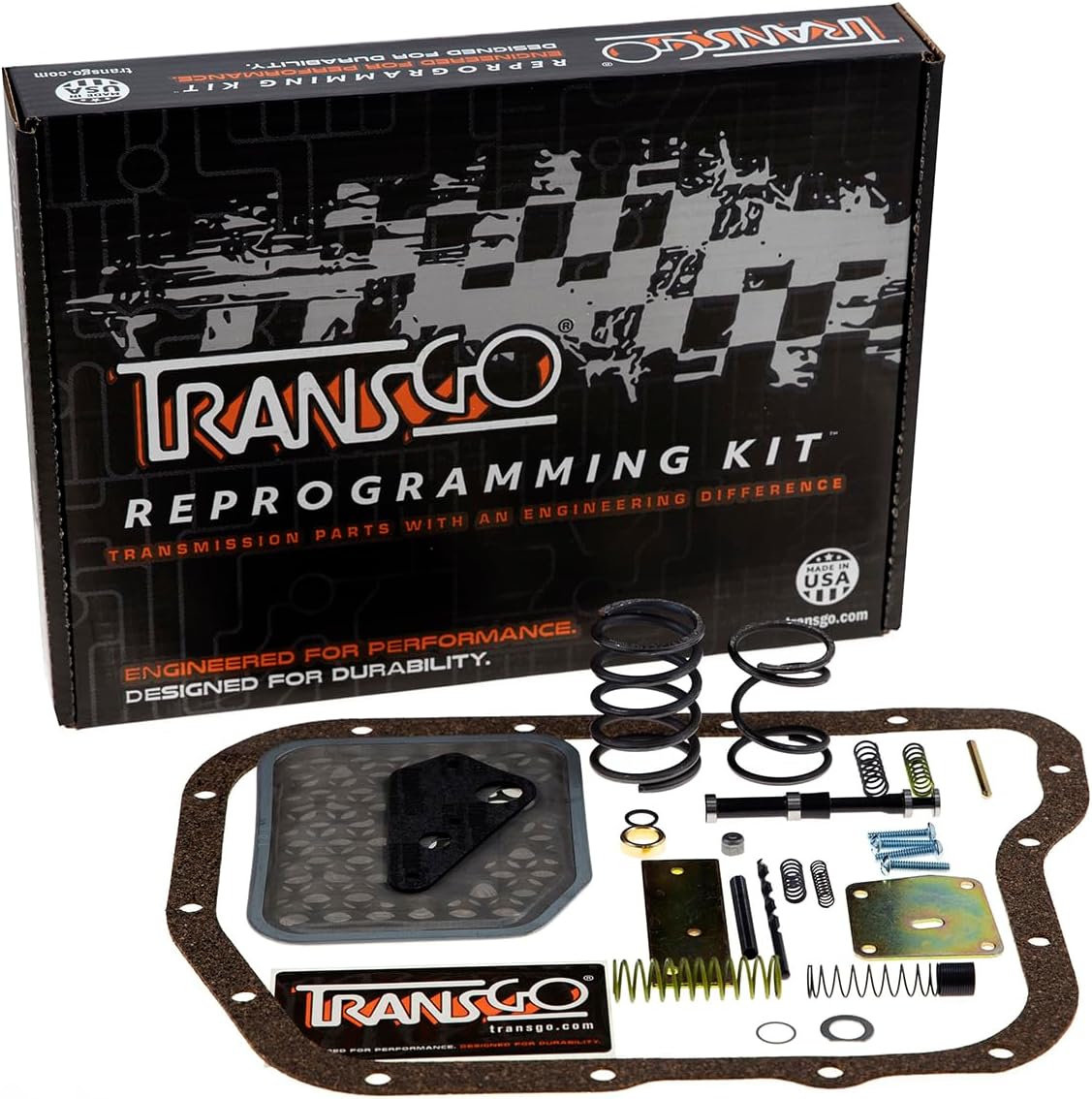
If the unit has been driven a long time with the linkage off, expect glazed clutches and a worn kickdown band; the ATP TMS-14 master rebuild kit covers the soft parts. For firmer, better-timed shifts after the linkage is set, the TransGo TF-2 Gear Command kit is the usual street choice. Service the unit with ATF+4 or the Dexron-type fluid it has been running, checked hot in Neutral.