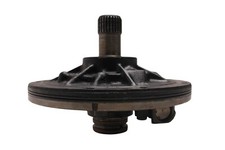
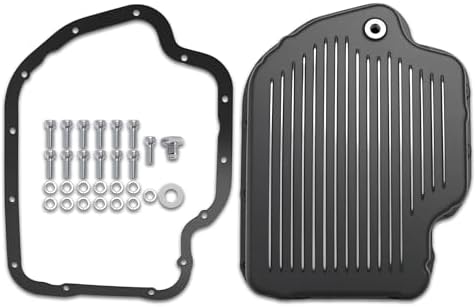
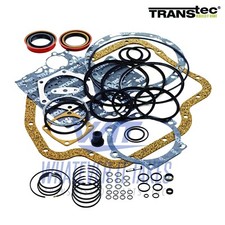
From 1971 on, the Turbo Hydra-Matic 400 settled into the fixed-stator, three-speed workhorse that went behind big-block trucks, motorhomes, three-quarter and one-ton pickups and plenty of street and strip builds. If your TH400 now whines with engine speed, takes its time to grab Drive or Reverse once the fluid is hot, or slips in every gear instead of just one, a worn front pump is the usual suspect. This listing is a used TH400 front pump assembly for 1971-1998 units: the pump body with its gears, the cover with the stator shaft pressed in, ready to bolt to the front of the case.
What the pump does in a 1971-1998 TH400
The TH400 pump is an internal gear type. Tangs on the converter hub drive the inner gear at engine speed, and the crescent splits the suction side from the pressure side. The cover holds the pressure regulator and boost valves that set line pressure from the vacuum modulator signal, and its stator shaft anchors the converter stator and carries the sealing rings that feed the forward clutch. The pump also supplies converter charge, cooler flow and the lube oil that returns through the stator shaft. Because one part sources every one of those circuits, a tired pump shows up everywhere at once.
On 1971 and later pumps the regulator valve bore is the common high-mileage wear point. Sonnax lists its drop-in pressure regulator valve kit for '71-later TH400 and TH425 units and describes a worn bore causing high, uncontrollable line pressure, delayed converter charge and poor Reverse engagement, with converter, crankshaft and clutch damage following if it is ignored.
Symptoms of a worn TH400 pump
- Whine in Park and Neutral that climbs with rpm and is present in every gear
- Slow or soft engagement into Drive and Reverse after a long drive, often Reverse first since it needs the most pressure
- Slipping or flare across all three clutch packs instead of one, with dark, burnt fluid
- Harsh, banging shifts and erratic pressure from a worn regulator bore
- A front seal that leaks again soon after replacement, from a worn bushing letting the converter hub wobble
How to confirm before you buy
Check the easy things first: fluid level on the dipstick hot, the filter and its intake O-ring, and the modulator vacuum line. A cracked filter neck or rolled O-ring makes the same noise and low pressure as a bad pump. Then tee a gauge into the line pressure port. GM's chart for the TH400 calls for roughly 60 to 90 psi in Park, Neutral and Drive at 1000 rpm with the modulator hooked up. Read it cold and again at full operating temperature; a pump that makes pressure cold and sags hot is worn. If pressure is high and will not come down, suspect the regulator bore. Our TH400 pump failure guide walks through the full pressure table, and the TH400 delayed engagement guide covers the non-pump causes of a slow Drive or Reverse.
Fitment
This pump is listed for TH400 units from 1971 through 1998. By 1971 the switch-pitch converter that some 1965-1967 Buick, Olds and Cadillac units used was gone, so these pumps run a conventional fixed stator. TH400s still varied by application over that span, and GM changed details such as cover castings and valve parts, so set your old pump next to this one and compare the bolt pattern, stator shaft spline, cover casting and the sealing ring lands before you tear down. If anything looks different, or you are not sure what you have, send us the year, vehicle and VIN or the transmission ID plate code and we will check it. For other years see the TH400 pump listing, and the full lineup is on the TH400 parts page.
Install notes
- Fit a new front seal, pump-to-case O-ring and gasket, and check the bushing against the converter hub; a nicked or grooved hub will chew up the new seal.
- Center the body and cover with an alignment band before torquing; GM's figure is 15-20 lb-ft for both the cover bolts and the pump-to-case bolts.
- Turn the turbine shaft by hand as you draw the pump in. If it binds, the forward or direct housing is not indexed with all its plates, so stop and correct it.
- Check front end play at the turbine shaft: GM's spec is .003 to .024 in., set by the selective washer between the pump cover and the forward clutch housing.
- Prime the pump, fill with licensed DEXRON fluid and finish the level hot on the dipstick.
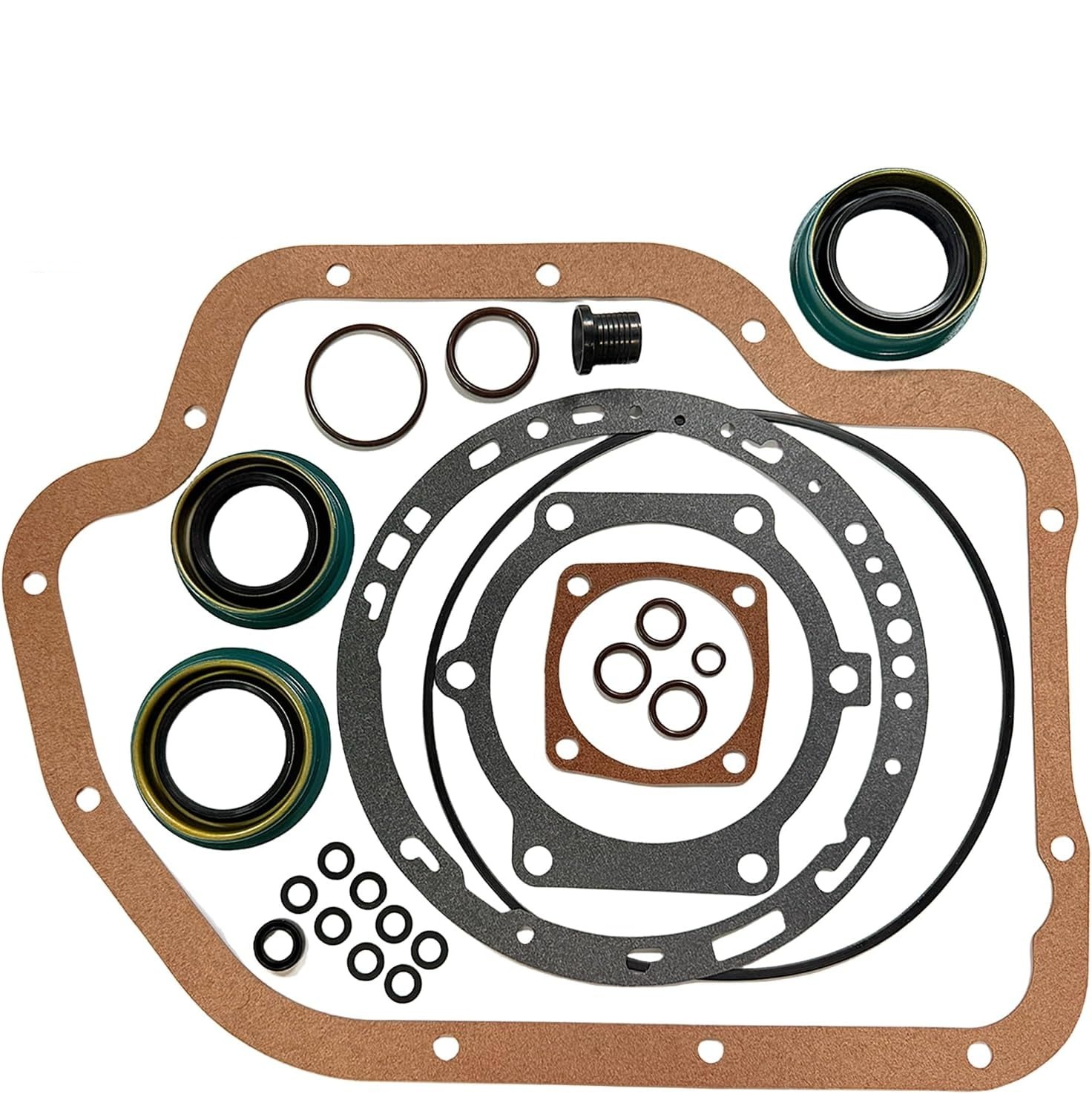
If the unit has been slipping on low pressure, the clutches are probably cooked, so rebuild while it is apart with the TH400 overhaul kit for 1965-1998, and stop external leaks with the TH400 external reseal kit. A front pump alignment band makes centering the pump halves straightforward.