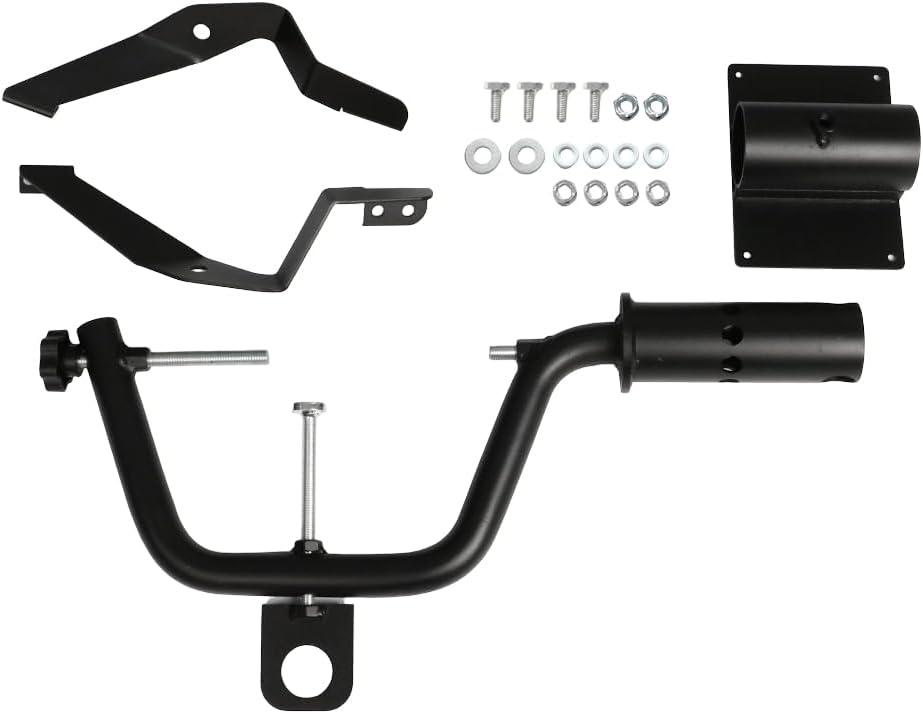
Rebuilding a 4L60E, 700R4, TH350, C6, AOD or 727 on the bench and the front pump will not come out of the case? This is a universal front pump remover of the same clamp-and-forcing-screw design as the Atec Trans-Tool T-0033 and the Kent-Moore J-45053. It grabs the pump by its stator support and jacks it straight up out of the case bore, so you do not have to pry on the pump flange or hammer on the bolt holes.
How a front pump remover works
A front pump is a tight fit in its case bore, and after years of heat cycling and varnish it can feel welded in place even with every bolt out. The tool solves that with two parts. A split clamp closes around the stator support tube that sticks out of the front of the pump, and a bridge over the clamp carries a center forcing screw. When you turn that screw it bears down on the end of the input shaft, and since the input shaft cannot move further into the case, the screw lifts the clamp and the pump with it. The pull is centered on the bore, so the pump comes out square instead of cocking to one side.
The GM factory overhaul procedure for the 4L60-E does it the same way: remove all pump bolts, fit the adapter to the stator support, tighten the remover around it, then turn the T-handle and lift the pump out of the case. The older GM tool numbers for that job were J 37789-A with adapter J 39119; this tool covers the same step without hunting down both pieces.
Why prying a pump out causes problems
- Screwdrivers under the pump flange gouge the case face where the pump seal and gasket sit, which leads to a front leak after the rebuild.
- Uneven force cocks the pump in its bore and can score the bore or crack an aluminum pump body.
- Hammering on the stator tube can bend it or loosen it in the pump, and the input shaft bushings and sealing rings ride on that tube.
- A pump that comes out damaged turns a good reusable core into an extra parts bill.
Before you pull the pump
Check input endplay first while the pump is still bolted in. That reading tells you whether the selective thrust washer needs to change and is much harder to get once the unit is apart. For the 4L60-E, the GM procedure calls for 0.13 to 0.92 mm (0.005 to 0.036 in). Our 4L60E bench rebuild tool list covers the dial indicator setup and the other tools that save time on teardown. Once the pump is out, look at the converter hub bushing and the stator tube bushings; our guide on converter hub and pump bushing wear explains what a worn bushing looks like and why it matters.
Fitment
This remover is listed for GM 200, 200-4R, 250, 350, 400 (3L80), 700-R4, 4L60, 4L60E and Powerglide, Ford C4, C5, C6, AOD, AODE, 4R70W and E4OD, and Chrysler 727, 904, 998 and 999. These all use a pump with a stator support tube the clamp can grip. It is not meant for units without that layout, and some transverse or late-model designs have their own dedicated pullers. Browse parts for the units you work on most, such as the 4L60E, 700R4 and 727 collections.
Using it on the bench
- Mount the case so the bell housing faces up. A rotating holding fixture makes this easy and keeps the case stable while you turn the screw.
- Remove every pump bolt and the converter housing on units that have a separate bell.
- Set the clamp low on the stator support and tighten it evenly so it bites without crushing the tube.
- Protect the end of the input shaft with a cap or socket so the screw tip does not mark it.
- Turn the screw slowly. If the pump binds, stop and check for a missed bolt instead of forcing it.
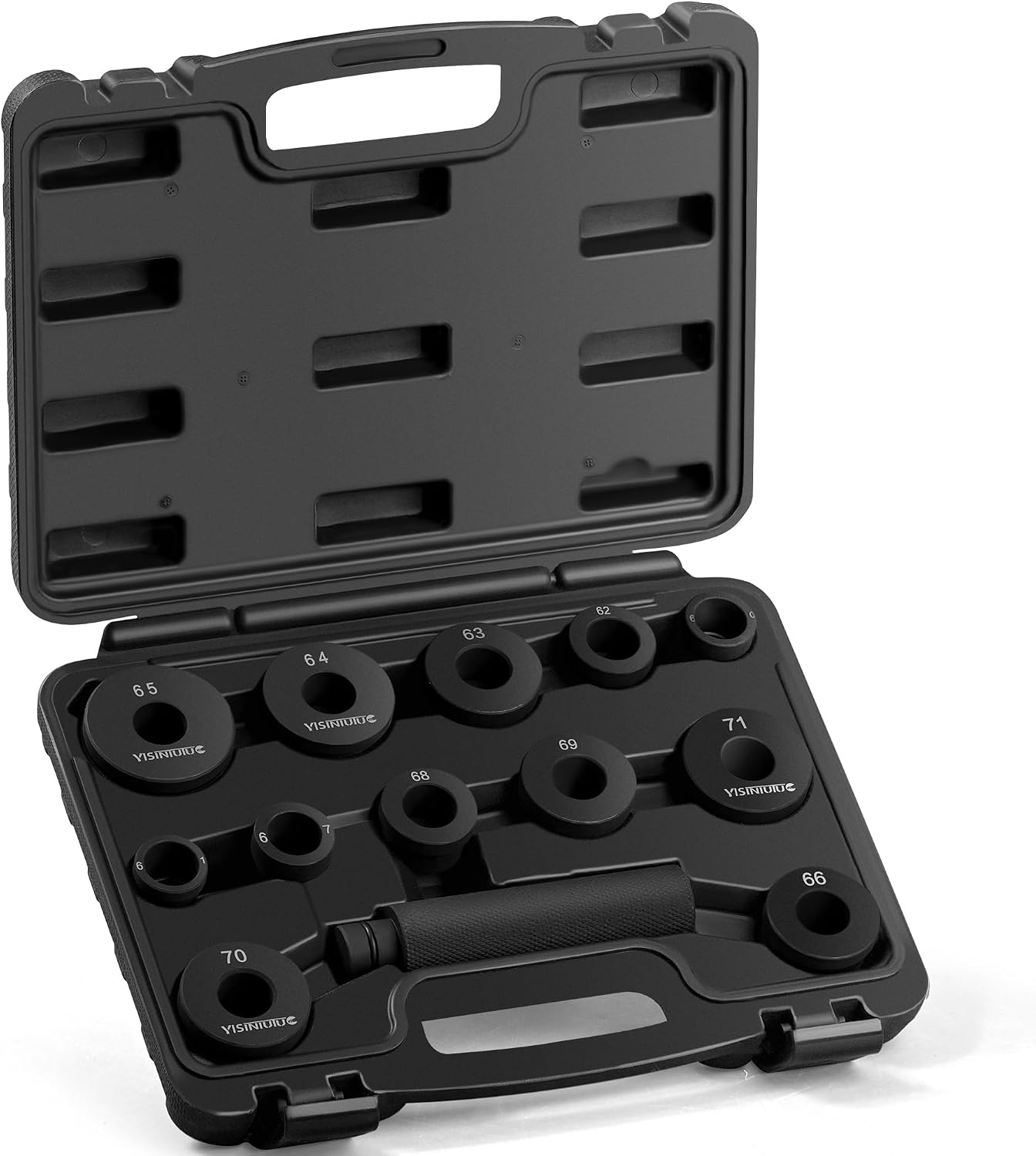
After the pump is out, a good set of drivers like our 4L60E/700R4 master bushing driver set handles the pump and stator bushings.