Valvoline CVT Full Synthetic is the multi-vehicle CVT fluid people reach for when they own more than one CVT car, need a quart to top off a Nissan Versa or Rogue, a Subaru Outback, a Jeep Patriot or a Mini Cooper, or want a fluid that is on the shelf everywhere instead of a dealer-only bottle. This listing is one quart; Valvoline's quart case part number is 804751. It is a full synthetic fluid made for belt and chain CVTs, and Valvoline's product sheet lists the factory specifications it is recommended for, which is what matters before you pour it in.
What a CVT fluid does in a belt or chain CVT
In a continuously variable transmission the ratio comes from two variable-width pulleys connected by a steel push belt or a chain. Hydraulic pressure squeezes the pulley halves onto the belt, and the belt drives by friction against the pulley faces. That means the fluid has two jobs that pull in opposite directions: it must lubricate the bearings, pump and planetary parts, and it must also let steel grip steel at the belt contact without slipping or juddering. Valvoline builds this fluid on synthetic base stocks with long-life friction modifiers, anti-wear additives and shear-stable viscosity modifiers, and states typical properties of 7.2 cSt at 100 degrees C and a Brookfield viscosity of 9,000 cP at minus 40 degrees C. A conventional ATF is designed for clutch packs in a stepped automatic and does not give a belt CVT the friction it needs.
Symptoms of tired CVT fluid
- Judder or shake pulling away from a stop at light throttle
- A whine or drone that rises with road speed
- Rpm climbing ahead of road speed, the rubber-band feel, especially on hills
- Delayed engagement into Drive or Reverse
- Reduced power after long highway or towing runs as the transmission protects itself from heat
- Fluid that is dark, smells burnt or has passed its service interval
How to confirm before you buy parts
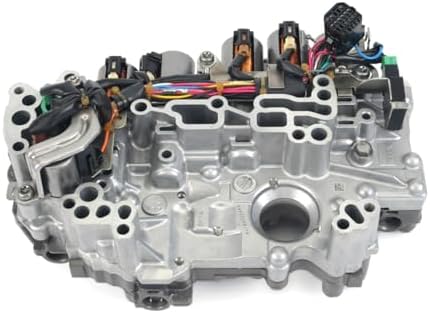
Read your fluid specification first, from the owner's manual or the label at the fill point, and check it against the list below. Then check the level hot using your vehicle's procedure, because many CVTs have no dipstick and are checked at a fill or overflow plug at a set temperature. Scan for codes; on Nissan and Jatco units, judder and pulley-ratio codes point to hardware rather than fluid. Our guide to CVT harsh or delayed shifts lays out the order of checks, and JATCO CVT problems and fixes covers the Nissan, Jeep and Mitsubishi units this fluid is most often bought for.
Fitment
Valvoline's product information sheet recommends this fluid where these specifications are called for: Nissan NS-2 and NS-3; Dodge and Jeep NS-2 and CVTF+4; Ford CVT23, CVT30 and Mercon C; GM and Saturn DEX-CVT; Honda HMMF and HCF-2; Hyundai and Kia SP-CVT 1; Mazda CVTF 3320; Mercedes-Benz 236.20; Mitsubishi CVTF-J1 and CVTF-J4; Mini EZL 799; Subaru Lineartronic CVTF, High Torque CVTF and e-CVTF; Suzuki TC, CVT Green 1 and CVT Green 2; Toyota TC and FE; and VW and Audi TL 52180. Valvoline says it is not recommended for hybrid CVT units from Toyota and Ford, and it is not for dual-clutch transmissions. Some automakers still tell dealers to use only their own fluid, especially for warranty work, so if your car is under powertrain warranty, the factory fluid is the safest choice; the genuine Honda HCF-2 quart is one example. Browse CVT parts on our CVT collection page, or send your year and VIN and we will confirm the spec.
Install notes
- Plan quantity before you start. One quart is a top-off; a drain-and-fill on most compact CVTs takes several quarts, and a full exchange takes more.
- Do not mix fluids if you can avoid it. If the unit has an unknown fluid in it, a second drain-and-fill brings it closer to a clean fill.
- On a Nissan Versa or Kicks with the RE0F11B, change the filter and pan gasket at the same service with the RE0F11B filter and pan gasket kit.
- Set the level at the temperature your service procedure specifies; CVT level is very sensitive to temperature.
- A fluid quality tester helps time the next change, which matters on CVTs that run hot in traffic.