Mustang owners describe 10R80 shift problems in a lot of ways: a bang on the 3-4 on the first cold drive of the day, a thump when it kicks down from 5th to 3rd for a pass, a clunk into reverse in the driveway, a delay before Drive engages, or shifts that feel fine one day and lazy the next. Those are not all the same failure. On a 2018-2026 Mustang, the build date tells you more about the likely cause than the symptom does, because Ford has written separate bulletins for separate build windows.
This guide is about shift quality: harsh, late, erratic, or bumpy shifts. If the engine flares between gears or the car will not take 3rd, that is a slip, and our Mustang 10R80 slipping guide covers it. Everything below comes from Ford's technical service bulletins as filed with NHTSA, plus ATRA's GEARS Magazine and Sonnax tech notes. Links are in the Sources section at the bottom.

How a 10R80 shift happens, and where it goes wrong
The 10R80 has six friction elements, lettered A through F, and four planetary gearsets. Every gear uses four of them. A shift releases one element and applies another while the other three stay on, so a single upshift is a timed hand-off between two clutches. Per GEARS Magazine, each clutch has its own direct-acting shift solenoid (Ford calls them CIDAS), and zero current means zero clutch pressure. The line pressure control (LPC) solenoid works the other way: full line pressure at low or no current and very low pressure at 850 mA.
Ford's 307-01 description and operation shows the F clutch applied in reverse and in every forward gear from 4th through 10th. It comes on during the 3-4 upshift and lets go on the 4-3 downshift. Keep that in mind, because it explains the cold-shift bulletin for the newest Mustangs.
Shift quality depends on three things: the clutch packs having the right clearance and friction surfaces, the hydraulic circuits holding pressure, and the PCM having correct adaptive values for fill time and pressure. Ford's bulletins cover all three, depending on build date.
Step 1: Build date, codes, battery
Read the build date off the door tag before you drive the car. Then pull codes from every module. The DTC list that shows up across Ford's harsh-shift bulletins is long: shift solenoid codes P0751 through P0772, clutch apply-time codes P2700 through P2708, and gear ratio codes P0729 and P0731 through P0736. A harsh shift with no codes at all is common, and it usually points away from an electrical fault.
Check the battery. Sonnax notes that a weak battery after a car sits for a few days can keep the transmission from adapting, causing harsh engagements and erratic upshifts and downshifts that show up on a cold start and fade once the unit is warm. They also put Ford battery life at about three years. Load test it before you go after the valve body.
Step 2: Fluid level, hot, and only ULV
The 10R80 takes MERCON ULV (Motorcraft XT-12-QULV), and every bulletin in this guide lists it. Sonnax says the level should be checked at 96 to 101 C (206 to 215 F) and that being as little as one quart over full causes overheating and venting. A low level lets the pump draw air under acceleration and cornering, and that can feel like random harsh or slurred shifts. If the car had a fluid service or any repair just before the shift complaints started, check the level hot before anything else. Our 10R80 fluid guide walks through the check.
Step 3: Match the symptom to the build window
| Mustang build | Ford bulletin | Symptom | Cause per Ford |
|---|---|---|---|
| 2018-2020 | TSB 25-2475 | Harsh/delayed engagement, harsh/delayed shifts, long DTC list | CDF clutch cylinder sleeve moving, hydraulic leak |
| 2021-2022, built on or before 15-Aug-2022 | TSB 26-2226 | Harsh/delayed engagement and shifts | PCM software and/or CDF sleeve leak |
| 2022-2024, built 16-Aug-2022 through 23-Sep-2024 | TSB 26-2408 | Harsh 3-4 and 4-5 upshifts, harsh 5-3 and 4-3 downshifts, harsh reverse, worse cold | F clutch frictions brinelling into the clutch and planetary container cylinder |
| 2024-2026 | TSB 26-2263 | No upshift past 2nd, no 3rd gear ratio, P0757 and P2701 | Damaged one-way clutch |
2018-2022: the CDF sleeve
On the earlier cars, harsh and delayed shifts usually come from the CDF clutch cylinder. TSB 25-2475 (2018-2020) and TSB 26-2226 (2021-2022 built on or before 15-Aug-2022) both describe the sleeve inside the CDF cylinder moving axially and opening a leak in the C, D and F clutch circuits. A clutch that fills slowly gives a delayed shift. When the TCM sees a late ratio change and pushes more pressure, the shift ends with a bump. Ford's Mustang parts are CDF cylinder JL3Z-7H351-B for the 5.0L and JR3Z-7H351-B for the 2.3L, plus clutch and planetary container cylinder PC3Z-7B177-A.
One detail people miss: TSB 26-2226 starts with a PCM reflash only on 2021-2022 F-150s and 2022 Expedition/Navigators. For a Mustang the procedure goes straight to the leak test. A Mustang owner told "we updated the software" has not had the bulletin done.
Ford requires proof before the transmission comes out. With a VCMM pressure-vacuum transducer, you run the FDRS Transmission Clutch Circuit Leak Test. Without one, the bulletin allows a damped mechanical gauge that reads at least 300 psi (2,000 kPa) on the line pressure port. The port is M10x1.0, and Ford warns that an NPT fitting will damage the case. Tell the test whether the complaint happens at TFT of 49 C (121 F) or below, or at 50 C (122 F) and above. Ford pays 0.7 hours for a passing test on a 2021-2022 Mustang and 10.4 to 12.0 hours to replace the CDF cylinder, depending on engine and body. That gap is why the test is not optional.
2022-2024: the F clutch and the gray silt check
This is the bulletin most current Mustang owners need to know about. TSB 26-2408 (September 2026, superseding 26-2309, 26-2241 and 25-2587) covers Mustangs built from 16-Aug-2022 through 23-Sep-2024, which takes in the 2024 S650 cars. The symptoms are specific: harsh 3-4 and 4-5 upshifts, harsh 5-3 and 4-3 downshifts, and harsh reverse engagement, all worse when cold. Every one of those events applies or releases the F clutch, or holds it under changing load. Ford's cause is the F clutch friction plates brinelling into the clutch and planetary container cylinder (7B177). The plate tabs pound notches into the drum splines, so the plates hang up instead of sliding, and the clutch applies with a jolt.
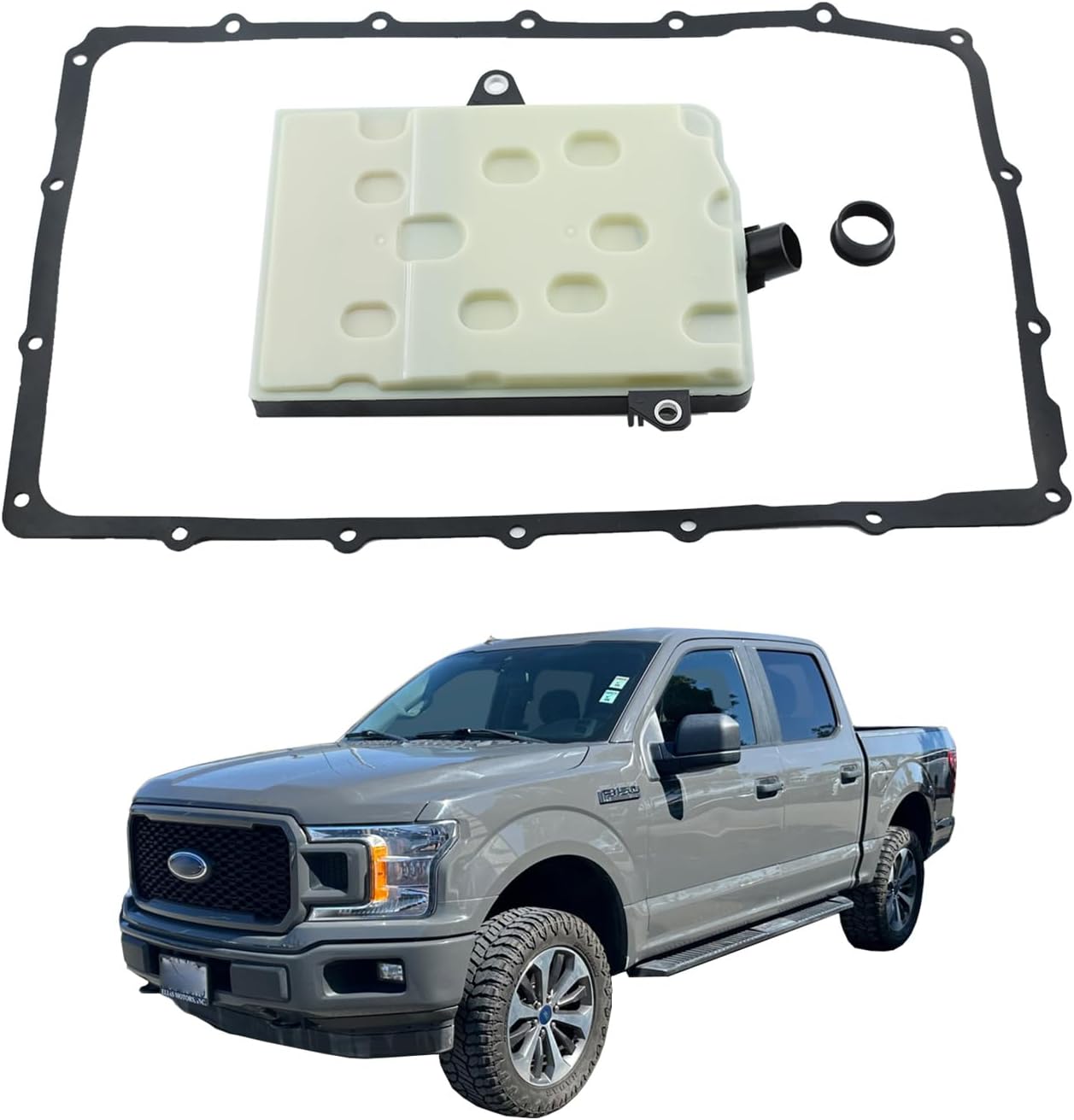
The first diagnostic step is a filter inspection, not a scan tool. Drop the pan, pull the filter, and look at the top side. Gray silt on top of the filter means the bulletin applies. No silt means it does not, and you go back to normal diagnostics. That silt is metal worn off where the plates have been hammering the container cylinder.
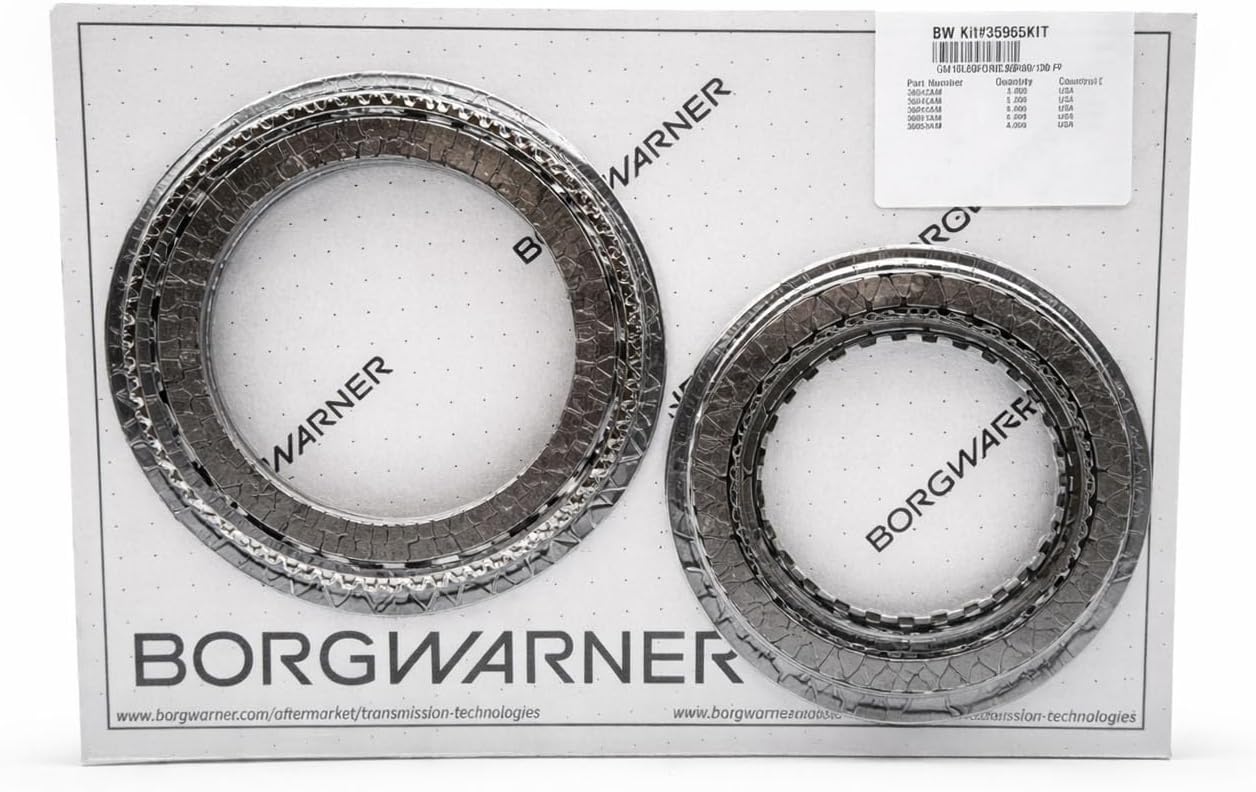
If the filter fails, the repair is big. The transmission comes out, the main control valve body is overhauled, and the F clutch steel and friction plates and the 7B177 container cylinder are replaced. On Mustangs the parts are PC3Z-7B177-A for the container cylinder, HL3Z-7B164-D F clutch frictions, and F clutch steels HL3Z-7B164-G, except on the 2024 5.0L, which takes PR3Z-7B164-A. F clutch clearance is set with a selective snap ring from 1.5 to 2.3 mm in 0.2 mm steps. Labor runs 2.7 hours for a passed filter check on a 2.3L and 3.1 hours on a 5.0L. A failed check pays 10.4 hours on a 2.3L coupe and up to 13.4 hours on a 5.0L convertible.
On the bench, do not just swap the F pack and move on. Clean the valve body completely, because the silt that reached the filter also went through the solenoid bores. Check the clutch control valve bores for wear, and replace the solenoid retainers. The bulletin includes six HL3Z-7G007-A shift solenoid retainers for a reason.
2024-2026: no 3rd is not a shift-quality problem
If a newer Mustang will not upshift past 2nd and sets P0757 and P2701, that is the one-way clutch in TSB 26-2263, and the fix is a front support assembly. It gets mistaken for a solenoid problem because P0757 is a shift solenoid B code, but the failure is mechanical. The slipping guide covers the directional test.
Step 4: Adaptives, done properly
Every Ford bulletin above ends with an adaptive learning drive cycle and a warning that shifts may be firmer than normal for several days afterward. Plenty of "harsh shift" cars just have bad adaptive tables after a battery replacement, a tune, or a valve body swap with no relearn. GEARS Magazine gives the procedure: clear DTCs and adaptive tables, warm the unit fully, accelerate from a stop at about 15 percent throttle with 1st through 8th upshifts between 1300 and 1600 RPM, keep going to 55 mph so the 8-9 and 9-10 shifts happen, brake gently to a stop and hold it five seconds, then go Neutral one second, Reverse two seconds, Neutral one second, and Drive two seconds. Repeat that six more times. Budget 30 to 45 minutes. A quick drive around the block is not a relearn.
Step 5: When it is the valve body
If the codes, battery, fluid and relearn all check out, the TSB tests pass, and the shifts are still harsh across the board, look at line pressure control in the valve body. Sonnax lists the main pressure regulator valve, TCC priority and regulator valves, boost valve, and latch valves damaged by the solenoid retainer clips as the common wear points. Their LPC signal damper piston kit (105740-04K) targets harsh shifts and high line pressure, and the solenoid stabilization retainer (105740-19K) targets loss of shift solenoid control pressure and poor shift quality. Sonnax also says the solenoids themselves rarely fail. Do not throw a solenoid kit at a harsh-shift Mustang without a pressure reading that points to one.
How I work a Mustang with shift complaints
- Door tag build date and engine. That tells you which bulletin applies.
- Battery load test, full code scan, software check.
- Hot fluid level at 206-215 F, MERCON ULV only, and look at the fluid condition.
- Drive it cold and hot, logging commanded gear, TFT, turbine and output speed. Note exactly which shifts are harsh.
- Run the bulletin test. Pressure leak test for 2018-2022 builds, filter silt check for 16-Aug-2022 through 23-Sep-2024 builds.
- Full adaptive drive cycle if nothing fails.
- Valve body work last, backed by a line pressure reading.
Sonnax Zip kit for the valve body overhaul
Both the F clutch and CDF bulletins send the valve body to the bench. The Sonnax 10L80-G1-10R80-ZIP kit bundles their 10-speed valve body fixes in one box, which Sonnax rates for burnt clutches, lube failures and low cooler flow.
Shop the part for this fix →Need clutches or seals too? The 10-speed parts collection carries friction and steel packs and kits for the Ford and GM 10-speeds.
Need parts for this job?
The Sonnax Zip kit, 10R80 friction modules, filter and gasket kits, valve bodies, solenoids and MERCON ULV-spec fluid are on our 10R80 parts page, with checkout on site.
FAQ
Why does my Mustang 10R80 shift hard when cold?
On Mustangs built from 16-Aug-2022 through 23-Sep-2024, Ford TSB 26-2408 ties harsh 3-4 and 4-5 upshifts, harsh 5-3 and 4-3 downshifts and harsh reverse, all worse when cold, to F clutch plates brinelling into the clutch and planetary container cylinder. The first check is pulling the filter and looking for gray silt on its top side. On older cars, a weak battery that keeps the transmission from adapting can also cause harsh shifts that fade once it warms up.
Will a software update fix harsh shifts on a Mustang 10R80?
Sometimes, but not usually on a Mustang. TSB 26-2226 starts with a PCM reflash only for 2021-2022 F-150 and 2022 Expedition and Navigator; Mustangs go straight to the hydraulic leak test. A full adaptive learning drive cycle does fix many no-code harsh-shift complaints after a battery change, tune or valve body swap.
How do I know if the CDF clutch cylinder is the problem?
Run the leak test in the bulletin for your build date. Ford uses the FDRS Transmission Clutch Circuit Leak Test with a pressure transducer, or a damped gauge reading at least 300 psi on the M10x1.0 line pressure port. A circuit that loses pressure when its clutch is commanded on points to the CDF sleeve leak.
What fluid does a Mustang 10R80 use, and does level affect shifting?
MERCON ULV, Motorcraft XT-12-QULV. Check the level hot at 206-215 F. Sonnax found that one quart over full causes overheating and venting, and a low level lets the pump draw air, so both can cause erratic or harsh shifts.
How long does a 10R80 adaptive relearn take?
The full adaptive learning drive cycle published in GEARS Magazine takes 30 to 45 minutes. It is seven runs of light-throttle upshifts to 55 mph followed by a stop and a Neutral-Reverse-Neutral-Drive sequence. Ford warns that shifts may be firmer than normal for several days after adaptives are reset.
Related guides
- 10R80 Mustang Slipping: Causes and Fix
- 10R80 Mustang Common Problems and Fixes
- 10R80 Harsh and Delayed Shifts
- 10R80 Valve Body Problems and Testing
- 10R80 F-150 Shift Problems: Diagnosis and Fix
Sources
- Ford Motor Company — Technical Service Bulletin 26-2408 (supersedes 26-2309), "Harsh Shifts Between 3rd And 5th Gears And/Or Harsh Reverse Engagement, Symptoms Worse When Cold" (16 September 2026). 2022-2024 Mustang built 16-Aug-2022 through 23-Sep-2024, F clutch brinelling into the 7B177 container cylinder, gray silt filter check, F clutch part numbers including PR3Z-7B164-A for the 2024 5.0L, 1.5-2.3 mm selective snap rings, solenoid retainers HL3Z-7G007-A, Mustang labor times. static.nhtsa.gov (PDF)
- Ford Motor Company — Technical Service Bulletin 26-2226 (supersedes 26-2046), "Harsh/Delayed Engagement And/Or Harsh/Delayed Shift" (8 May 2026). 2021-2022 Mustang built on or before 15-Aug-2022, PCM software and/or CDF sleeve cause, reflash step limited to F-150/Expedition/Navigator, FDRS leak test or 300 psi damped gauge, M10x1.0 port, 49/50 C test split, Mustang CDF cylinder part numbers and labor times. static.nhtsa.gov (PDF)
- Ford Motor Company — Technical Service Bulletin 25-2475 (supersedes 25-2301), "Harsh/Delayed Engagement And/Or Harsh/Delayed Shift" (29 October 2025). 2018-2020 Mustang applicability, DTC list P0751-P0772, P2700-P2708, P0729 and P0731-P0736, CDF clutch cylinder sleeve cause. static.nhtsa.gov (PDF)
- Ford Motor Company — Technical Service Bulletin 26-2263 (supersedes 26-2112), "No Upshift Past Second Gear, Unable To Achieve Third Gear Ratio, And/Or Illuminated MIL With DTCs P0757 And P2701" (28 May 2026). 2024-2026 Mustang one-way clutch cause and front support repair. static.nhtsa.gov (PDF)
- GEARS Magazine (ATRA) — "Direct Connection: 10R60, 10R80 and 10R140 Solenoids Make Shifts Happen." One CIDAS shift solenoid per clutch A-F, zero current equals zero clutch pressure, LPC inverse operation (full pressure at low current, very low at 850 mA), adaptive learning drive cycle steps and 30-45 minute time. gearsmagazine.com
- Sonnax — "Tackling Ford/GM 10-Speed Valve Body Problems, Failing Batteries & More" and Jim Mobley, "Tips for Troubleshooting Ford 10-Speed ATF Venting & Overheating." Battery-related adapt problems and three-year battery life, valve body wear points, LPC signal damper 105740-04K, solenoid stabilization retainer 105740-19K, solenoids rarely fail; 96-101 C (206-215 F) level check and one-quart overfill. Valve body and batteries · Venting and overheating