A fluid change on a Silverado 1500 with the 6L80 is one of the simplest services on the truck and one of the easiest to get wrong. Nobody gets the filter backwards. The mistakes are wrong fluid, the wrong amount, a level set at the wrong temperature, and an old filter seal left in the pump. All four are covered in GM's own paperwork. This post goes through that paperwork for the half-ton: the 2017 Silverado owner manual, the Chevrolet Performance 6L80 instruction sheet, GM TechLink, and three GM bulletins that NHTSA hosts.
This one is specific to the Silverado 1500 with the 6L80 (RPO MYC). For the general fluid spec across every 6L80 application, see our 6L80 fluid type and capacity reference.
The short version: DEXRON-VI only (GM P/N 88861037). A pan and filter service takes about 5.7 L (6.0 qt). The whole system holds about 11.5 L (12.2 qt) including the cooler. The 2017 Silverado manual lists no fluid change on the normal schedule and every 45,000 miles on the severe schedule. Set the level hot, at 160-200 F on the DIC temperature readout, after cycling through every range. Fit a new filter seal every time the filter comes out. The pan gasket can be reused.
First, Make Sure It Is Actually a 6L80
Half-ton Silverados of the same generation came with different transmissions, and they take different fluids. Check the Service Parts Identification label in the glove box for RPO MYC. That is the 6L80. GM uses MYC as the 6L80 code in every document cited here, from the 2007-2013 filler tube bulletin to the 2021-2025 Silverado 1500 applicability in bulletin 22-NA-182.
The 2017 Silverado owner manual splits the transmission into two entries. The 6-speed gets DEXRON-VI and has a dipstick at the rear of the engine compartment on the passenger side. The 8-speed gets DEXRON-HP (GM P/N 19331925), and the manual says that transmission has no dipstick and its check-and-change procedure should be done at the dealer. If your truck has no dipstick, you are reading the wrong article.
The Fluid: DEXRON-VI, and Only DEXRON-VI
The Chevrolet Performance installation sheet for the 6L80 gives a part number and a warning: use DEXRON-VI, P/N 88861037 in the US or 19264717 in Canada, because the wrong fluid "may result in transmission internal damage." The owner manual repeats the warning in warranty terms: the wrong ATF can damage the vehicle, and that damage may not be covered.
I see two wrong fills in the shop. The first is DEXRON-HP, because it is the newer GM fluid and the jugs look alike on the shelf. The second is a multi-vehicle ATF with "suitable for DEXRON-VI applications" on the label. The 6L80 shifts clutch-to-clutch, with every apply and release timed by solenoid pressure inside the TEHCM. The TCM learns fill times based on how the fluid behaves. Change the fluid's friction or viscosity and you change those fill times, and the first sign is usually a shift-quality or converter complaint a few hundred miles later, not anything you can see on the dipstick. Buy fluid that is licensed DEXRON-VI.
Capacity: Three Numbers, Three Jobs
GM does not publish one capacity for the 6L80. The Chevrolet Performance sheet gives three, because three different jobs drain three different amounts.
| Service | Metric | US |
|---|---|---|
| Pan removal and filter replacement | 5.7 L | 6.0 qt |
| Overhaul, transmission volume only | 9.9 L | 10.5 qt |
| Complete system, including cooler | 11.5 L | 12.2 qt |
The table explains why a pan service only refreshes about half the fluid. Roughly 6 of the 12.2 quarts come out with the pan. The rest stays in the converter, the valve body, the clutch feed circuits, the cooler and the lines. The fresh half mixes with the old half, so one pan drop on a neglected truck gives you about 50-percent-new fluid. Two pan services a few hundred miles apart get you most of the way. A cooler flush or a machine exchange gets you the rest.
Practical rule: catch what drains, measure it, and put that much back before you go near the dipstick. If the converter drained back less than usual and only 4.5 quarts came out, pouring in 6 means an overfill you then have to pull back out.
When to Change It: Read the Severe Schedule Honestly
The 2017 Silverado owner manual has two maintenance tables. The normal table lists no automatic transmission fluid change at all through 150,000 miles. The severe table lists "Change automatic transmission fluid and filter" at 45,000, 90,000 and 135,000 miles, so every 45,000 miles.
Severe service, per the same manual, covers a truck that is mainly driven in heavy city traffic in hot weather, mainly driven in hilly or mountainous terrain, frequently towing a trailer, used for high-speed or competitive driving, or used for taxi, police or delivery work. Most half-tons I see that tow, haul or idle in summer traffic qualify. The manual also lists automatic transmission fluid first among the things that matter most when trailering.
My advice from the bench: if the truck tows, treat 45,000 miles as the interval. If it has gone well past that without a service, a pan and filter change is still worth doing. Just don't follow it with a full high-pressure flush, as covered below.
The Job, Step by Step
Parts and tools
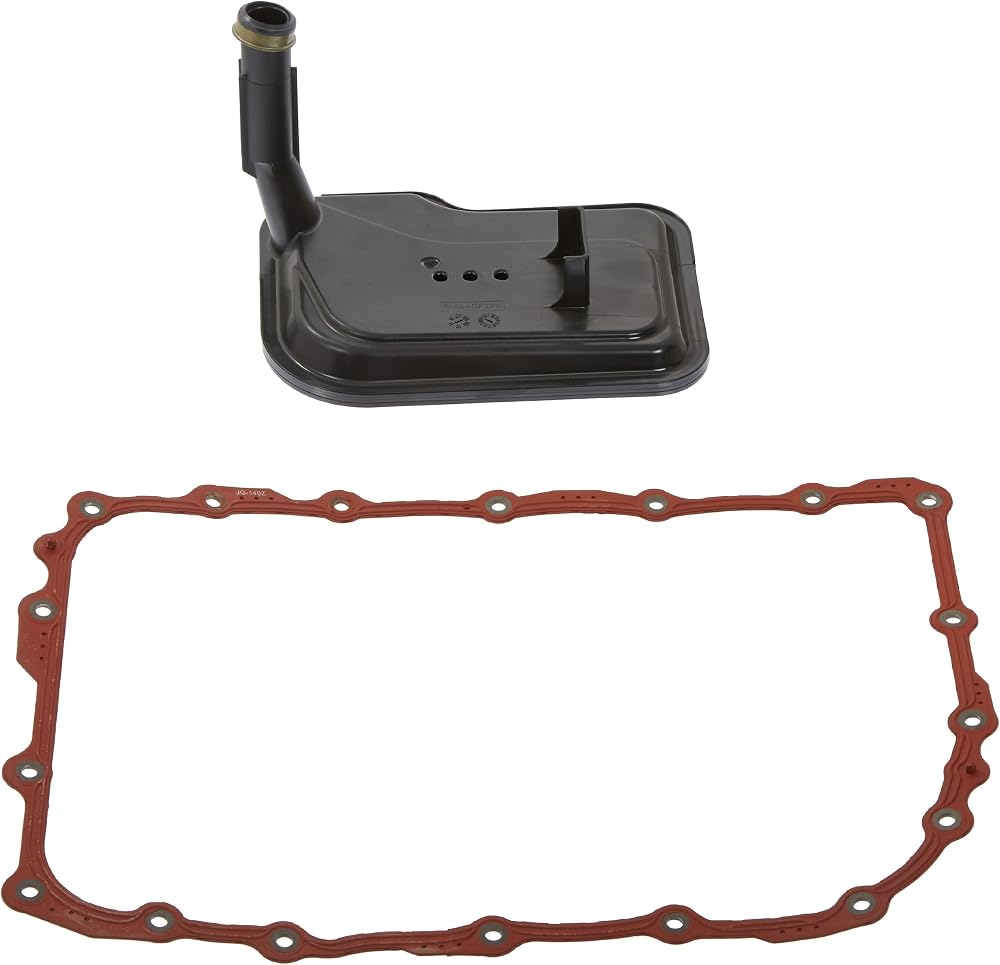
- Filter with its seal. GM TechLink (December 2023) lists filter and seal kit 24236933, filter 24236517 and seal 24225347 for the 6L50 (MYB), 6L80 (MYC) and 6L90 (MYD).
- 7 quarts of licensed DEXRON-VI for a pan service. Buy 13 if you plan a second drain or a cooler flush.
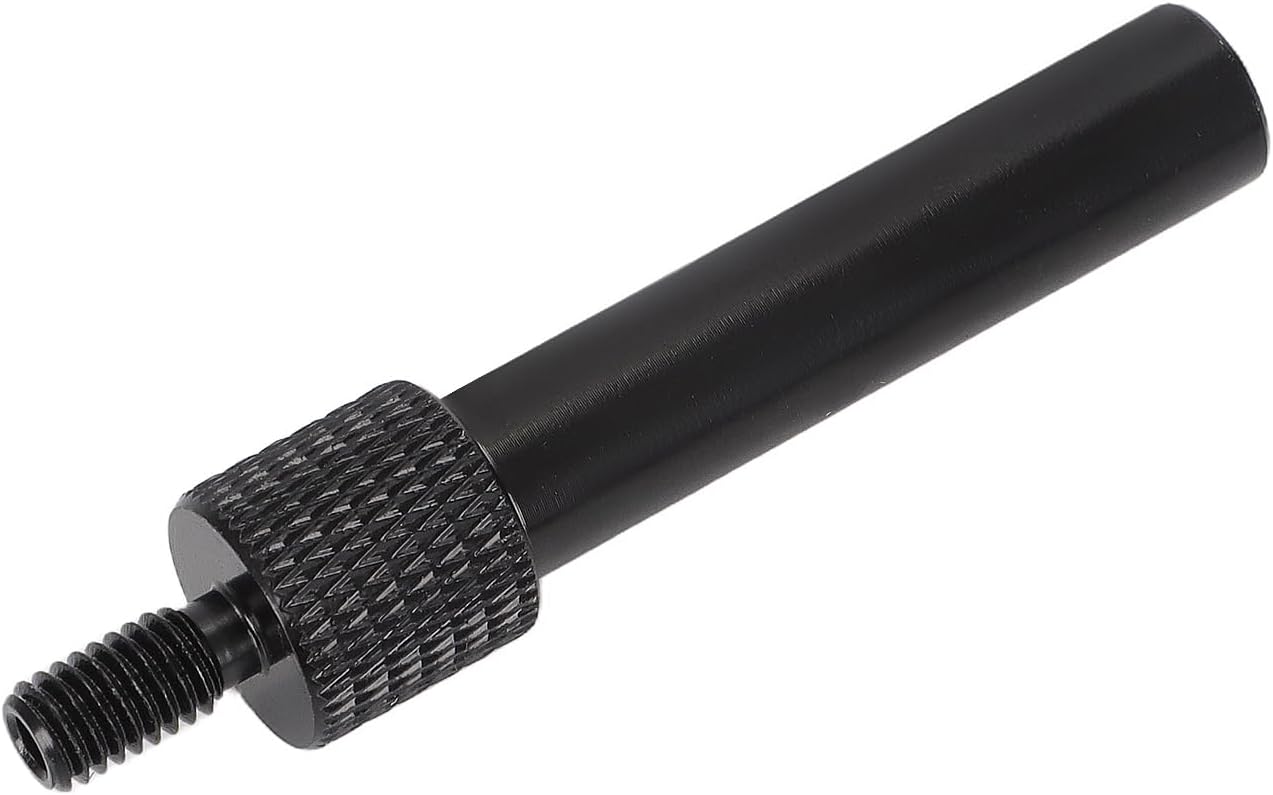
- A fill adapter or a long funnel that fits the dipstick tube. The stock pan has no fill port.
- A drain pan wide enough to catch fluid from a pan that has no drain plug.
Dropping the pan
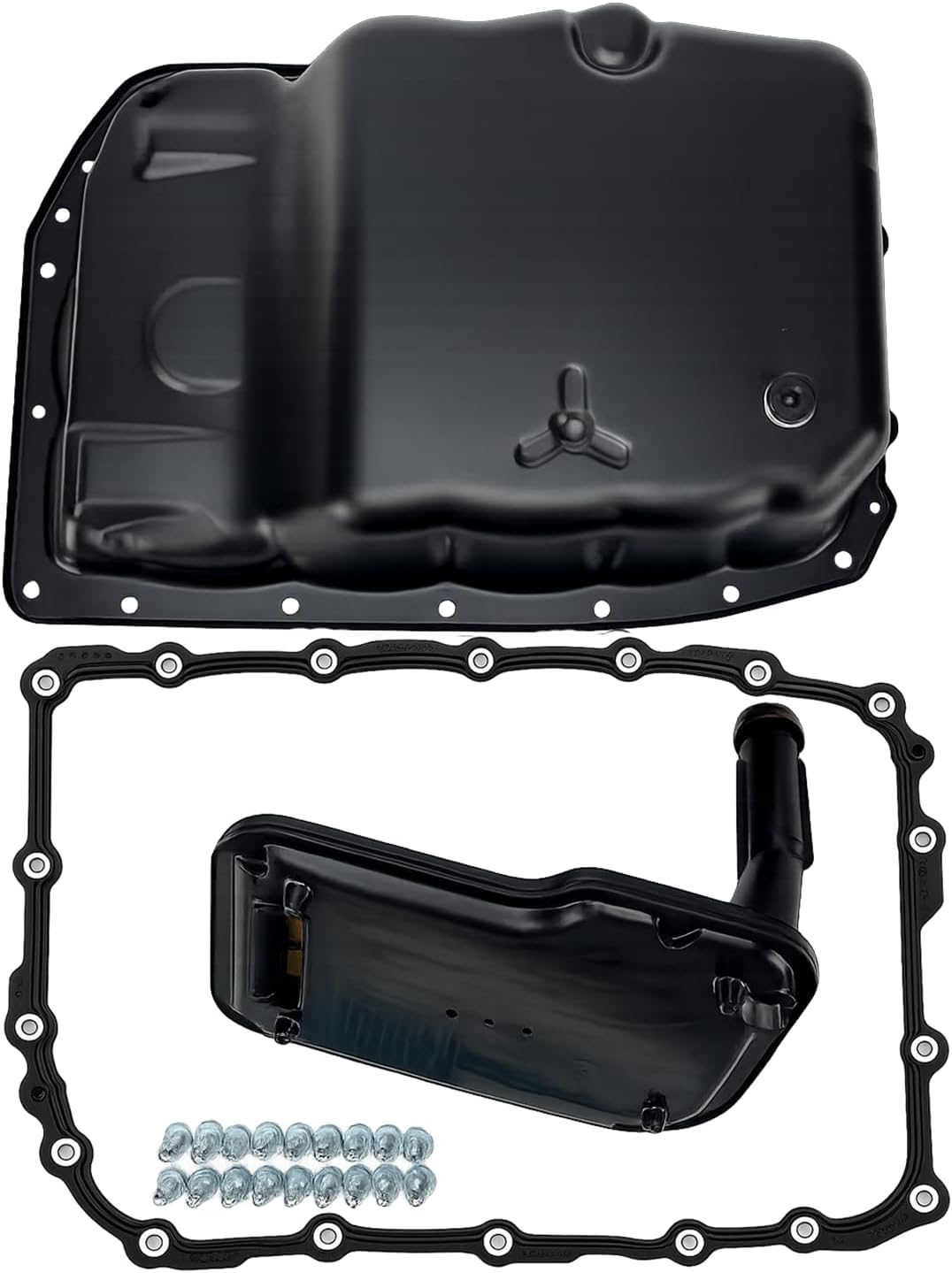
The factory 6L80 pan has no drain plug, so this is a messy job. Loosen all the bolts, remove the ones on one end, and let the pan tip so it drains from that corner. Lower the pan slowly, because the filler tube extends down into it. GM's preliminary information PI0522D says so directly: the fill tube extends into the transmission pan to stabilize the oil level indicator and give an accurate reading. Never cut it shorter for clearance, because a shortened tube gives a wrong reading and leads to an underfill or overfill.
While you are there, check the tube. PI0522D covers 2007-2013 Silverado trucks with the MYC transmission and a tick or rattle from the right front of the dash caused by a filler tube cracked from resonance. GM's check: grab the tube with your thumb and two fingers and push it toward the driver's seat and back twice. A good tube moves less than two inches and springs back. A damaged tube moves more than that and stays put. The revised tube has a foam damper near the top.
Filter and seal
Pull the filter straight down. Then look up into the pump bore, because the filter seal usually stays in the case. GM's current procedure, per the TechLink article, is to replace that seal every time the filter is removed. That is why GM now sells the filter and seal separately as well as in kit 24236933. An old seal left in the bore with a new one pushed in behind it gives you a filter neck that will not seat. A hardened old seal by itself lets the pump draw air. Either way, the truck comes back with a line-pressure complaint you caused.
The pan gasket is a different case. TechLink says the 6L80 pan gasket is reusable and should be replaced only if it is stuck to the case or pan. Clean the magnet, wipe the pan, look at what was on the magnet, and refit the gasket if it peeled off clean. Bring the pan bolts up in a crossing pattern by hand. These are small fasteners in an aluminum case.
Refill and set the level
Pour the measured amount in through the dipstick tube. Then follow the procedure. It is the same in the owner manual and the Chevrolet Performance sheet:
- Start the engine, park on level ground, and keep it running.
- Set the parking brake and put the shifter in Park.
- With your foot on the brake, move the shifter through every range, pausing about three seconds in each, then return to Park.
- Idle at 500-800 rpm for at least one minute.
- Read transmission fluid temperature on the Driver Information Center. The Silverado shows it as a DIC menu item, so no scan tool is needed.
The cold check is valid only between 80 F and 90 F (27-32 C). GM says it is only a reference to confirm there is enough fluid to drive safely until a hot check can be made. The hot check is valid between 160 F and 200 F (71-93 C). It is the accurate one, and the level should be inside the HOT crosshatch on the dipstick. Read both sides of the stick and use the lower mark. Check at least twice. GM notes that a top-off generally takes less than half a liter (one pint), so add in small amounts.
If the readings don't repeat, the Chevrolet Performance sheet says to inspect the transmission vent and make sure it is clean and not clogged. The same sheet warns that an overfill can foam and push fluid out the vent tube. Fluid on the dipstick should be red or dark brown. Very dark or black fluid with a burnt smell is a diagnosis job, not a service job.
Cooler Flush, Exchange Machines and What to Skip
GM's cooler bulletin 02-07-30-052J (May 2015) describes the J-45096 TransFlow machine, which flushes the cooler circuit with DEXRON-VI and air injection and then measures cooler flow in gallons per minute. GM's warning in that bulletin: "Insufficient oil flow through the ATF oil cooling system will cause premature transmission failure." The bulletin applies to 2011 and earlier models and sends 2012-up models to SI for the cooler flushing and flow test procedure. Its line table lists the 6L50/80/90 cooler feed (out of the transmission) on the bottom connector and the return on the top connector. That matters if you open the lines to run a flow check or catch old fluid at idle.
What I avoid on a high-mileage unit that has never been serviced is a pressurized flush that pushes solvent or fluid backward through the case. A cooler-only flush done GM's way, followed by a pan and filter service, is a different and safer job. If the fluid is already black and there is clutch material on the magnet, changing the fluid will not save the transmission. Diagnose it first.
Heat Is What Wears the Fluid Out
On the 6L80, GM bulletin 22-NA-182 puts the thermal bypass valve outside the transmission and gives an opening temperature of 158 F (70 C). Below that, fluid bypasses the cooler so the unit warms up. Above it, fluid goes to the cooler. A stuck valve or a twisted rubber cooler line on a low-mileage truck can run fluid temperatures high, and the bulletin lists harsh shift, shudder, flare and overheating as possible results. The bulletin's correction ends the same way every time: fix the line or valve, then check the fluid level following SI.
The 2017 manual also has a TRANSMISSION HOT IDLE ENGINE message that tells the driver to stop and idle until the fluid cools. If a customer has seen that message, change the fluid at the next service rather than waiting for the schedule, and find out why it got hot.
What It Costs
The parts bill for a DIY pan service is a filter and seal kit, about 7 quarts of DEXRON-VI, and a fill adapter if you don't already have one. Our ATP B-239 6L80 filter and gasket kit is $64.99 and the fill adapter is $36.99. If the pan is dented, rusted at the rail, or you are tired of draining it over your arms, a pan, filter and gasket kit is $124.99. A second drain-and-fill later costs fluid only. Shop pricing varies by how much fluid is replaced. A pan service uses about 6 quarts and an exchange uses 12-plus, so when comparing quotes, ask how many quarts go in and whether a new filter seal is included. For a deeper breakdown, see our 6L80 fluid change cost post.
Mistakes That Bring the Truck Back
- DEXRON-HP in a 6L80, or a "multi-vehicle" ATF in place of licensed DEXRON-VI.
- Filling to a quart count from the internet instead of measuring what drained and setting the level hot.
- Checking the level without cycling through the ranges, or outside the 160-200 F window.
- Leaving the old filter seal in the pump bore.
- Cutting or bending the filler tube, which changes the dipstick reading.
- Overfilling to "be safe," which can foam the fluid and push it out the vent.
Keep the numbers at the bench. Our free transmission fluid spec chart lists the correct ATF for the 6L80 and dozens of other units, so nobody tops off a Silverado with HP by mistake.
FAQ
What transmission fluid does a Silverado 1500 with the 6L80 take?
DEXRON-VI. The Silverado owner manual lists DEXRON-VI for the 6-speed automatic and DEXRON-HP for the 8-speed, and GM's 6L80 instruction sheet gives DEXRON-VI part number 88861037 (19264717 in Canada). Do not put HP in a 6L80 just because it is the newer fluid on the shelf.
How many quarts does a 6L80 Silverado take for a fluid change?
GM publishes about 5.7 liters (6.0 quarts) for a pan removal and filter replacement, 9.9 liters (10.5 quarts) for the transmission alone after an overhaul, and 11.5 liters (12.2 quarts) for the complete system including the cooler. On a pan drop, measure what came out and put that much back, then set the final level with the hot check.
How often should the 6L80 fluid be changed in a Silverado 1500?
The 2017 Silverado owner manual does not list a transmission fluid change on the normal schedule. On the severe schedule (hot-weather city traffic, hilly terrain, frequent towing, delivery or police use) it calls for fluid and filter every 45,000 miles. Most half-ton trucks that tow or work fit the severe description.
Can I reuse the 6L80 pan gasket on a Silverado?
Yes, per GM TechLink: the pan gasket is reusable and should only be replaced if it is stuck to the case or pan. The filter seal is a different story. GM's current procedure is to replace the filter seal every time the filter comes out, and the filter, seal and kit are sold under 24236517, 24225347 and 24236933.
Sources
- Chevrolet — 2017 Chevrolet Silverado Owner Manual (Automatic Transmission Fluid, 6-Speed and 8-Speed; Maintenance Schedule, Normal and Severe; Recommended Fluids and Lubricants; DIC). Backs: DEXRON-VI for the 6-speed and DEXRON-HP P/N 19331925 for the 8-speed, the passenger-side dipstick location, the range-sweep and 500-800 rpm idle preparation, the cold (80-90 F) and hot (160-200 F) check windows and the less-than-one-pint top-off, no ATF change on the normal schedule and fluid and filter every 45,000 miles on the severe schedule, the severe-service definitions, the DIC fluid temperature readout and the TRANSMISSION HOT IDLE ENGINE message. 2017 Silverado Owner Manual (PDF)
- Chevrolet Performance — Supermatic 6L80 Transmission Controller Kit for LS Crate Engines, Installation Instructions, P/N 19366636. Backs: DEXRON-VI P/N 88861037 (19264717 Canada) and the internal-damage caution, the approximate capacities of 5.7 L / 6.0 qt, 9.9 L / 10.5 qt and 11.5 L / 12.2 qt, the overfill foaming and vent tube warning, the vent inspection for inconsistent readings, and red-to-dark-brown fluid condition. Chevrolet Performance 6L80 instruction sheet (PDF)
- GM TechLink — "6-Speed Automatic Transmission Oil Filter and Seal Now Available Individually," December 15, 2023. Backs: kit 24236933, filter 24236517 and seal 24225347 for MYB, MYC and MYD; the pan gasket being reusable unless stuck; and the requirement to replace the seal any time the filter is removed. gm-techlink.com
- General Motors — Preliminary Information PI0522D, "Tick, Buzz or Rattle Noise from Front of Dash, Transmission Filler Tube Cracked or Broken," March 2013 (hosted by NHTSA). Backs: 2007-2013 Silverado MYC coverage, the resonance-cracked filler tube, the two-inch flex test, the foam damper revision, and the instruction never to shorten the tube because it extends into the pan to stabilize the level reading. GM PI0522D (PDF)
- General Motors — Service Bulletin 02-07-30-052J, "Automatic Transmission Oil Cooler Flow Test Essential Tool J-45096 TransFlow," May 2015 (hosted by NHTSA). Backs: the cooler flush and flow test with DEXRON-VI, the premature-failure warning for low cooler flow, the 2011-and-prior scope with 2012-up referred to SI, and the 6L50/80/90 cooler feed on the bottom connector and return on the top. GM 02-07-30-052J (PDF)
- General Motors — Service Bulletin 22-NA-182, May 2025 (hosted by NHTSA). Backs: Silverado 1500 MYC applicability, the twisted cooler line cause of overheating, harsh shift, shudder and flare, the external 6L80 thermal bypass valve opening at 158 F (70 C), and the instruction to check fluid level per SI after the repair. GM 22-NA-182 (PDF)