A 6R140 that sits for a second or two after you pull it into Drive or Reverse is telling you something about oil supply. The engagement is nothing more than a clutch piston filling with pressurized fluid and squeezing a pack. If the pump can't make pressure, the pickup is sucking air, or the pressure is leaking out of worn bores before it reaches the piston, the fill takes longer and the truck sits there. The trick is that "delayed engagement" on this unit has at least four distinct causes, and each one has a pattern you can recognize before you spend a dime.
Below: the Ford pump bulletin, two documented filter-seal failures, worn valve body circuits, clutch-side leaks, and the gauge and scan checks that separate them. Sources are at the bottom.

What has to happen for the 6R140 to engage
The 6R140 (TorqShift 6) is a Lepelletier design with one simple planetary and one Ravigneaux gear set, and five clutch packs, three rotating and two brake clutches, per Ford Component Sales. It runs MERCON LV, with a 3.974:1 first and 3.128:1 reverse.
For a builder, the useful way to think about it is by circuit:
- Drive (first gear) applies the 1-2-3-4 clutch, with the one-way clutch holding the reaction. If the 1-2-3-4 circuit is slow to fill, Drive is late.
- Reverse applies the 3-5-R clutch and the low/reverse clutch together. If either of those circuits leaks, Reverse is late or missing.
- Both depend on the pump, the filter pickup, the main regulator and the solenoid supply circuit. A problem there shows up in both ranges.
That split is your first diagnostic fork. Delay in Drive only points at the forward circuit. Delay in Reverse only points at the reverse circuits (see our 6R140 no-reverse guide). Delay in both ranges points upstream, at oil supply and main pressure, which is where most of the documented 6R140 cases live.
Cause 1: pump losing prime after sitting (Ford TSB 14-0177)
Ford addressed this one directly. TSB 14-0177, which supersedes TSB 13-1-3, covers some 2011-2012 F-Super Duty trucks with the TorqShift 6. It applies to trucks without a PTO built on or before 7/25/2012, and trucks with a PTO built on or before 9/30/2012. The complaint is an intermittent delayed engagement in Drive or Reverse that only happens on the first engagement after the truck has been parked with the engine off for at least 2 to 3 hours. Ford's stated cause is the transmission pump losing prime.
The bulletin's test is simple and worth copying even on trucks outside the build range:
- Install a pressure gauge on the line pressure tap. Ford notes the tap is an M10 x 1.00 thread and warns not to use an NPT fitting, because it will damage the case.
- Let the truck sit 3 to 4 hours with the engine off.
- Hold the brake firmly, start the engine, and immediately shift to Reverse while watching the gauge.
- If engagement is delayed and the gauge reads below 10 psi (68.9 kPa) during the delay, Ford's fix is to replace the pump assembly.
The service parts called out are pump assembly BC3Z-7A103-E (without PTO) or BC3Z-7A103-F (with PTO), pump seal BC3Z-7A248-C, and a filler tube O-ring. Low pressure plus delay is a supply problem. Normal pressure plus delay is a leak or clutch problem downstream.
Drainback versus loss of prime
Both sound the same to the customer. A converter that drains back overnight leaves the pan overfull cold, and the delay is the converter refilling. A pump that lost prime reads near zero on the gauge until it picks up oil. The cold dipstick level after an overnight sit plus the gauge at startup tells you which.
Cause 2: filter neck O-ring that won't seal cold
This is the one that follows a fluid service. Transmission Digest published a 6R140 case with no forward or reverse engagement when cold that improved as the unit warmed and came back after it cooled down. The truck had also stored P0722 (output shaft speed sensor no signal) and U0422 (invalid data from the body control module), which sent the diagnosis in the wrong direction.
The line pressure gauge read zero when cold, even with the case connector unplugged, so it wasn't a solenoid command problem. The cause was an undersized O-ring seal on the neck of a new filter. The pump was drawing air past the seal and cavitating. As the fluid warmed, the O-ring swelled enough to seal and the pressure came up to normal. A filter with the correct seal fixed the engagement and cleared the codes.
A normal cold dipstick level is what ruled out drainback. If the truck just had a filter service and now engages late cold, check the filter neck seal first.
Cause 3: filter seal leak that shows up on a hill
Sonnax documented a related failure that shows up as an intermittent neutral in Forward or Reverse rather than a delay every time. In their case the truck lost engagement pulling up an inclined driveway, and line pressure dropped to 0 psi during the episode. The defective filter seal let the pickup draw air when the fluid shifted in the pan at an angle. The original seal had essentially no resistance when the filter was pulled out. Sonnax's fix was a more robust O-ring.
Sonnax's test is to park nose-up on a 20-30 degree incline and watch line pressure. They also give the fill numbers you need when you're in there. The level check is done at 91-102°C (196-216°F), and approximate refill is 7.8 L (8.2 qt) for a pan drop, 9.7 L (10.2 qt) with the valve body removed, and 15.3 L (16.2 qt) after a full overhaul. They also warn against overfilling Ford 6- through 10-speed units, since excess fluid causes overheated ATF. Ford Component Sales lists total capacity at about 4 gallons of MERCON LV.
Cause 4: worn valve body circuits leaking pressure
On a high-mileage unit with a delay that is worse hot and doesn't care how long the truck sat, look at the valve body. Sonnax lists delayed engagement first among the symptoms it addresses, alongside harsh engagement, flare shifts, bind-ups, soft shifts and TCC concerns. Their root cause is loss of oil pressure due to worn components in critical oil circuits.
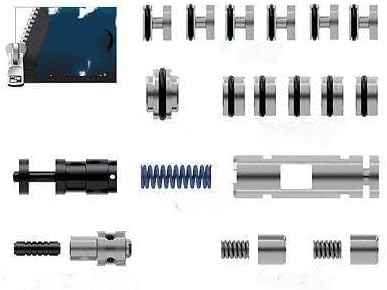
The kit's coverage tells you where the leaks are. Sonnax says it seals the main line, solenoid regulator, reverse, clutch control, TCC and solenoid apply circuits, with O-ringed end plugs, a TCC apply boost valve kit, a converter limit valve, and three accumulator pistons and springs. When those bores wear, pressure that should be filling a clutch piston leaks back to exhaust. Hot, thin fluid leaks faster, so the delay grows as the truck warms up. That is the opposite of the filter seal pattern, which gets better warm.
Debris is the other valve body issue. GEARS Magazine reports that debris from normal wear can drop into the valve control channels and stick the 1-2-3-4 control valve. That can cause the unit to neutralize at stops or give harsh downshifts. Because the 1-2-3-4 clutch is what engages Drive, a sticking valve in that circuit can look a lot like a delayed Drive engagement. GEARS lists normal operating temperature as 195-230°F; running hotter speeds up wear.
Solenoids and adapts
If the valve body comes apart, keep every solenoid in its original bore. 6R140 solenoids are flow-banded, and the module's calibration is tied to those bands. A swapped or wrong-band solenoid can cause a delayed or harsh engagement that takes a long time to adapt out. After any repair, reset the adaptive tables with a capable scan tool and let the module relearn engagements before you judge the result.
Cause 5: the clutch side
If supply pressure is right and the valve body is tight, the fill is being lost at the clutch. Look for a cut or rolled piston seal, a cracked piston, worn sealing rings on the shaft or support, or excessive clutch clearance. GEARS notes that some early factory reference material gave incorrect clutch clearance figures for this unit, so verify clearances against current data during a rebuild rather than an old printout. An air check of each circuit will usually find the leak, and the fix is an overhaul.
Diagnosis step by step
- Define the pattern. Drive only, Reverse only, or both? Only after sitting, only cold, only on a grade, or worse hot? The pattern usually points to one of the five causes above.
- Check the fluid correctly. MERCON LV, level checked in the 196-216°F window per Sonnax. Note the cold level after an overnight sit as well, since that is your drainback check.
- Scan for codes. Speed sensor or network codes can show up alongside a supply problem, as in the Transmission Digest case. Don't chase them until you know pressure is good.
- Put a gauge on the line tap. Use an M10 x 1.00 fitting, never NPT. Pressure near zero during the delay means a supply problem: pump prime, filter seal, low fluid or a stuck main regulator. Normal pressure during the delay means the oil is being lost downstream.
- Time the engagement on the scan tool. With the brake held, log engine rpm and turbine shaft speed (TSS) and shift into gear. The time from the range change to TSS pulling down toward zero is your engagement time. Compare Drive to Reverse and cold to hot. A delay that is long in one range and normal in the other points at that range's circuit.
- Drop the pan. Inspect the filter neck seal, the debris in the pan and on the magnet, and the condition of the fluid. Heavy friction material or metal changes the plan from a valve body job to a rebuild.
The fix, matched to the cause
| Pattern | Likely cause | Fix |
|---|---|---|
| First engagement after 2-3+ hours, low pressure on gauge, 2011-2012 Super Duty | Pump losing prime (TSB 14-0177) | Pump assembly per the bulletin |
| Late or no engagement cold, fine warm, recent filter service | Undersized filter neck O-ring | Filter with the correct seal |
| Neutral or delay on a grade, pressure drops to zero | Filter seal leak or low fluid | New filter and seal, correct fill level |
| Delay worse hot, high mileage, flares and soft shifts too | Worn valve body bores | Zip Kit or reman valve body |
| Drive only, neutralizing at stops | Sticking 1-2-3-4 control valve | Clean and repair the valve body |
| Normal pressure, delay persists, debris in pan | Clutch piston seals, sealing rings or worn frictions | Overhaul |
Preventing a repeat
Use a filter with a proper seal, fill to the correct hot level with MERCON LV, and don't overfill. Keep temperatures in range when towing, since heat speeds up bore wear. After any pan drop, check engagement cold the next morning, while the truck is still in your bay.
6R140 filter kit with pan gasket
Two of the documented 6R140 delayed-engagement cases came down to the filter seal. If the pan is coming down, put in a complete filter and gasket kit instead of reusing parts. It fits the 2011-up Super Duty TorqShift 6. Sold by our sister store, CoreTransmissionParts.
Shop the part for this fix →Going deeper? The rebuild kits collection covers overhaul kits for clutch-side repairs.
Need parts for this job?
Our 6R140 parts page carries filter and gasket kits, pumps, Sonnax Zip Kits, valve bodies, solenoid kits and complete rebuild kits for the Super Duty TorqShift 6. Checkout is on site.
FAQ
Why does my 6R140 take a few seconds to go into gear?
The clutch that engages Drive or Reverse is filling slowly because pressure is low or leaking. On this unit the common causes are the pump losing prime after sitting (Ford TSB 14-0177), a filter neck seal drawing air, low fluid, worn valve body bores or leaking clutch piston seals. When the delay happens tells you which one to check first.
Is there a Ford TSB for 6R140 delayed engagement?
Yes. TSB 14-0177 covers some 2011-2012 F-Super Duty trucks with the TorqShift 6 that engage late in Drive or Reverse after sitting 2 to 3 hours. Ford's test is a line pressure gauge at startup after a 3-4 hour sit. If engagement is delayed and pressure reads under 10 psi, the fix is a new pump assembly.
Can a new filter cause delayed engagement on a 6R140?
Yes. Transmission Digest documented a 6R140 with no engagement cold after a filter change. An undersized O-ring on the filter neck let the pump cavitate, and line pressure read zero until the seal swelled with heat. A filter with the correct seal fixed it.
How much fluid does a 6R140 take after a pan drop?
Sonnax lists about 7.8 L (8.2 qt) of MERCON LV for a pan drop, 9.7 L (10.2 qt) if the valve body is removed, and 15.3 L (16.2 qt) after a full overhaul. Check the final level with the fluid at 196-216 degrees F and do not overfill.
Related guides
- 6R140 No Reverse Fix
- 6R140 Slipping: Causes and Fix
- 6R140 Valve Body Wear and Fix
- 6R140 Filter and Pan Service
- 6R80 Delayed Engagement Fix
Sources
- Ford Motor Company, Technical Service Bulletin 14-0177, "TorqShift6 Transmission - Delayed Engagement in Drive or Reverse - Built On or Before 9/30/2012" (supersedes TSB 13-1-3). Backs the affected 2011-2012 F-Super Duty build dates, pump losing prime, the 3-4 hour sit test, the M10 x 1.00 line tap and NPT warning, the under-10 psi (68.9 kPa) criterion, and pump part numbers BC3Z-7A103-E/F and seal BC3Z-7A248-C. TSB 14-0177 (PDF)
- Transmission Digest, "Ford 6R140 no engagement cold." Backs the undersized filter neck O-ring causing pump cavitation, zero line pressure when cold, P0722 and U0422, the seal swelling as it warms, and using the cold dipstick level to rule out drainback. transmissiondigest.com
- Sonnax, "Ford 6R140 - Repairing Elusive Intermittent Neutral Condition." Backs the filter seal leak on an incline, 0 psi line pressure during the event, the 20-30 degree incline test, the 91-102°C level check window, the 7.8 L / 9.7 L / 15.3 L refill amounts, and the overfill warning. sonnax.com
- Sonnax, 6R140-ZIP Zip Kit product and technical information. Backs delayed engagement from loss of oil pressure due to worn components, and the circuits it seals (main line, solenoid regulator, reverse, clutch control, TCC and solenoid apply). sonnax.com
- GEARS Magazine (ATRA), "Problems and Fixes! Revisiting the 6R140 Transmission." Backs debris sticking the 1-2-3-4 control valve (neutralizing at stops, harsh downshifts), the 195-230°F normal operating range, and incorrect clutch clearance data in early factory reference material. gearsmagazine.com
- Ford Component Sales, LLC, Ford 6R140 6-Speed Automatic Transmission Technical Specifications. Backs the Lepelletier layout, five clutch packs (three rotating, two brake), MERCON LV, the approximately 4-gallon capacity, and the 3.974 first and 3.128 reverse ratios. fordcomponentsalesllc.com (PDF)