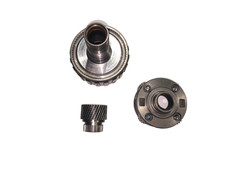
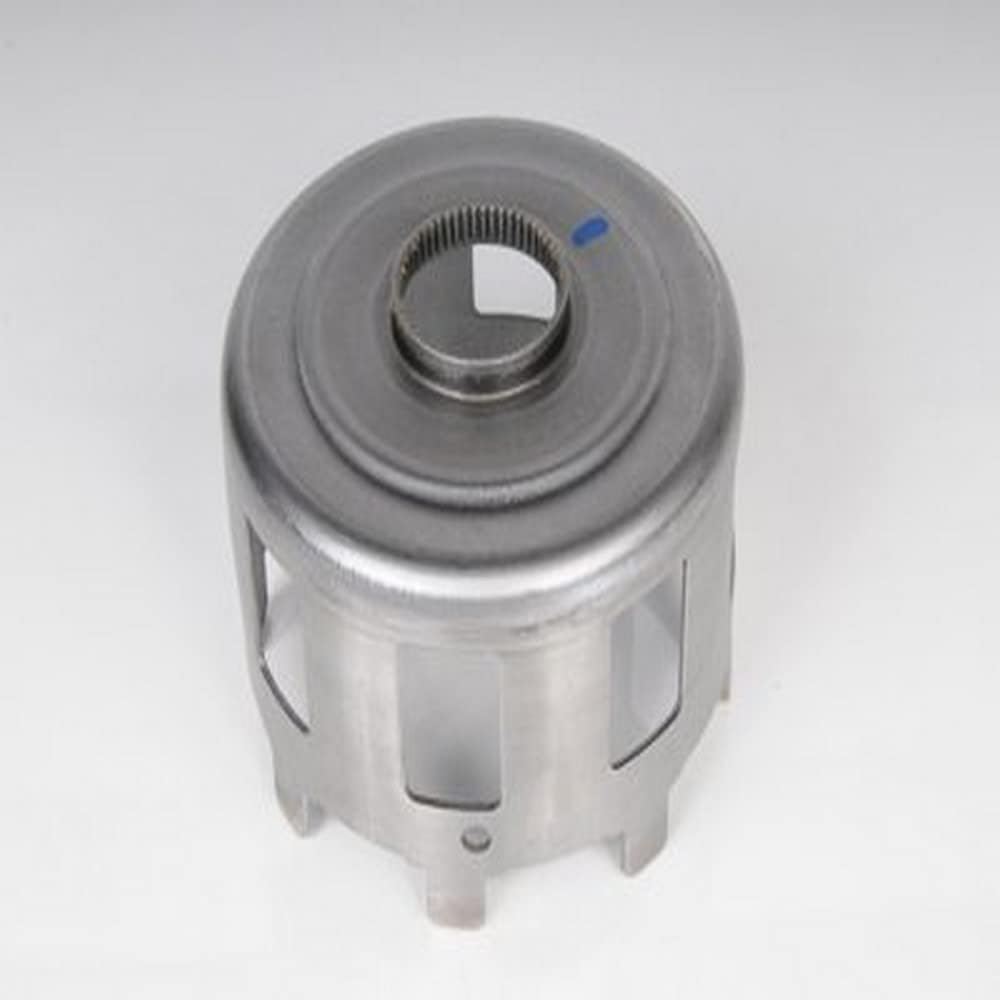
When a 4L60E in a Silverado, Sierra, Tahoe, S10, Blazer or Camaro starts singing a whine that rises and falls with road speed, or a teardown turns up loose pinions and a magnet full of bright steel, the planetary is the part on the bench. This listing is a remanufactured 4L60E planetary, inspected and ready to install, priced for the rebuilder who wants a good used-and-restored gearset rather than a new heavy-duty carrier. It suits a budget overhaul where the case, shafts and drums are sound and only the gearset is worn out.
What the planetary does in a 4L60E
The 4L60E uses two planetary gearsets in series, an input set in front and a reaction set behind it, tied together so the internal gear of one is driven with the carrier of the other. Each set has a center sun gear, an outer ring gear and a carrier holding a group of pinion gears on hardened pins. The clutches, the 2-4 band and the low roller clutch decide which member is driven and which is held, and the gearsets turn that into first through fourth and reverse. Every pinion spins on needle bearings and rides between thrust washers, so a gearset that runs low on fluid, overheats or lives behind a lot of torque wears its pins and bearings first. Sonnax notes that the rear planetary bearing is a chronic failure point in this family, which is one reason the reaction side often comes out looking worse than the input side.
Symptoms of a worn planetary
- A whine or howl tied to vehicle speed, sometimes louder in one gear and quieter in fourth
- Shiny metal flakes on the pan magnet rather than dark friction paste
- Pinions that rock on their pins, show heat bluing or have chipped teeth
- A clunk on engagement or a loss of drive if a pin walks out or the carrier cracks
How to confirm before you buy
Separate gear noise from other noises first. A planetary whine follows road speed, while a pump or converter noise follows engine rpm, so hold a steady speed and let the transmission shift, or coast in neutral, and listen for what changes. Drop the pan and read the magnet. If the complaint is a lost gear rather than noise, check our 4L60E common problems guide first, because on this unit a stripped reaction sun shell or a burnt 3-4 clutch is far more common than a broken carrier. If the issue is how a shift feels rather than a sound, the 1-2 accumulator and shift feel guide helps you avoid buying hard parts for a hydraulic problem.
Fitment
This listing is described as a direct-fit 4L60E planetary, without a year range or a front or rear position in its title. GM revised the gear train several times across the 4L60E run, and front and rear carriers are not interchangeable, so match this part to the one you removed before you order: count the pinions, compare the hub spline and look at the thrust surfaces. Send us your year, VIN and a photo of your old carrier and we will confirm it. If you have a 2001-2006 truck, our new 2001-2006 4L60E planetary is listed for those years, and the full range is in the 4L60E parts collection.
Install notes
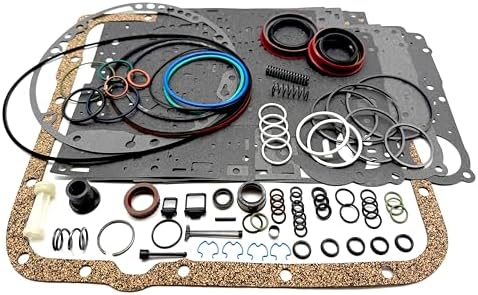
Clean every gear and inspect the matching sun and ring gears; pitted teeth on either one will wear a fresh carrier quickly. Check pinion end play with a feeler gauge, replace the thrust washers and bearings in the gear-train stack, and replace any scored bushings. Look at the reaction sun shell splines while the unit is apart, since a GM genuine reaction sun shell is cheap insurance on a high-mileage unit. Before closing the case, measure overall end play; an oil pump remover and end play checking tool makes that job straightforward. Pair the gearset with a full gasket and seal overhaul kit, pre-lube the pinions with ATF, flush the cooler, refill with Dexron VI and check the level hot after the first drive.