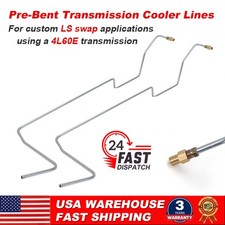
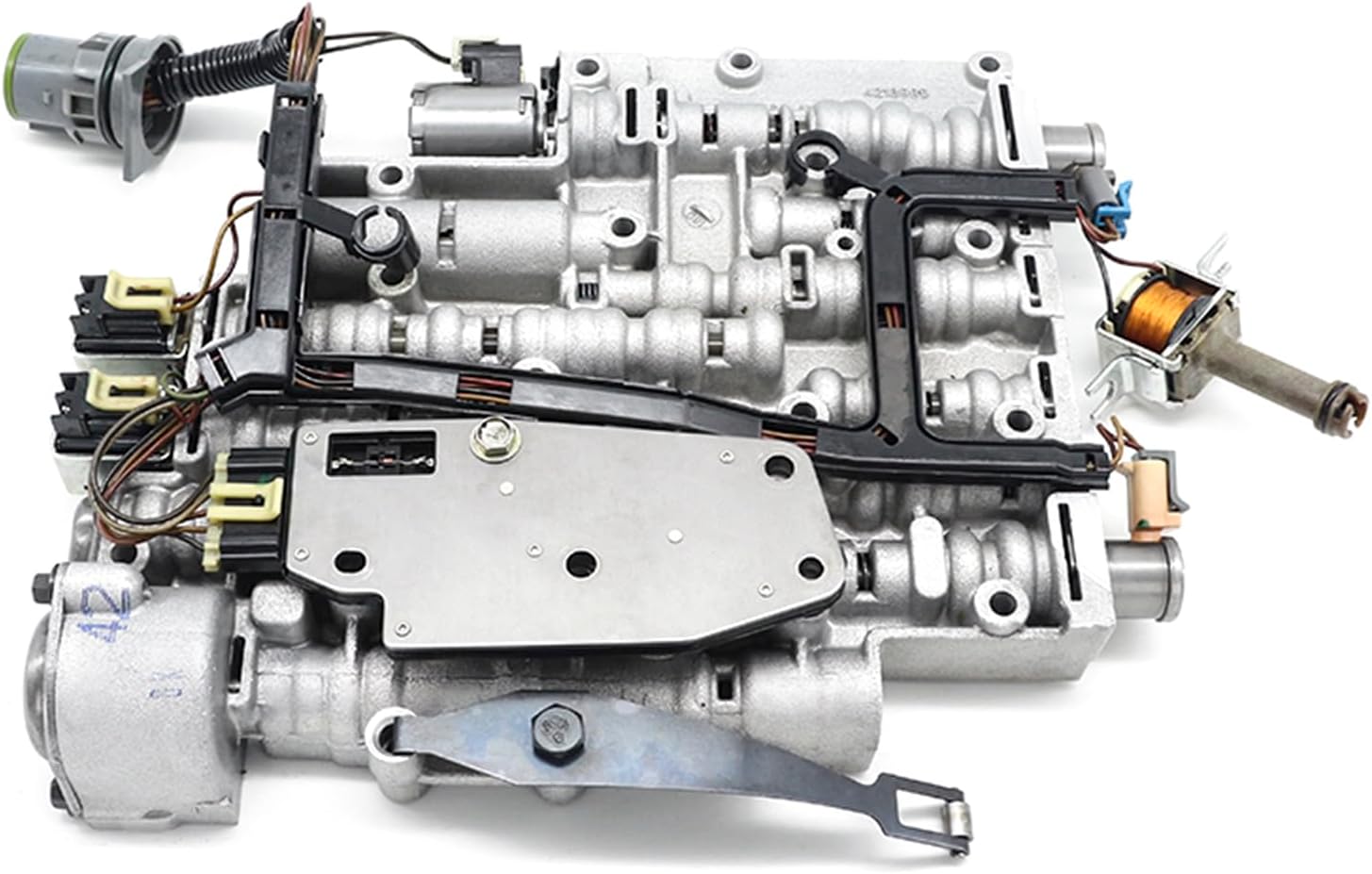
If your Chevy or GMC truck, Tahoe, Suburban, S10 or Blazer has a 4L60E that is dripping red fluid from a rusted hard line, or a line that got pinched during a frame or exhaust job, this listing is the replacement steel plumbing. Despite the generic name, the part pictured is not a radiator-style core: it is a matched pair of pre-bent steel transmission cooler lines, each with a threaded brass fitting on one end and a beaded tube end on the other. It is sold new and ships fast from the USA.
What the cooler lines do in a 4L60E
Every 4L60E pushes converter oil out to a cooler and gets it back again. The two hard lines are the path. Novak notes the late 4L60E uses flare and O-ring fittings on the passenger side of the case for this circuit, which is where the threaded ends of a set like this attach. Hot oil leaves the case through one line, sheds heat in the cooler up front, and returns through the other line to lubricate the planetary gears, bushings and the 3-4 clutch area before it drains to the pan. That return flow is the part people forget. A restricted or leaking line does not just raise temperature; it cuts lube to parts that are already the weak points of this transmission.
Symptoms that point to the cooler lines
- Fresh ATF on the passenger-side frame rail, crossmember or oil pan after a drive
- Steel line scaled with rust or pitted where it rubs a clip or bracket
- A dent or kink in a line after the truck was lifted or jacked on the wrong spot
- Fluid level that keeps dropping with no leak at the pan gasket, axle seal or range switch
- Slipping on the 3-4 shift, or no 3rd and 4th at all, after a line let go and the unit ran low
How to confirm before you buy
Wipe the lines dry, start the engine and let the transmission warm up, then trace each line with a flashlight from the case forward. Leaks often only show when the circuit is hot and pressurized. Pay attention to the radiator end too: Sonnax documented a 2000 Chevrolet pickup whose top cooler line walked out of the radiator about six inches after a small retaining clip wore through, and the fluid loss burned the 3-4 clutches. If you already have a slip or a flare, read our 4L60E common problems guide before replacing lines alone, because the line may have caused damage inside. Owners of compact trucks can also check the S10 4L60E problems guide for the leak and overheating checks specific to that chassis.
Fitment
This set is listed only as fitting the 4L60E, with no model years or body style on the listing. That matters, because GM routed cooler lines differently by chassis, two- or four-wheel drive, engine, wheelbase and whether the vehicle had an auxiliary cooler, and the 4L60E ran from 1993 into the 2013 model year. Before ordering, lay our photo next to your old lines and compare the bend pattern, the length of each run and the fitting style on both ends. If you are not sure, send us your year, VIN and drivetrain and we will check it for you. Other parts for this unit are on our 4L60E parts page.
Install notes
- Cap the old lines as you remove them and keep a drain pan under both the case and the radiator end.
- Start the threaded brass fittings by hand so you do not cross-thread the case connector, then snug them with a line wrench, not an open-end wrench.
- Route the new lines along the original clips, away from the exhaust, and secure them so they cannot rub through on a frame rail.
- If the transmission failed or the fluid was burnt, flush or replace the cooler itself; debris left in it goes straight back into the case.
- Top off with Dexron VI and check the level hot in park.
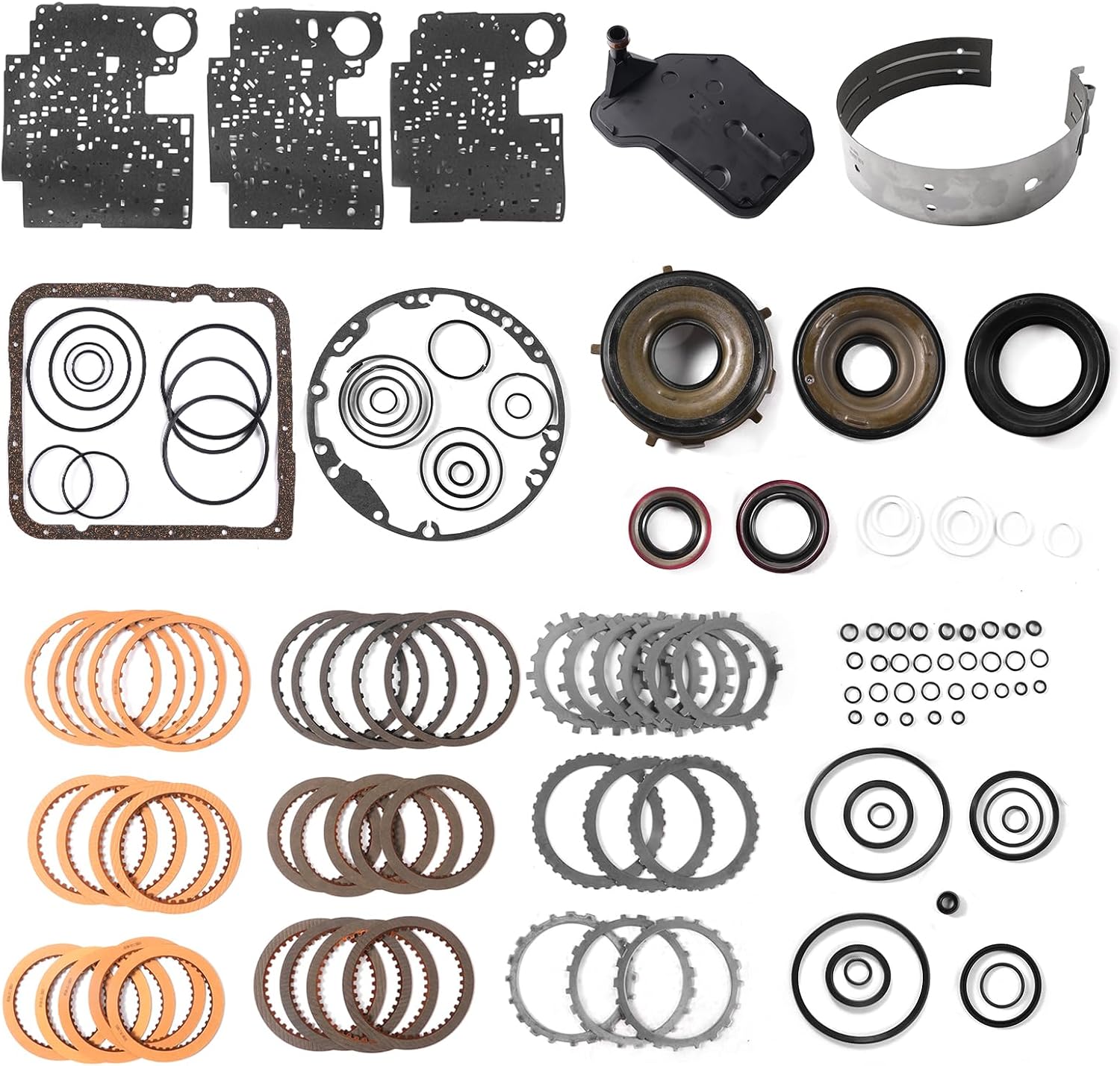
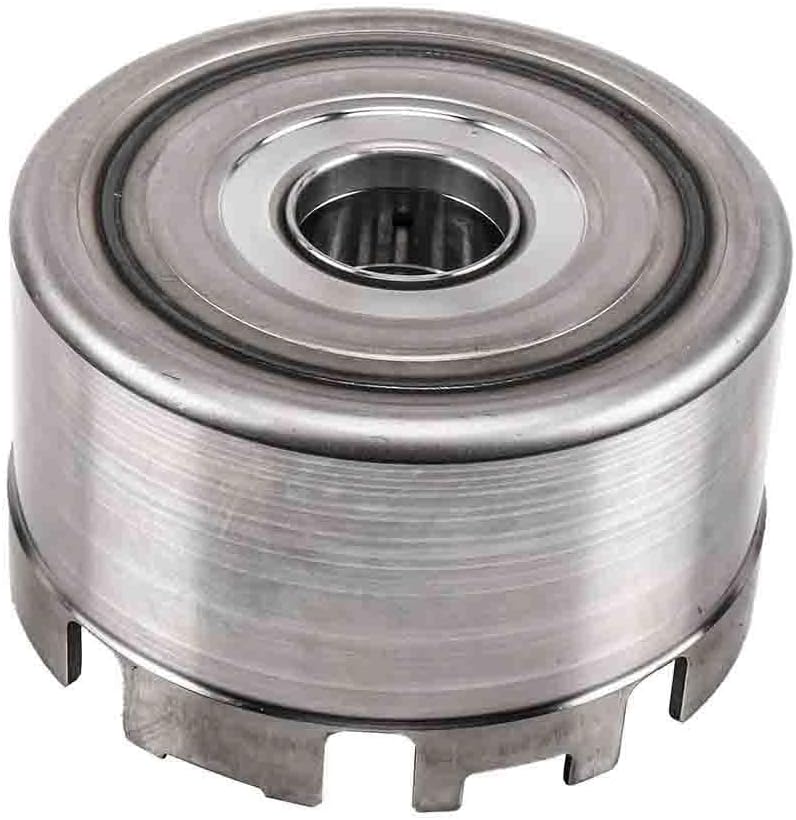
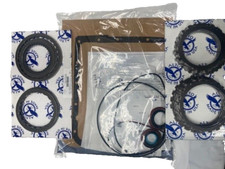
If the leak caught you too late and the 3-4 pack is gone, a 4L60E master rebuild kit with filter covers the frictions and seals, and a new reverse input clutch housing is worth pricing if the drum was overheated.