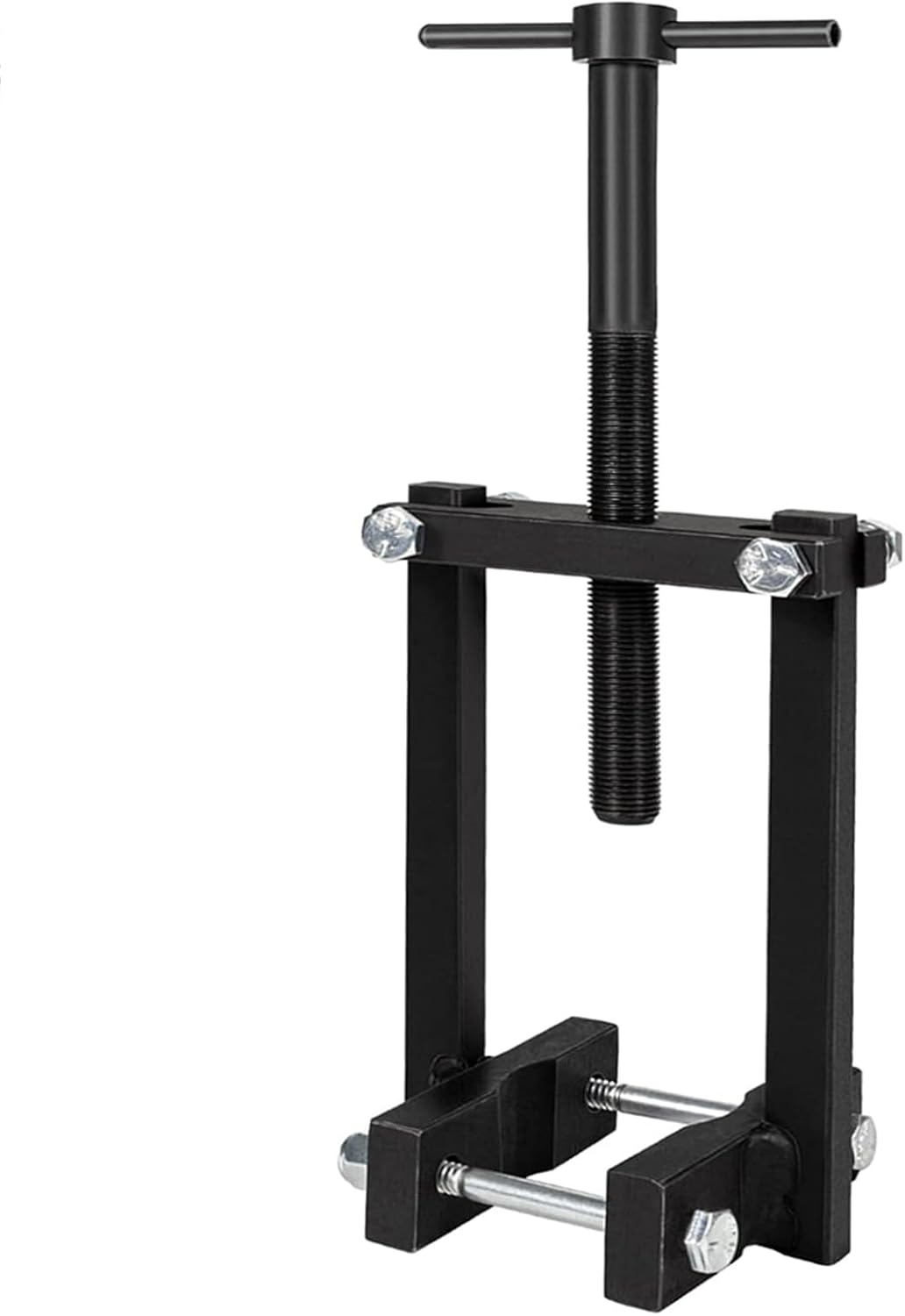
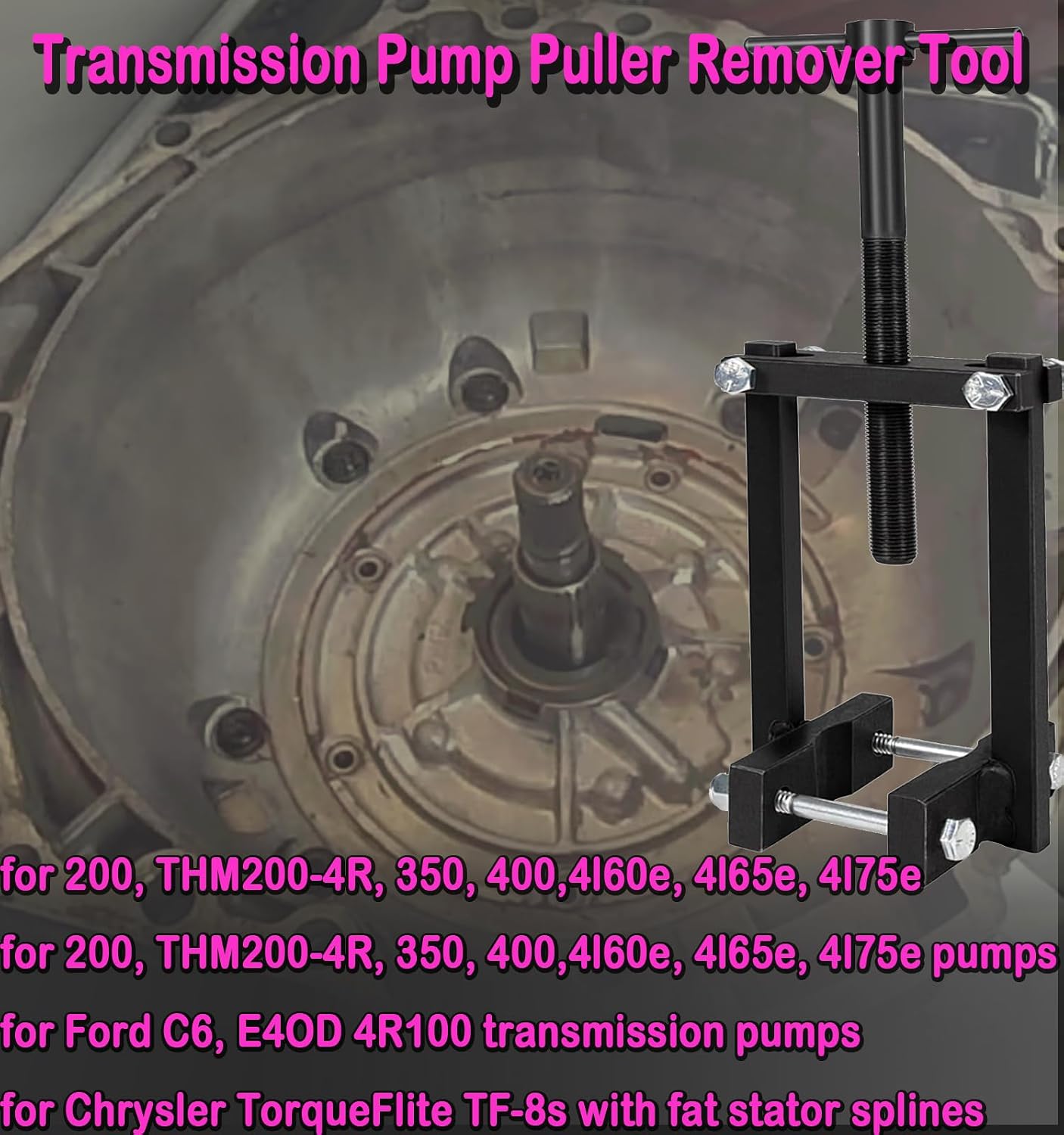
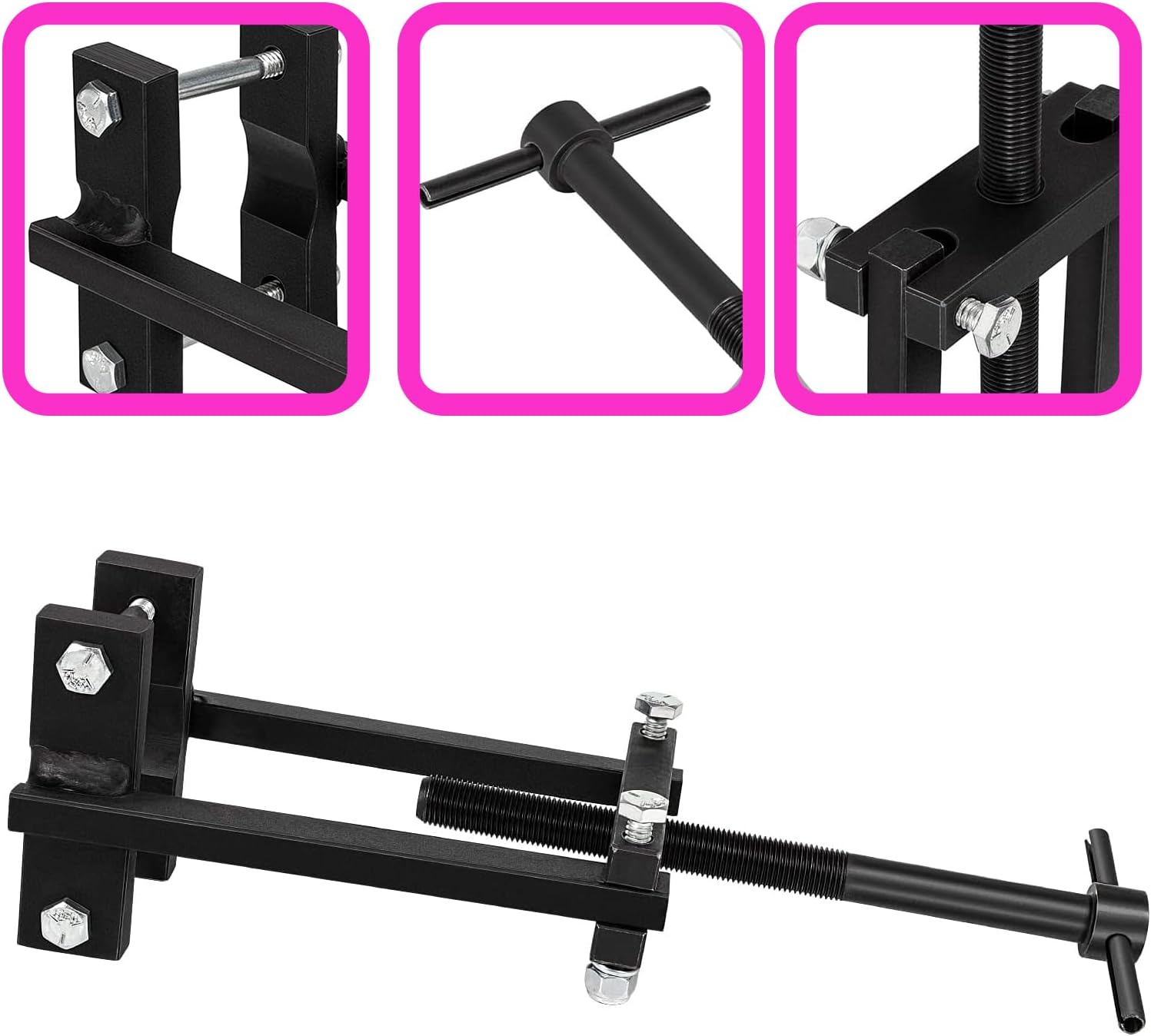
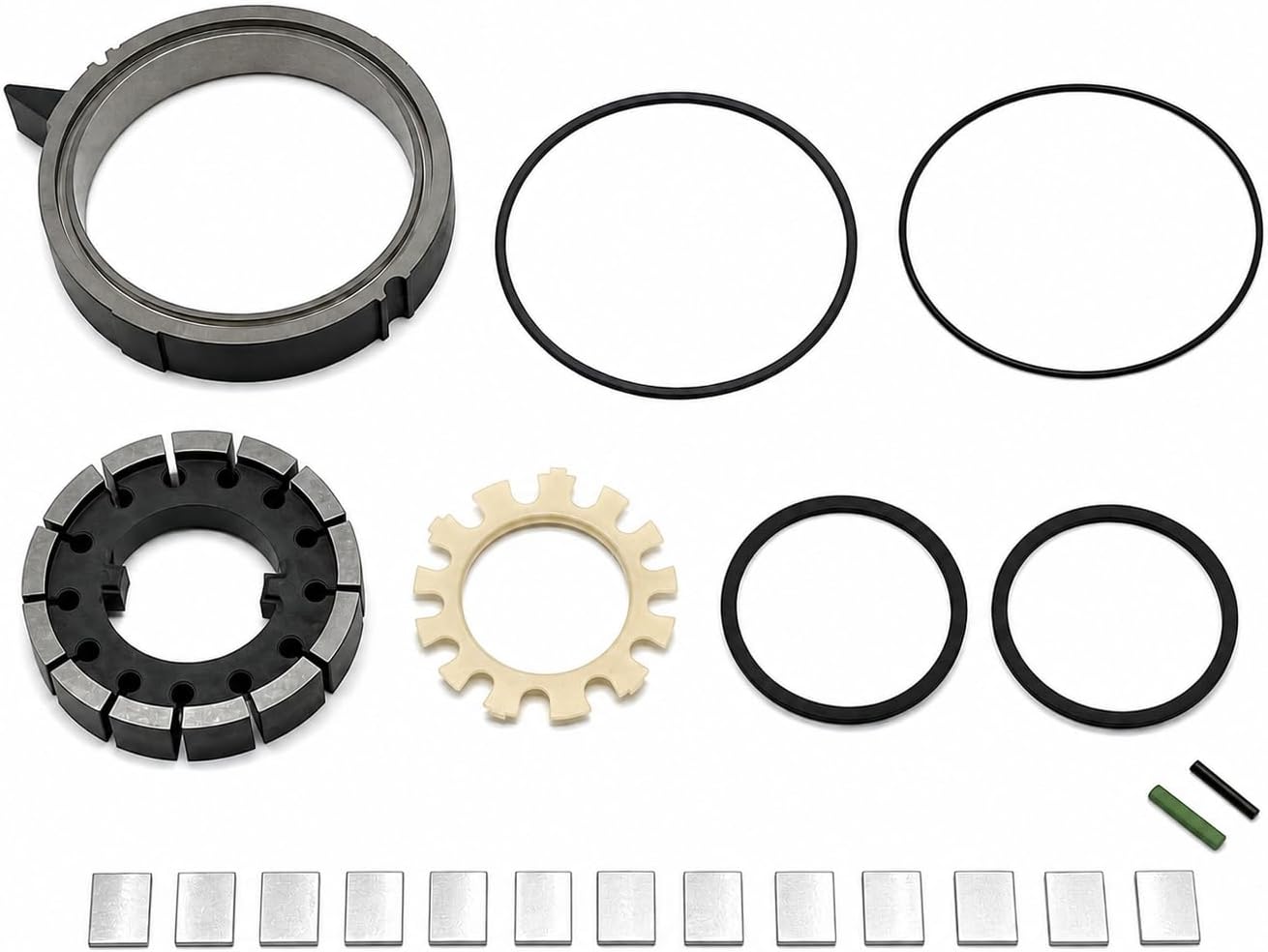
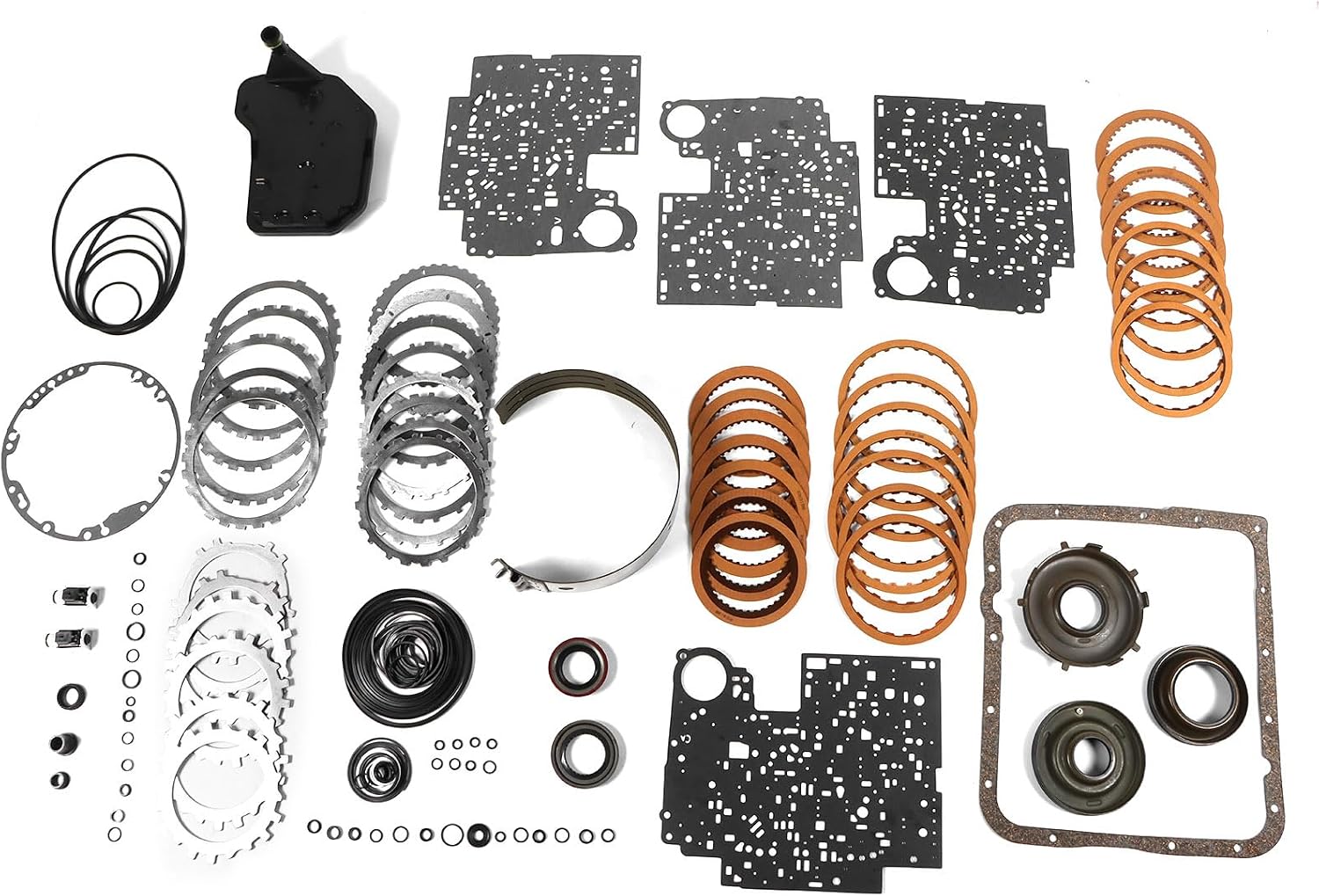
Pulling the front pump is the first real step of any 4L60E teardown, and it is where a lot of cases get damaged. Once the bolts are out of the pump on a Silverado, Sierra, Tahoe, Suburban, Yukon, S10 or Camaro unit, the pump still sits tight in the case bore with an outer seal holding it, and it rarely comes free by hand. Prying behind the flange with screwdrivers gouges the case sealing surface and can crack the pump body. This adjustable-jaw puller (model TZ200) hooks behind the pump and draws it straight out using a center screw, so the pump leaves the bore square instead of cocking and binding.
What a pump puller does on a 4L60E
The 4L60E front pump is the source of all hydraulic pressure in the unit. GM service information describes it as a 13-vane variable-displacement pump, and it mounts at the front of the case where the converter drives it. Its outside diameter is a close fit to the case bore, which is what keeps it centered on the input shaft, and the outer seal adds drag on top of that. The puller's jaws reach in and grip behind the pump, and the center screw bears on the input shaft. Turning the screw down pushes against the shaft and pulls the pump forward evenly. Because the force goes through the shaft's centerline, the pump walks out level rather than tipping and wedging in the bore.
Why you are pulling the pump in the first place
Most buyers are here because the transmission has one of these complaints and needs to come apart:
- Delayed engagement into Drive and Reverse, or slipping in all gears, which can point to a worn pump or low line pressure
- A whine that rises and falls with engine RPM
- A burnt 3-4 clutch pack, one of the most common 4L60E failures, especially behind a modified engine
- No 3rd or 4th gear from stripped sun shell splines
- A front seal or pump bushing leak that has come back more than once
Confirm the diagnosis before teardown
A line pressure gauge reading tells you whether the pump side is the problem before you pull anything. Low pressure in every range points to the pump, slide or pressure regulator. Our guide to 4L60E pump rotor and bushing wear covers what to measure once the pump is on the bench, and 4L60E common problems and fixes explains the 3-4 clutch and sun shell failures that send most of these units to a rebuild.
Fitment
This puller is listed for GM THM200, 200-4R, 350, 400, 4L60E, 4L65E and 4L75E pumps, plus Ford C6, E4OD and 4R100, and Chrysler TorqueFlite units with the fat stator spline. The tool weighs 2.33 lb and measures 8.86 x 4.06 x 4.13 in. The jaws are adjustable, but pump flange shapes are not identical across every unit, so check that the jaws seat fully behind your pump before loading the screw. For help confirming your unit, send us the year and VIN. Browse everything we carry for the 4L60E on the 4L60E collection page.
Using the puller
- Drain the fluid, pull the converter straight off, and set the case on the bench with the bell housing up or the unit level.
- Remove the pump-to-case bolts.
- Leave the input shaft in place. The screw needs it to push against, and it keeps the forward and 3-4 clutch drums from coming out stuck to the pump.
- Set the jaws behind the pump, snug the center screw against the input shaft, then turn it down evenly until the pump clears its seal.
- Keep the selective thrust washers in order as they come out; you will need them to set end play.
On reassembly, a front pump alignment band keeps the pump halves concentric while you torque them, and a new front seal and bushing should go in while the pump is out. If the rotor or vanes show scoring, the 13-vane pump rotor kit rebuilds the pump instead of replacing it. Prime the pump before the first start and refill with Dexron VI ATF.