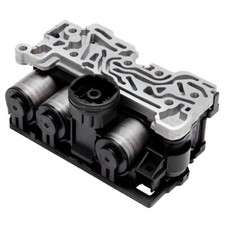
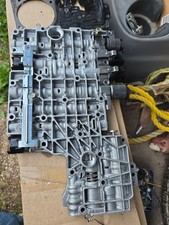
A 2002-2010 Explorer or Mountaineer that clunks into Drive, waits two or three seconds before Reverse catches, or flares into fourth is the classic 5R55W complaint, and a search for a pressure control solenoid usually follows. On this transmission the pressure control solenoids are not sold as separate pieces. They live inside the solenoid pack, the block bolted to the bottom of the valve body, and this listing is that pack: an original Ford unit marked 9L2Z-7G391-AA and 4L2P-7G391-AA, pulled from a working transmission and tested one solenoid at a time before it ships.
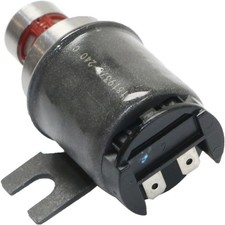
What the pressure control solenoids do in a 5R55W
Transmission Digest's breakdown of this unit explains it well. In Park, Reverse, Neutral and Drive the four on/off shift solenoids stay in the same state, so the feel of every engagement from a stop is decided only by the three variable force solenoids, PCA, PCB and PCC. When you select Drive, the PCM uses PCB to hold the forward engagement control valve so full line pressure cannot slam the forward clutch, then reduces PCA current so its pressure climbs and the forward clutch applies smoothly. Reverse is handled the same way, with PCB and PCC working the direct clutch. Lower current means higher pressure on these solenoids, so one that sticks, or a connector that loses contact, can show up as anything from a bang into gear to a long delay.
Symptoms on an Explorer or Mountaineer
- Harsh or delayed engagement into Drive or Reverse, usually worse when the fluid is hot
- A 3-4 flare, or a bind-up feel on upshifts
- Pressure control codes P0748 or P0960, or shift solenoid codes with the truck dropping into failsafe
- A converter clutch that will not lock, or slips at highway speed
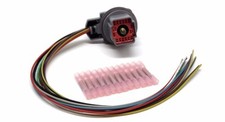
- Intermittent faults that follow the wiring, often from fluid wicking into the case connector
How to confirm before you buy
Do not assume the pack is guilty just because engagement is bad. GEARS Magazine documented a 2006 Explorer with severe delayed forward engagement when warm whose solenoid and sensor readings were normal; the damage turned out to be in the forward clutch. Check the fluid condition and pan debris, inspect the internal harness and case connector, and compare commanded solenoid current with what the truck actually does on a scan tool. Slipping with P0735 points to servo pin bore wear rather than the pack. Our 5R55W Explorer shift problems guide and the servo pin bore wear guide cover both checks.
Fitment
The 5R55W went into the four-door Explorer and Mountaineer starting with the 2002 redesign. Sonnax notes it gave way to the closely related 5R55S in those trucks around 2004-2005, and both use this solenoid assembly. What matters most is the pack design. ATRA's seminar material puts 2002-2003 W and S units on the early 1L2Z-7G391-AG pack and 2004-on units on the later design, which Ford updated to 9L2Z-7G391-A and now recommends exclusively for those years. The two designs are not equal: ATRA measured a 4 psi difference in PCA output at 0.6 amp, which works out to about 30 psi of mainline pressure. That makes this pack the straightforward choice for 2004-2010, while a 2002 or 2003 owner should read the number on the old pack and send it with the VIN first. It is not the part for a Ranger or a 1997-2001 Explorer with the 5R55E, which uses separate solenoids. The full 5R55 parts page has the rest of this family.
Install notes
- Drain the fluid and drop the pan. Replace the filter, since debris from a failing unit collects there.
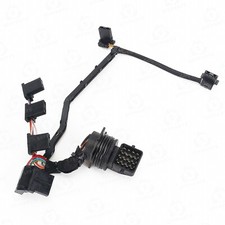
- Unplug the case connector and remove the eight pack bolts. While it is out, check the 5R55W internal wiring harness for oil inside the connector or chafed wires.
- Torque the pack to 71 lb-in (8 Nm) in sequence. Overtightening is a known way to ruin one.
- Refill with Mercon V. The fill and level plug is a T30 Torx on the case, and the 5R55W/5R55S ATF fill adapter lets you pump fluid in from below. Check the level at operating temperature.
- Clear codes and reset the PCM adaptive memory, then drive through all five gears with several stop-and-go engagements so the truck relearns.