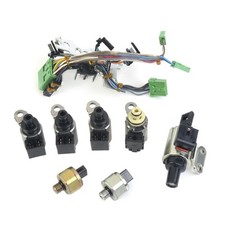
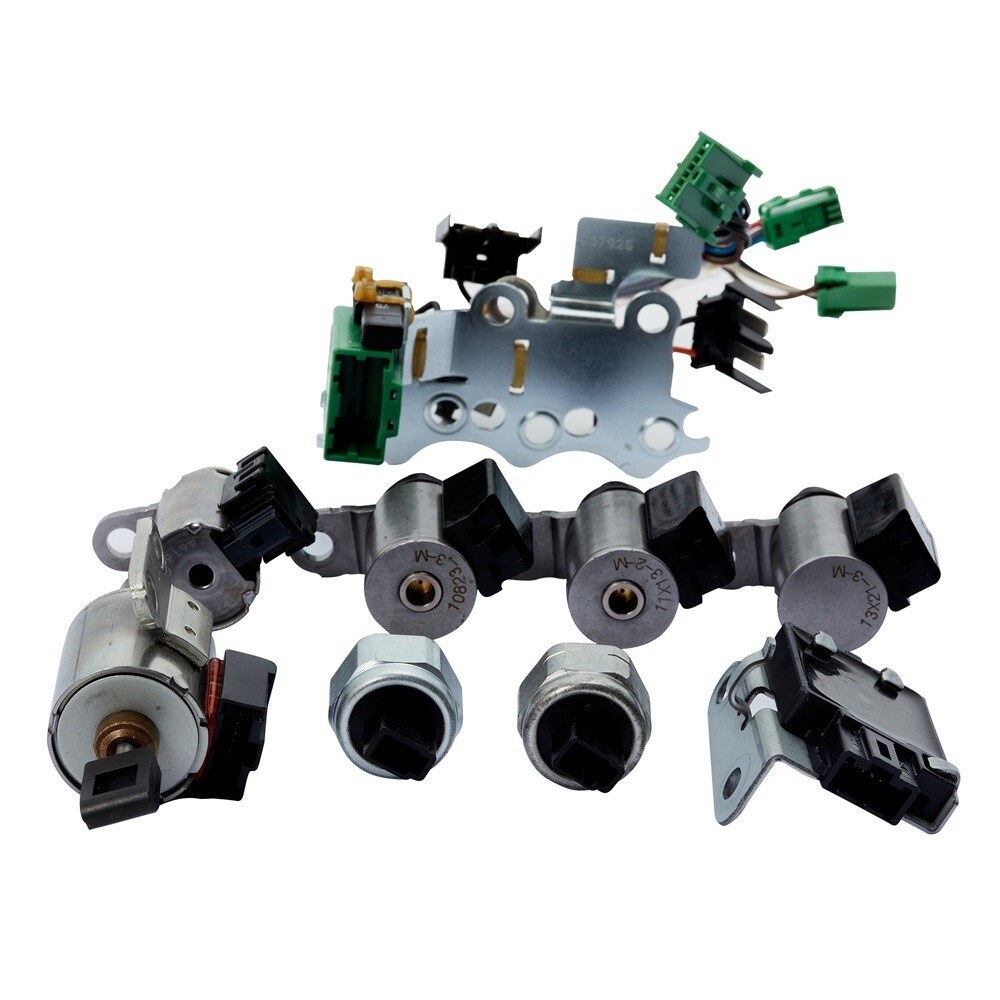
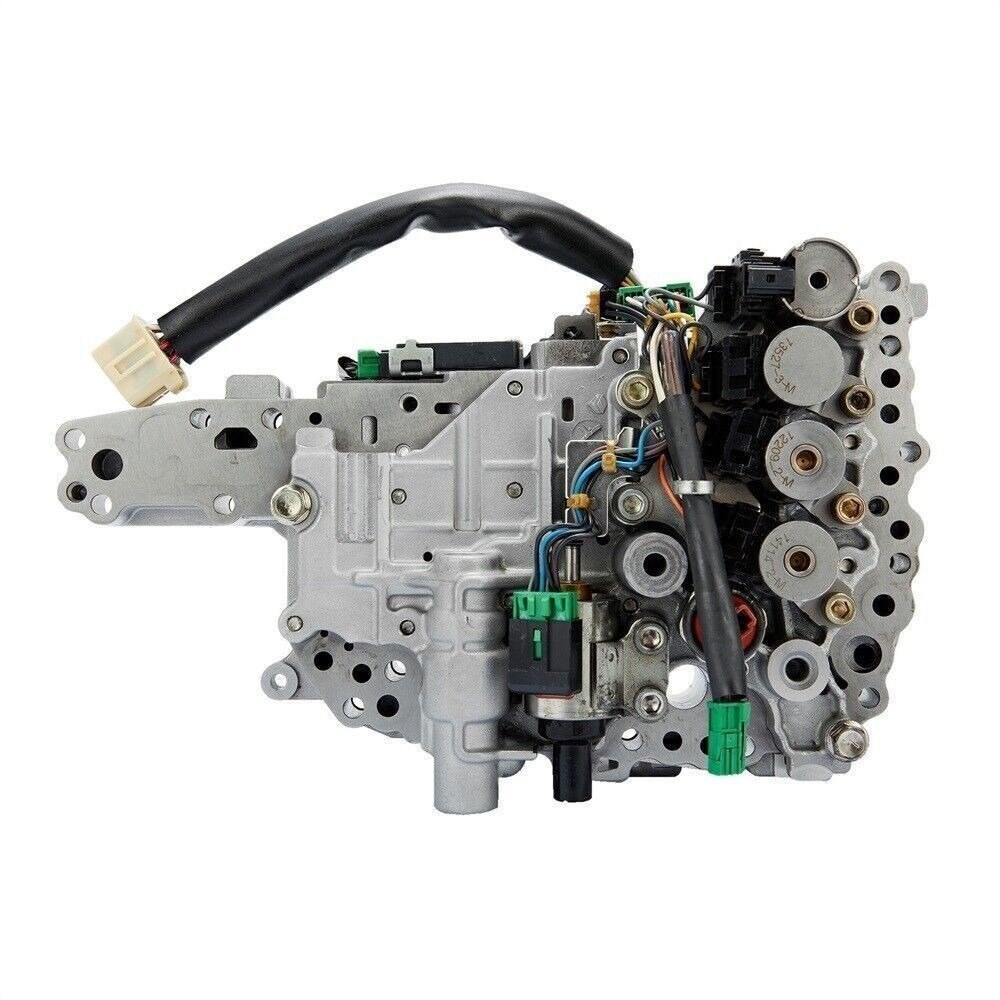
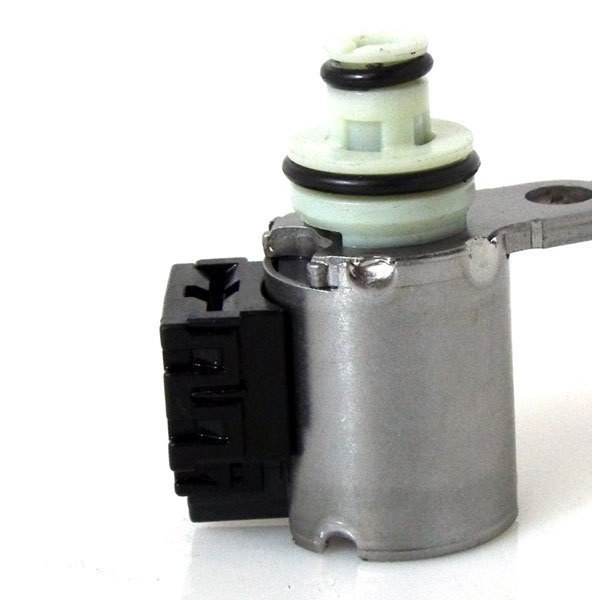
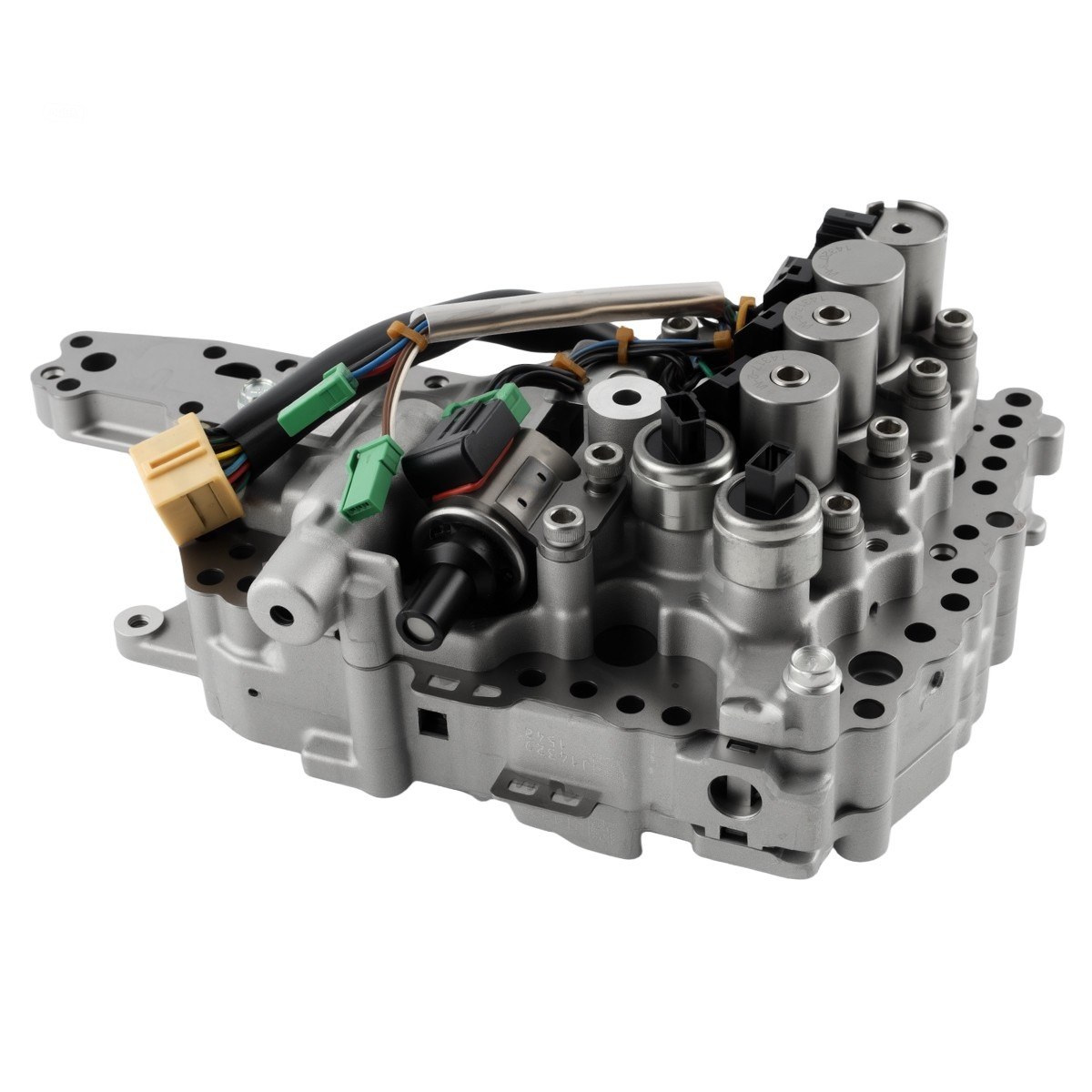
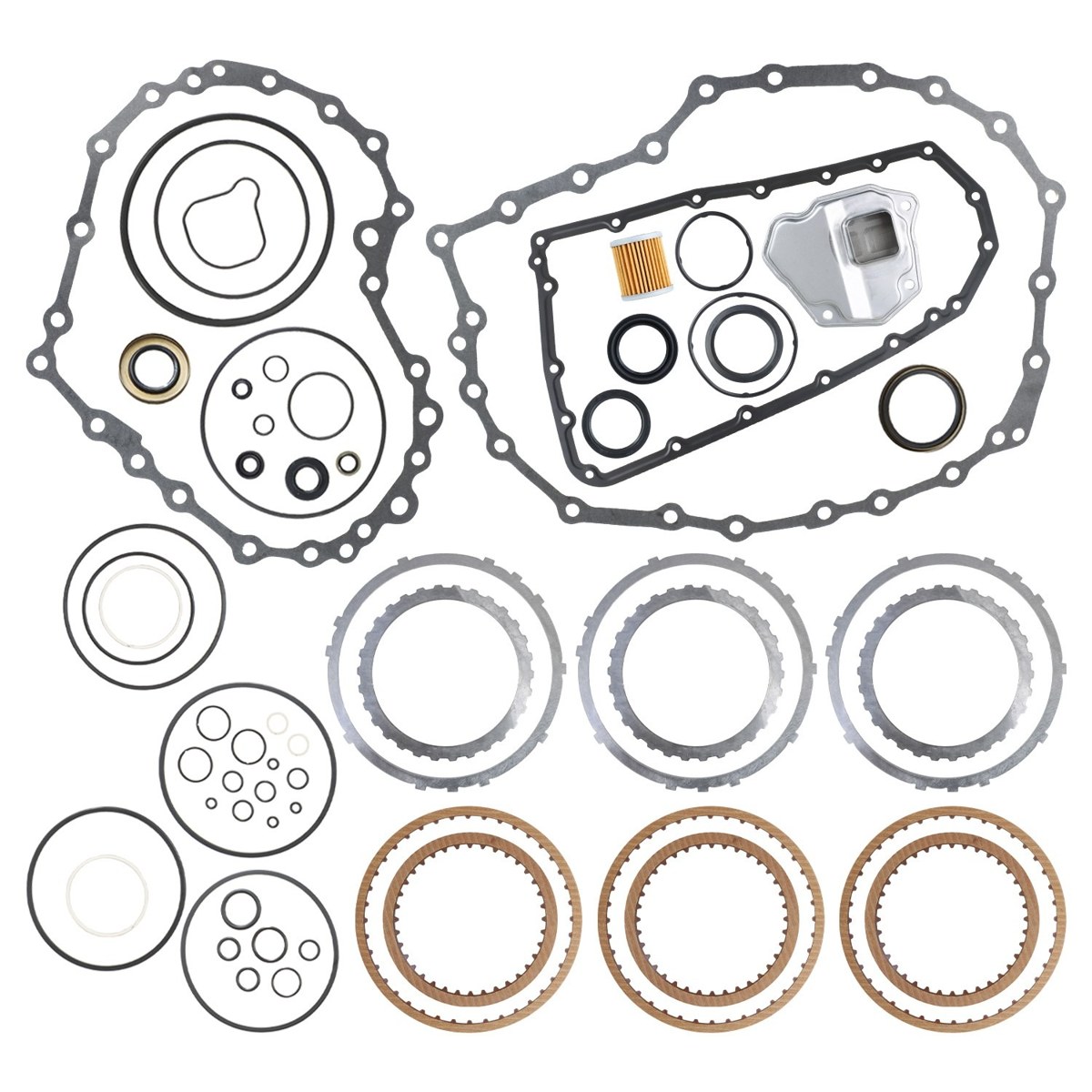
Nissan owners who see RE0F10A on a repair estimate are usually dealing with a 2.5L Altima, a first-generation Rogue or a 2.0L Sentra that has started to flare, hesitate or drop into fail-safe with a pressure code stored. RE0F10A is Nissan's name for the Jatco JF011E, the same CVT that Dodge, Jeep and Mitsubishi used. What this listing pictures is not a lone coil: it is the electrical group that bolts to the valve body, including the pressure control solenoids, the longer lock-up solenoid, the primary and secondary pulley pressure sensors and the internal wiring harness with its green connectors. On a high-mileage unit where one pressure circuit has quit, renewing all of them in one pan-off job saves a second teardown when the next tired coil gives up.
What the pressure control solenoids do in an RE0F10A
A conventional automatic uses pressure to squeeze clutch packs. The RE0F10A uses it to squeeze a steel push belt between two variable pulleys. The pressure control solenoid sets main line pressure for the whole unit, and the secondary pressure control solenoid trims the clamp on the output pulley so the belt does not slip under torque. The primary pulley is moved by the step motor to change ratio. Because the stakes are a slipping belt, the TCM does not trust the solenoids blindly: two pressure transducers report what the primary and secondary pulleys are really seeing. Fender Bender's write-up of this unit notes those sensors read about 0.5 volt at zero pressure and about 4.5 volts near 870 psi, rising in a straight line in between, so a scan tool can tell you whether commanded and actual pressure agree.
Symptoms that point at this solenoid group
- Engine speed rises on acceleration but the car gains little road speed, especially on grades or with a load
- Chatter or a judder pulling away from a stop
- A firm thump when you select Drive or Reverse
- Fail-safe: limited power, the check engine light on and a stuck ratio
- Nissan pressure codes such as P0745 or P0746 for the line pressure solenoid, P0776 or P0778 for the secondary pressure solenoid, and P0840 or P0841 for the pulley pressure sensor
How to confirm the fault first
Measure before you buy. Fender Bender lists about 6.5 ohms for the pressure control, secondary pressure control and lock-up control solenoids, and about 28 ohms for the lock-up select solenoid. A coil that is open, shorted or far off those numbers is a clear electrical failure. If every coil reads in range and the codes keep coming back, look at the valve body instead: Sonnax ties chatter on acceleration, high or low line pressure, slipping in forward and reverse and even pulley breakage to a worn primary pressure regulator bore. Also pull the pan and look at the magnet; heavy steel paste means the belt or pulleys are already damaged. Our CVT slipping under load guide walks through the road test, and the Jatco CVT problems and fixes guide covers the Nissan failure patterns.
Fitment
The listing names the RE0F10A (JF011E) and gives no model years. It is not for the bigger RE0F09A behind the 3.5L V6, nor the later RE0F11A or JF016E units. Harness routing, connector bodies and sensor style changed during the production run, so set the photo beside the parts on your valve body and match them before you order, or send us your year and VIN and we will check it. Every version we carry for this transmission is on the CVT parts page, where the JF011E and RE0F10A versions are listed.
Install notes
- Drain the fluid, drop the pan and remove the strainer and its bracket to reach the valve body.
- Keep the ROM calibration chip with the vehicle; it is matched to that valve body and the TCM.
- Install each solenoid and sensor in its original bore with fresh O-rings wetted in CVT fluid, and lay the harness in its original clips so nothing rubs the pulleys.
- Refill with genuine Nissan NS-2, check the level at operating temperature, clear codes and drive through the relearn cycle.
If your coils test good and the bores are worn, a complete RE0F10A valve body is the right repair instead. With the pan off, fit a new filter and pan gasket kit as well.