P0500 on a 4R100 truck means the PCM lost faith in its vehicle speed input. The ATSG 4R100 code chart groups it with P0503 as "insufficient or intermittent vehicle speed input from VSS/ABS," and the symptom list is long: harsh engagements, firm shift feel, an abnormal shift pattern, unexpected downshifts at closed throttle, and TCC that works wrong or only engages at wide-open throttle. The O/D OFF lamp may flash. On older calibrations the same fault shows up as P1500 with the identical description.
The part that trips people up is that P0500 is a speed-signal code, not a transmission code, and the signal can come from more than one place depending on the truck. Ford documents two different paths for it. Before you buy a sensor, you need to know which path your Super Duty, Excursion or van uses and where in that path the signal is dying. Code definitions and specs below come from the ATSG 4R100 manual, monitor logic from Ford's OBD system summary, and the stationary-signal fix from ATRA's 2003 Ford technical book. Full list under Sources.
Where the 4R100 PCM gets vehicle speed
Ford's 2004 OBD System Operation Summary lays out both arrangements in its transmission inputs section. On some applications the PCM calculates vehicle speed itself, using the transmission output shaft speed (OSS) sensor signal and a conversion factor for axle ratio and tire size programmed into the Vehicle ID (VID) block. A Vehicle Speed Output pin on the PCM then feeds the rest of the truck the standard 8,000 pulses per mile signal for the speedometer and other modules. On all other applications, vehicle speed is provided by the anti-lock brake system or a separate vehicle speed sensor. Either way, the PCM tests that input as "VSS" and stores P0500 when it fails.
That matters because the same code points at completely different hardware:
- OSS-calculated trucks: the suspect list is the OSS on top of the extension housing, its rotor on the output shaft, the two-wire circuit to the PCM, and the VID block programming.
- ABS-sourced trucks: the suspect list is the wheel or rear axle speed sensor, its tone ring, the ABS module, and the wire or network path from the ABS module to the PCM.
On many 1999-up Super Duty and Excursion trucks, owners and shops report the speed input running through the ABS side from the rear axle sensor, and that is consistent with Ford's "ABS or VSS" language. But do not assume. Pull the wiring diagram for the VIN and model year and trace the VSS input back to its source before you condemn anything.
Ford adds one more note worth remembering: if the VID block has never been programmed, or was programmed with an out-of-range (uncertified) tire and axle ratio, the PCM stores P1639 and turns the MIL on immediately. If you see P1639 alongside P0500 after a PCM swap, tire change or gear change, fix the programming first.
How Ford's monitor sets P0500
Ford's summary lists the vehicle speed functional check as a continuous monitor with a 30-second monitoring duration. The entry conditions are the same family used for the other speed sensor checks: the transmission in any forward range, with engine speed above converter stall or turbine and intermediate shaft speeds high enough that the truck should be moving. The malfunction logic is simple. If the PCM infers the vehicle is moving with positive driving torque and the speed input still reads near zero (the summary uses 100 to 200 rpm of output speed as the floor) for 5 seconds, it fails the test.
The same document notes that on standalone systems, where an ECM runs the engine and a TCM runs the transmission, the ABS-supplied speed input is diagnosed by the engine module. That 2004 summary is written around the 6.0L diesel and names the 5R110W, not the 4R100, so treat it as Ford's generic logic rather than a 4R100-specific calibration. The 4R100 ATSG chart lines up with it: insufficient or intermittent signal, from VSS or ABS.
Two practical takeaways. First, a dead signal sets the code fast, within seconds of driving. An intermittent signal can take a lot of miles, and the shift complaints show up long before the MIL does. Second, P0500 with no other speed codes usually means the fault is upstream of the transmission's own sensors. If OSS is the source and it failed, you would expect P0720 or P0721 with it. Our 4R100 P0720 guide covers that sensor in detail.
Why speed input wrecks shift quality
ATSG says the PCM uses the OSS signal to control EPC pressure, shift scheduling and TCC strategy. Vehicle speed is the backbone of the shift schedule: the PCM picks gears from speed and throttle, and it sets line pressure partly from where it thinks the truck is in the speed range. Feed it a speed of zero while the truck is rolling and it will hold low gears, slam a downshift as you lift off the throttle, or refuse lockup. Feed it a speed that drops in and out and you get the classic intermittent customer story: fine on the highway, then a hard 2-1 or 3-2 coming to a light.
The opposite failure is just as real. ATRA's 2003 Ford technical book has a specific 4R100 item: an erratic 1-2 upshift or 2-1 downshift can be caused by a VSS input while the vehicle is stationary. The PCM sees phantom speed with the truck parked and starts scheduling shifts that should not happen. On a PTO truck there is a second consequence. ATSG lists zero vehicle speed as one of the conditions the 7.3L auxiliary powertrain control module needs before it raises idle for stationary PTO work, so a phantom speed signal is worth checking when stationary PTO high idle won't engage.
Step 1: Read speed on live data, both sides
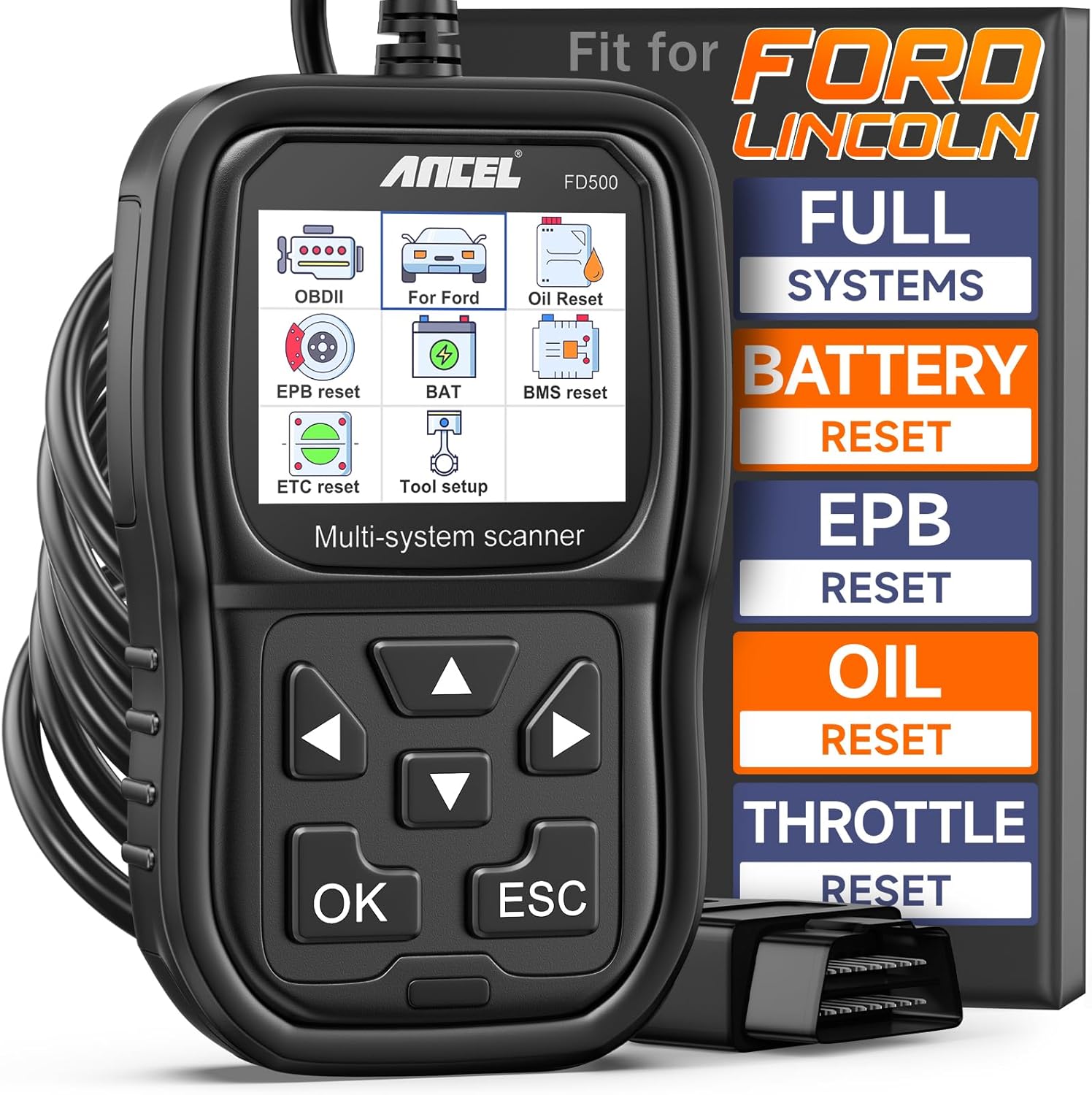
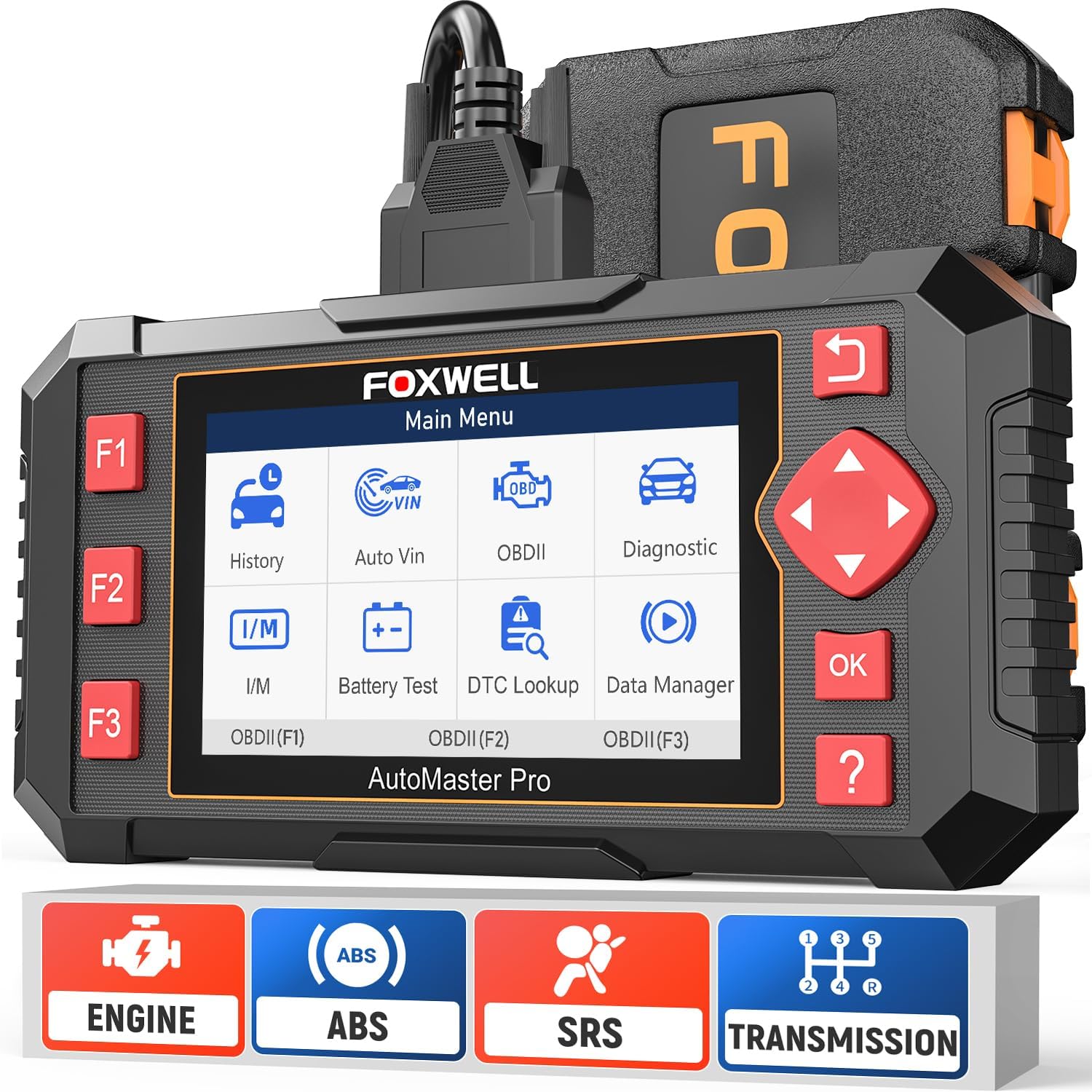
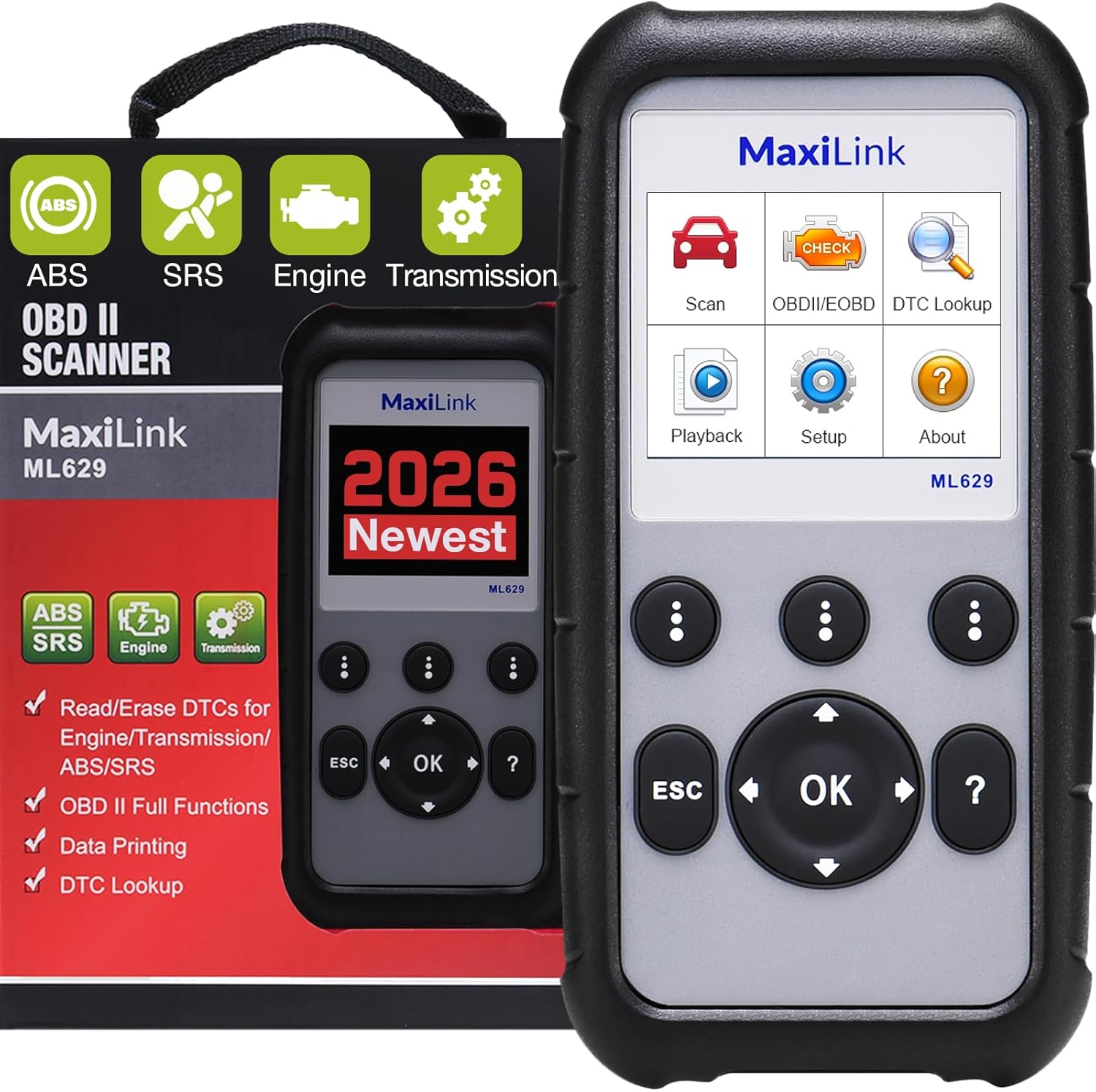
Do this before you touch a wrench. You need a scanner that can read both the PCM and the ABS module on a Ford.
- Key on, engine off. Look at the PCM's VSS reading. It must be zero. If the scanner shows vehicle speed with the truck parked and the engine off, you have the stationary-signal problem ATRA describes. Go to Step 3.
- Road test with logging. Record VSS, OSS, TSS, gear commanded, and TCC command together. On an OSS-calculated truck, VSS should track OSS smoothly. On an ABS-sourced truck, compare the PCM's VSS to the ABS module's wheel speed readings.
- Look at what drops first. If the ABS wheel speed stays clean and the PCM's VSS drops out, the fault is in the path between the ABS module and the PCM. If the wheel speed drops out at the same moment, the fault is at the axle sensor or tone ring. If OSS itself drops, you are chasing the transmission sensor and its circuit.
- Check the speedometer. It tells you whether the downstream modules lost the signal too. A dead speedometer and a PCM P0500 together point at the shared source. A working speedometer with P0500 points at the branch that only feeds the PCM.
Write down the other codes. ABS codes, P1639, P0720 and P0721 change the diagnosis. Fix network and ABS faults before you chase the transmission.
Step 2: Test the sensor and circuit
Most speed sensors on these trucks are two-wire variable reluctance (VR) pickups. GEARS magazine's speed sensor series explains the principle: a permanent magnet wrapped in a fine coil generates an AC signal as tone wheel teeth pass the tip, and the frequency rises with speed. The author notes VR sensor resistance ranges widely between units, from around 500 ohms in a 41TE to about 2,400 ohms in an Allison 2000, so use the spec for the sensor in front of you.
For the 4R100 OSS, ATSG gives part number F81Z-7M101-AA with a resistance of 781 to 1979 ohms, and the sensor bolt torques to 8-10 N-m. The OSS sits on top of the extension housing and reads a rotor pressed onto the output shaft. For an ABS-sourced truck, get the axle or wheel sensor resistance spec from Ford service information for that model year.
A good resistance reading only tells you the coil is intact. Dan Frazier made the point in Transmission Digest while diagnosing a 2004 F-550 V10 4R100 PTO truck: he uses the ohmmeter for opens and shorts but prefers voltage-drop testing for bad grounds and poor connections, because the meter doesn't push enough current to find them. His check for a VR circuit is quick and worth copying. With the sensor out, put a lab scope on the signal wire at the PCM and wave a steel screwdriver fast across the sensor tip. A clean AC signal at the PCM proves the sensor and wiring. On that truck the sensor and circuit were fine, and the real fault was a coast clutch drum (the TSS target) that wasn't spinning, which is a good reminder that the tone wheel side can fail too.
Pull the sensor and inspect the tip for metal fuzz, then look at the target. Damaged, missing or loose tone ring teeth make a signal that drops out at a certain speed. On the rear axle, a sensor that has backed away from the ring or a ring with a cracked tooth does exactly that.
Step 3: Fix the stationary VSS signal
If Step 1 showed speed with the key on and the engine off, ATRA's answer for the 4R100 is a Ford ground jumper kit, part number 1C3Z-13N850-AA. The kit replaces the PCM's existing ground wires with a single body ground cable. The procedure from the ATRA book:
- Disconnect the negative battery cable.
- Remove the ground screw under the dash, left of the brake pedal.
- Drill a 6 mm (1/4 inch) hole near the original ground screw location and clean it to bare metal, making sure there is room for a nut behind the bolt.
- Attach the original ground eyelets to the sheet metal with a new bolt and nut.
- Remove the PCM connector and shield, then remove the red locking plate from the front of the connector.
- Remove the wires from PCM pins 3, 23, 24, 51, 76, 77 and 103.
- Install the jumper kit terminals in those locations, reassemble, and retest.
Retest the same way you found it: key on, engine off, VSS must read zero. Then road test the 1-2 and 2-1.
Fluid, and when it isn't electrical
P0500 itself is electrical, but a truck that has been shifting on bad speed data for months has been taking harsh engagements and closed-throttle slam downshifts the whole time. Check the fluid while you're in there. ATSG calls for MERCON-type fluid in all 4R100 transmissions and says to check level at normal operating temperature, 150 to 170 F, engine idling in Park. Motorcraft MERCON V (XT-5-QMC quarts) is approved for transmissions previously serviced with MERCON. If the fluid is burnt or there is friction material in the pan, the speed fault may have masked or caused real clutch wear, and the shift complaints won't fully go away after the sensor fix. Our 4R100 harsh shift guide covers the hydraulic side.
Preventing a repeat
Work the path in order: codes from every module first, then the VID block if P1639 is present, then the speed source on live data, then the sensor and its target, then the circuit with a scope or voltage drop. On trucks with the stationary-signal problem, the ground kit is the fix, not another sensor. After any gear or tire change, make sure the VID block has the right axle ratio and tire size so the calculated speed is correct. When you replace a speed sensor, clean the mounting bore, check the O-ring, and torque the bolt to spec so the air gap stays where it was designed.
Shop the part for this fix: 4R100 output speed sensor (VSS)
If live data and a scope test prove the transmission's output speed sensor is the one dropping out, this is the replacement for 1989-2004 Ford units. Confirm the sensor location, connector and your truck's year before you order.
See the 4R100 output speed sensor at CoreTransmissionPartsNeed parts for this job?
Our 4R100 parts page has filter kits, hard parts and master rebuild kits, with checkout on site. If the speed fault left clutch damage behind, start there.
Shop 4R100 parts →FAQ
What does P0500 mean on a 4R100?
P0500 means the PCM saw insufficient or intermittent vehicle speed input, from either a vehicle speed sensor or the ABS system. ATSG lists harsh engagements, firm shifts, unexpected closed-throttle downshifts and abnormal TCC operation as symptoms, and the O/D OFF lamp may flash. Older calibrations report the same fault as P1500.
Which sensor causes P0500 on a Ford Super Duty with a 4R100?
It depends on how the truck gets vehicle speed. Ford documents two paths: the PCM calculating speed from the transmission output shaft speed sensor with the axle ratio and tire size in the VID block, or the speed input coming from the ABS system or a separate sensor. Check the wiring diagram for your VIN and compare PCM and ABS speed readings on a scanner before replacing anything.
Can P0500 cause harsh or erratic shifting?
Yes. The PCM uses speed to schedule shifts, set line pressure and control the converter clutch, so a missing or dropping speed signal causes held gears, hard downshifts and TCC problems. ATRA also documents a 4R100 case where a phantom speed signal with the truck stationary caused erratic 1-2 and 2-1 shifts.
How do I fix a VSS signal that shows speed while parked?
Confirm it first by reading VSS with the key on and the engine off; it should read zero. For the 4R100, ATRA's fix is Ford ground jumper kit 1C3Z-13N850-AA, which replaces the PCM ground wires at pins 3, 23, 24, 51, 76, 77 and 103 with a single body ground cable. Retest key-on engine-off after the install.
Related guides
- 4R100 P0720: Output Shaft Speed Sensor Causes & Fix
- 4R100 P0715: Input Turbine Speed Sensor Causes & Fix
- 4R100 Speed Sensor Symptoms
- 4R100 Harsh Shift Causes
- 4R100 Limp Mode Causes
Sources
- ATSG (Automatic Transmission Service Group), Ford 4R100 technical service manual (2003). Backs the P0500/P0503 and P1500 code chart description and symptoms, the OSS location, rotor and use for EPC, shift scheduling and TCC, the OSS part number and 781-1979 ohm resistance, the zero vehicle speed condition for 7.3L stationary PTO idle-up, and the MERCON fluid and 150-170 F level check. ATSG 4R100 manual (PDF)
- Ford Motor Company, 2004 OBD System Operation Summary (revision August 7, 2003), Comprehensive Component Monitor, Transmission Inputs. Backs the OSS-calculated vs ABS/VSS speed sources, the VID block and 8,000 pulses per mile output, P1639, the continuous 30-second VSS functional check, the 5-second malfunction threshold, and the standalone ECM/TCM note. Ford OBD summary (archive.org PDF)
- ATRA, 2003 Ford technical seminar book, 4R100 "Vehicle Speed Sensor Input when Vehicle is Stationary" (pages 152-154). Backs the erratic 1-2/2-1 shift cause, the key-on engine-off VSS check, Ford ground jumper kit 1C3Z-13N850-AA, and the installation steps and PCM pins. ATRA 2003 Ford book (PDF)
- GEARS magazine (ATRA), "Advanced Speed Sensors, Part 1." Backs the variable reluctance sensor principle and the 500 to 2,400 ohm resistance range across units. gearsmagazine.com
- Transmission Digest, Dan Frazier, "Diagnosing Electrical Signals" (June 2016). Backs the 2004 F-550 V10 4R100 PTO case, voltage-drop over ohmmeter testing, the scope-and-screwdriver VR signal check, and the coast clutch drum as the TSS target. transmissiondigest.com
- Motorcraft (Ford), MERCON V Automatic Transmission Fluid product details. Backs part number XT-5-QMC and its use in transmissions previously serviced with MERCON. fcsdchemicalsandlubricants.com