P0720 on a 4R100 means the PCM thinks the truck is moving under power while the output shaft speed (OSS) sensor says the output isn't turning. That's the whole test. The code doesn't know whether the sensor failed, a wire broke at the extension housing, the connector filled with road salt, or the rotor the sensor reads let go of the output shaft. Each of those needs a different fix.
The OSS matters more on this transmission than the turbine sensor does. When it drops out, the shift schedule goes with it, so the complaints are louder: wrong-gear starts, late or harsh shifts, and a converter clutch that won't behave. This guide covers how Ford's monitor sets P0720, how it differs from P0721 and P0722, the specs to test the sensor and circuit, and the checks that keep you from buying a sensor the truck didn't need. Code definitions, specs and part numbers come from the ATSG 4R100 manual. The monitor logic comes from Ford's OBD system summary. Full list under Sources.
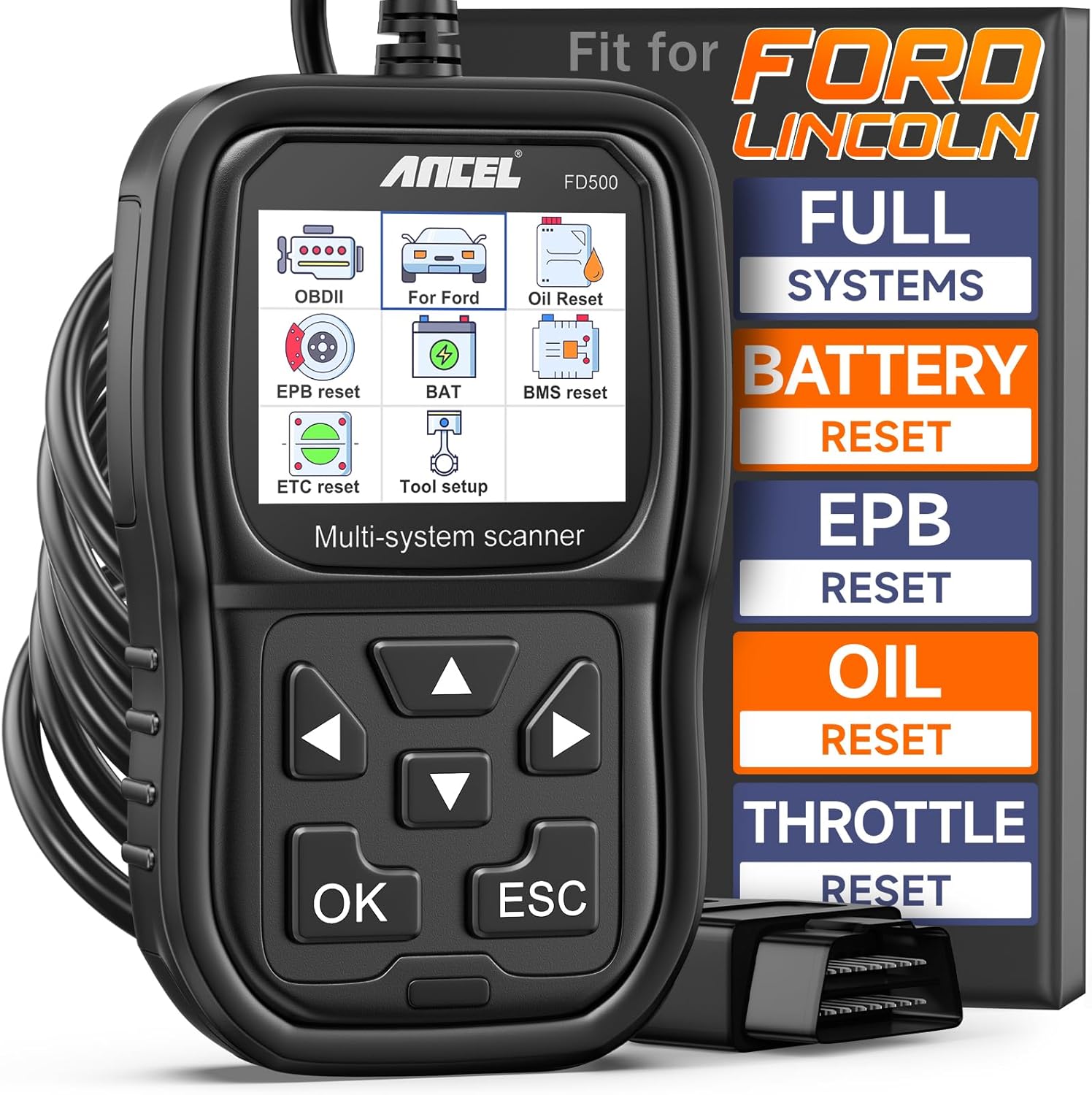
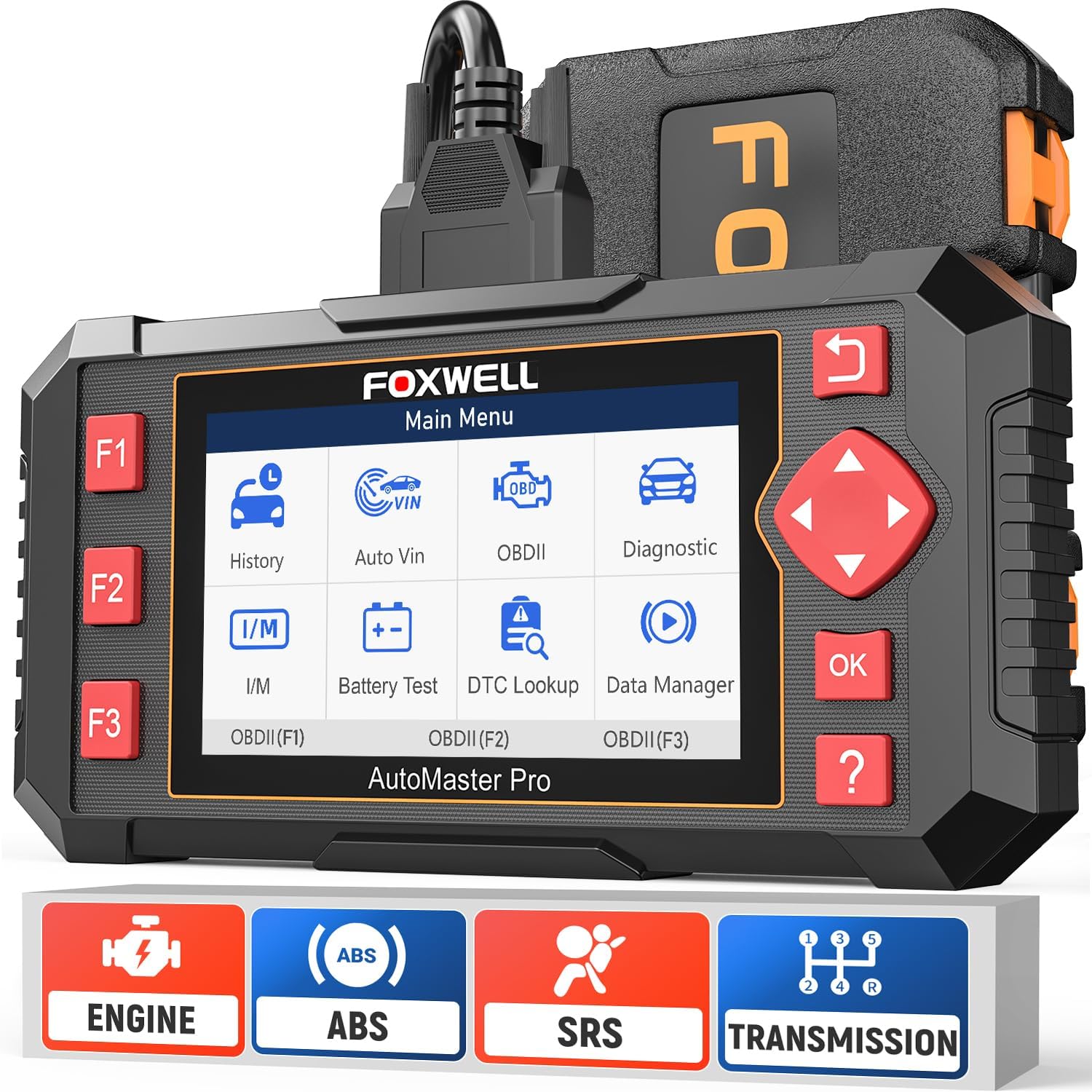
What the OSS does on a 4R100
The OSS is a two-wire magnetic pickup. Per ATSG, it sends the PCM a frequency signal tied to output shaft speed, and the PCM uses that signal for three jobs: EPC (line) pressure control, shift scheduling, and torque converter clutch strategy. That last list is the reason P0720 drives worse than P0715. The turbine sensor only feeds EPC and TCC. The OSS feeds all three.
Some hardware details worth knowing before you test:
- Location. ATSG shows the OSS on the top of the extension housing. It's a short reach on a 4x2. On a 4x4 the transfer case and crossmember crowd it, so plan the access before you start.
- What it reads. The sensor is triggered by a rotor pressed onto the output shaft. ATSG notes the park gear is also a press fit on the output shaft on this design, and the number 13 thrust washer between the case and park gear became a needle bearing.
- It's model dependent. ATSG states the TSS and OSS are model dependent, and its rebuild steps say "if equipped" for both. Confirm the truck actually has an OSS before you chase a P0720 on a scan tool that may be reading the wrong vehicle profile.
How Ford's monitor sets P0720
Ford's 2004 OBD System Operation Summary describes the OSS functional check in its general transmission-inputs section. It's written for Ford's automatics as a family, so the "if available" inputs drop out on a 4R100 that has no intermediate shaft sensor. Here's the logic:
| Item | Ford OSS functional check (P0720) |
|---|---|
| Monitor type | Continuous, 30-second monitoring duration |
| Gear selector | Any forward range |
| Proof the truck is moving | Engine above converter stall (3,000 rpm), OR turbine shaft 800 rpm (if available), OR intermediate shaft 800 rpm, OR vehicle speed 10 mph (if available) |
| Malfunction threshold | Vehicle inferred to be moving with positive driving torque and OSS below 100 to 200 rpm for 5 seconds |
The important part is how the PCM decides the truck is moving. It doesn't use the OSS for that, since the OSS is the thing under test. It uses turbine speed, engine speed above stall, or a separate vehicle speed input. Ford's summary says that on some applications vehicle speed is calculated from the OSS using the axle ratio and tire size in the Vehicle ID block, and on others it comes from the ABS system or a separate vehicle speed sensor, tested as P0500.
That has a practical side. Watch the speedometer on the road test. If the speedometer works while OSS reads zero, the truck's speed signal is coming from somewhere else and the OSS circuit is your suspect. If the speedometer dies at the same moment OSS drops, look for whatever the two signals share, and check the scan tool for P0500 alongside the P0720.
The same entry conditions tell you how to reproduce the code: forward range, positive torque, and a real turbine or vehicle speed. A truck idling in the bay won't set P0720.
P0720 vs P0721 vs P0722
The ATSG 4R100 code chart lists three OSS codes, and the PCM treats each one differently:
| Code | ATSG description | PCM response | Points toward |
|---|---|---|---|
| P0720 | Insufficient input from OSS sensor | Sets DTC, flashes TCIL and MIL | Signal missing or too low while moving: open circuit, dead sensor, damaged or loose rotor |
| P0721 | OSS sensor signal noisy | Sets DTC only | Signal present but dirty: grounds, harness routing, metal on the sensor tip |
| P0722 | OSS sensor signal intermittent | Sets DTC, flashes TCIL | Signal dropping out: connector, chafed harness, loose sensor |
The TCIL is the O/D OFF lamp. A flashing O/D OFF light with P0720 means the PCM has given up on the signal and moved to its failure strategy. Codes that show up together tell you where to look. P0722 that turns into P0720 over a few weeks is a connection getting worse. P0720 with P0715 at the same time points away from either sensor and toward something they share: the harness, the PCM connector, PCM power and grounds, or the PCM.
Step 1: Confirm it on live data
Put OSS, TSS, vehicle speed, engine rpm, commanded gear and TCC command on screen. Road test in Drive at light throttle.
- OSS at zero the whole drive while TSS and vehicle speed climb: open circuit, dead sensor, or nothing for the sensor to read. Move to Step 2.
- OSS that drops out and snaps back: intermittent connection. With data up, wiggle the connector at the extension housing and follow the harness forward along the case.
- OSS that reads at low speed and falls apart higher up: sensor or air-gap problem. Look for metal on the tip and make sure the sensor is seated flat.
- A sanity check in 3rd: the 4R100 runs direct drive in 3rd, so OSS should track TSS closely there. A steady OSS that disagrees with TSS in 3rd points to a scaling or signal-quality problem, not a dead sensor.
One more check before you move on. ATRA's 2003 Ford seminar book has a 4R100 bulletin for erratic 1-2 upshifts or 2-1 downshifts caused by a speed signal while the truck is stationary. Their test is simple: key on, engine off, and watch the speed PID. If the scan tool shows speed with the truck parked and the engine off, the signal is picking up electrical noise. The fix in that bulletin is Ford jumper kit 1C3Z-13N850-AA, which replaces the PCM's ground wires with a single body ground cable. ATRA lists PCM pins 3, 23, 24, 51, 76, 77 and 103 as the wires the kit replaces. That bulletin is about the speed input rather than a P0720 by name, but it's the same lesson for P0721: a speed signal on bad grounds can't be trusted.
Step 2: Test the sensor and circuit
ATSG lists one OSS for all models, which makes the test simpler than the turbine sensor:
| Item | Spec (ATSG) |
|---|---|
| OSS part number, all models | F81Z-7M101-AA |
| OSS resistance | 781-1979 ohms |
| OSS retaining bolt torque | 8-10 N-m (71-81 in-lb) |
Work through it in order:
- Resistance at the sensor. Unplug it and measure across the two terminals. It should fall in the 781-1979 ohm window. Check each terminal to ground too. It should read open.
- Resistance from the PCM end. Back-probe at the PCM or use a breakout box and measure the sensor through the harness. Good at the sensor and open at the PCM means a broken wire between them.
- AC output. A magnetic pickup makes its own voltage. In GEARS Magazine, Sean Boyle recommends measuring AC voltage with the part turning and comparing peak-to-peak voltage to a known-good sensor. Output drops at low rpm, so don't condemn a sensor on a crawl-speed reading.
- Scope it. Boyle points out that a scope shows signal quality a meter never will. A healthy pickup makes a clean sine-type wave. Missing or flattened peaks point to rotor damage or a bad air gap. Random spikes point to noise.
- Prove it end to end. Transmission Digest writer Dan Frazier used a cheap, decisive check on a 4R100 turbine sensor: pull the sensor, leave it plugged in, scope the signal wire at the PCM and pass a screwdriver quickly across the tip. A waveform at the PCM proves the sensor and the full circuit in one test. It works the same way on the OSS.
For P0721, look at the environment as much as the sensor. Boyle lists ignition, alternators, solenoids, relays and injectors as noise sources and notes that twisted wiring helps reject them. Check that the harness hasn't been rerouted near an ignition lead or the alternator output, and clean the PCM grounds before you replace parts.
Step 3: When the sensor and circuit test good
If the sensor makes a clean signal at the PCM on the screwdriver test and OSS still reads zero on the road, the problem is the thing it reads. On this design that's the rotor pressed onto the output shaft. With the sensor out, the drive wheels safely off the ground and the truck in gear at idle, shine a light into the sensor bore and watch the rotor. It should turn steadily with the driveshaft.
- Rotor turns, teeth look good: the problem is electrical after all. Go back to the PCM connector, PCM power and grounds, and the PCM.
- Rotor damaged, missing teeth, or not turning with the shaft: the extension housing has to come off, and you'll be into the output shaft and park gear area. Look hard at the area around the park gear and the bearing ATSG says replaced the number 13 thrust washer while you're in there.
Replacing the OSS
When it really is the sensor:
- Clean around the bore before you pull it so dirt doesn't fall onto the rotor.
- Look at the tip. A coat of metal fuzz distorts the signal and tells you something inside is shedding material. A heavy coat is a reason to drop the pan and look before you button it up.
- New O-ring, lube it with clean ATF, and torque the bolt to the ATSG spec of 8-10 N-m (71-81 in-lb). It threads into aluminum, so no impact.
- Replace a corroded connector instead of cleaning it. A cleaned-up green terminal comes back as P0722.
- Clear codes and road test in Drive under load with OSS, TSS and vehicle speed on screen. The monitor needs the same conditions it failed under.
Check the fluid while you're there. ATSG calls for MERCON-type fluid in the 4R100 and says to check level at 150-170 F with the engine idling in Park. Motorcraft MERCON V (XT-5-QMC quarts) is approved for transmissions previously serviced with MERCON. Burnt fluid or clutch material in the pan on a P0720 truck usually means the shift complaints have been doing damage while the code sat.
Preventing a repeat
Most repeat OSS codes come from a fix that skipped the cause. The extension housing connector sits where road spray, salt and heat from the exhaust all reach it, so clip the harness back where Ford had it and replace damaged connectors instead of taping them. Keep PCM grounds clean and tight. And treat a P0720 with a proven sensor as a mechanical warning, not a nuisance light, because a rotor that's moving on the shaft won't stay a sensor problem for long.
Shop the part for this fix: 4R100 output speed sensor
A direct-fit 4R100 output speed sensor. ATSG lists one OSS for all 4R100 models, Ford F81Z-7M101-AA, rated 781-1979 ohms. Measure the old one and prove the circuit before you order.
See the 4R100 output speed sensor at CoreTransmissionPartsNeed parts for this job?
Our 4R100 parts page has Ford-capable scan tools, solenoid packs, valve bodies, pumps and master rebuild kits, with checkout on site. Confirm model year, engine, 4x2 or 4x4, and PTO or non-PTO before you order hard parts.
Shop 4R100 parts →FAQ
What does P0720 mean on a 4R100?
P0720 means the PCM saw insufficient input from the output shaft speed (OSS) sensor. Ford's monitor sets it when the truck is in a forward range, moving with positive driving torque, and OSS reads below 100 to 200 rpm for 5 seconds. The PCM flashes the O/D OFF lamp and the MIL.
Can I drive a 4R100 with P0720?
Carefully and not for long. The PCM uses the OSS for line pressure, shift scheduling and converter clutch control, so expect harsh or wrong-gear shifts while it runs its failure strategy. If the rotor on the output shaft is the cause, driving it adds damage.
Where is the output speed sensor on a 4R100?
Per ATSG, the OSS sits on the top of the extension housing and reads a rotor pressed onto the output shaft. ATSG notes the sensors are model dependent, so confirm the truck has one before you diagnose it.
What is the resistance of a 4R100 output speed sensor?
ATSG lists 781-1979 ohms for the OSS on all 4R100 models, Ford part number F81Z-7M101-AA. A reading in range does not prove the sensor makes a usable signal, so scope it too.
Why does P0720 come back after a new sensor?
Because the code is a plausibility test, not a resistance test. A broken wire, a corroded extension housing connector, bad PCM grounds, or a damaged rotor all produce the same low OSS reading. Prove the sensor and circuit with a scope at the PCM before you replace anything else.
Related guides
- 4R100 P0715: Input Turbine Speed Sensor Causes & Fix
- 4R100 Input/Output Speed Sensor Symptoms
- 4R100 Limp Mode: Causes and Diagnosis
- 4R100 Harsh Shift Causes
- 4R100 TCC Lockup Explained
Sources
- ATSG (Automatic Transmission Service Group), Ford 4R100 technical service manual (2003). Backs the OSS description, extension housing location, rotor pressed onto the output shaft, press-fit park gear and needle bearing replacing the number 13 thrust washer, PCM use of OSS for EPC, shift scheduling and TCC, model-dependent sensors, OSS part number F81Z-7M101-AA and 781-1979 ohm spec, the P0720/P0721/P0722 code chart and PCM responses, the 8-10 N-m bolt torque, and the MERCON fluid and 150-170 F level check. ATSG 4R100 manual (PDF)
- Ford Motor Company, 2004 OBD System Operation Summary (revision August 7, 2003), Comprehensive Component Monitor, Transmission Inputs, "Output Shaft Speed Sensor Functional Check Operation" and the vehicle speed notes. Backs the P0720 continuous monitor, 30-second duration, entry conditions, the OSS below 100 to 200 rpm for 5 seconds threshold, and the OSS-derived versus ABS/VSS vehicle speed (P0500) explanation. Ford OBD summary (archive.org PDF)
- ATRA (Automatic Transmission Rebuilders Association), 2003 Technical Seminar, Ford section, "4R100 Vehicle Speed Sensor Input when Vehicle is Stationary." Backs the key-on engine-off speed signal test, Ford jumper kit 1C3Z-13N850-AA, and the PCM pins it replaces. ATRA 2003 Ford seminar (PDF)
- GEARS Magazine (ATRA), Sean Boyle, "Advanced Speed Sensors Part 1" (April 2024). Backs AC peak-to-peak testing against a known-good sensor, weaker output at low rpm, scope pattern testing, and noise sources and twisted wiring. gearsmagazine.com
- Transmission Digest, Dan Frazier, "Diagnosing Electrical Signals" (June 2016). Backs the screwdriver-and-scope test at the PCM on a 4R100 speed sensor circuit. transmissiondigest.com
- Motorcraft (Ford), MERCON V Automatic Transmission Fluid product details. Backs part number XT-5-QMC and its use in transmissions previously serviced with MERCON. fcsdchemicalsandlubricants.com