A Journey shift complaint almost never shows up with a code attached. It shows up as "it clunks into second," "it bangs into Drive in the morning," "it jerks on the highway with cruise on," or "it will not go past third." On a V6 Journey (and the 2012-2013 four-cylinders built with the six-speed) the transmission behind all of those is the 62TE, the same unit as the Grand Caravan. Chrysler documented most of the Journey's shift-feel complaints in its own bulletins, and most are software. A unit with real hardware trouble feels almost the same from the seat, so work it in order.
This is the order I work a Journey shift complaint. The numbered references point to the Sources list at the bottom.

First, sort the complaint into one of four buckets
Before you plug in, get the driver to tell you exactly when it happens. Journey shift complaints fall into four groups, and each one points somewhere different:
- It will not shift at all and sits in one gear. On the six-speed that gear is third. The owner's manual describes Limp Home Mode: when the TCM sees a condition that could damage the transmission, it holds third regardless of which forward gear is selected, while Park, Reverse and Neutral still work [1]. That is a fault, not a shift-quality problem. Go read codes.
- It shifts, but one shift clunks, bumps or lands hard. This is the bulletin bucket. Check the calibration first.
- The garage shift into Drive is harsh. Especially after the vehicle has sat for a short while. There is a Journey-specific bulletin for exactly this on 2014 models [3].
- The shift points feel wrong. Late upshifts, held gears, earlier converter lockup. Often this is the TCM protecting a hot transmission, which the manual describes plainly [1].
Also confirm which transmission you are looking at. Most 2.4L Journeys got a four-speed, and everything here is for the six-speed. FCA bulletin 18-066-15 shows that some 2012-2013 2.4L Journeys (engine sales code ED3) were built with the six-speed, sales code DG2 [2]. If the build sheet says DG2, you are in the right article.
Bucket one: the Journey shift bulletins
Chrysler released several calibrations that changed 62TE shift feel in the Journey. If the PCM has not been updated, nothing else you do will be a fair test.
2012-2013 Journey: FCA bulletin 18-066-15
Bulletin 18-066-15 (September 25, 2015) supersedes 18-008-13 and covers 2012-2013 JC Journeys with the 3.6L (sales code ERB), plus 2.4L six-speed units built before October 23, 2012 [2]. The shift symptoms it lists are a long, specific menu [2]:
| Symptom in 18-066-15 | Engine |
|---|---|
| 1-2 upshift clunk or bump | 2.4L and 3.6L |
| 3-4 harsh upshift at closed throttle after a WOT stab in 1st or 2nd | 2.4L and 3.6L |
| 4-5 upshift clunk or bump | 2.4L and 3.6L |
| 5-6 upshift, 6-5 and 6-4 downshift clunk or bump | 3.6L |
| RPM fluctuating or jerking in cruise control, worse on grades | 2.4L and 3.6L |
| 1-2 harsh upshift going down a grade; 3-2 and 4-3 downshift clunk | 2.4L |
| Delayed downshifts | 3.6L |
The same flash also improves how consistently upshifts are controlled under "torque management," and on 3.6L trucks it addresses a U0140 lost-communication code with the body control module that will not clear, plus a fuel pump relay cycling on remote start [2]. The flash is booked at 0.2 hours [2].
2014 Journey: FCA bulletin 18-069-15
Bulletin 18-069-15 (October 1, 2015) covers 2014 JC Journeys with the 3.6L built on or before September 11, 2013, along with 2014 Grand Caravan and Town and Country [3]. The shift complaints it fixes are the ones that drive owners crazy because they come and go [3]:
- Harsh garage shift into Drive after the engine has been off for 10 to 30 minutes.
- Harsh upshifts caused by backing out of the accelerator pedal.
- Harsh shifts after accelerate-then-decelerate maneuvers from a stop.
It also covers a P0606 internal control processor code and accuracy improvements to the automatic oil change indicator [3]. That 10-to-30-minute window is the giveaway: a hard engagement after a quick stop at the store, on a 2014 that was never flashed, is this bulletin.
Why the minivan bulletin matters on a Journey
The minivan version of this story, Chrysler bulletin 21-012-12 Rev. B (November 29, 2012), covers harsh 1-3 and 2-3 upshifts and a 1-2 clunk after throttle back-out on 2011-2013 Caravan and Town and Country with the same 3.6L and 62TE [4]. It is not a Journey bulletin, so do not bill it as one. Its repair procedure spells out what a 62TE needs after any change to shift calibration [4]:
- Hook up a battery charger and hold 13.2 to 13.5 volts for the whole flash. If the flash is interrupted, restart it.
- Reprogram the PCM, then clear any codes the flash sets in other modules.
- Clear the Variable Line Pressure (VLP) counters in the PCM Misc Functions menu.
- Run the Quick Learn from the same menu.
The Journey bulletins only call for the flash and code clear [2][3], but the TCM still has to relearn on the new software. I clear the VLP counters and run Quick Learn on every 62TE I flash for a shift complaint, then drive it hot through every shift before I hand it back.
Bucket two: one shift is still bad after the flash
If the calibration is current and one shift is still harsh or flares, it is time to understand what that shift actually does inside the box.
The 62TE is a 41TE four-speed main centerline with an underdrive compounder behind it. The compounder has a low clutch, a direct clutch, an overrunning clutch and a planetary set, and it runs in two modes, direct and reduction [5]. Several shifts need both halves of the transmission to change at the same moment. ATRA's 62TE update explains that the 2-3, 3-2 and 4-2 are "double swap" shifts: two elements release while two others apply, and the clutch-to-clutch handoff has to happen within 40 to 70 milliseconds [5]. If the compounder shifts too early relative to the main centerline, the driver feels a shudder or a harsh shift. If it shifts too late, they feel a double bump [5].
Read the clutch volumes before you reset anything
The TCM compares input and output speed sensor readings to know the actual gear ratio, and it measures how long the ratio takes to change after it commands a shift. From that time it calculates the volume of fluid it took to apply or release each clutch [6]. You can check the ratio yourself: divide input speed by output speed on the scan tool's monitors screen [6]. ATRA's preliminary 62TE ranges are [6]:
| Clutch | Preliminary CVI range |
|---|---|
| Underdrive (UD) | 26-74 |
| 2/4 | 16-54 |
| Overdrive (OD) | 42-143 |
| Low/Reverse (L/R) | 16-63 |
| Low clutch (LC), compounder | 16-25 |
| Direct clutch (DC), compounder | 26-34 |
A volume above the range means that clutch is taking too long to stroke. That usually means excess clearance or a leak in the feed circuit, and the shift flares and then lands hard as the TCM tries to make up for it. A volume at or below the bottom of the range points to an abrupt, harsh apply. Write the numbers down before you run Quick Learn, because Quick Learn wipes the evidence.
The volumes only update under set conditions. For the TE family, ATRA lists L/R updating on a 2-1 or 3-1 coast downshift with oil above 70 F (21 C) and less than 5 degrees of throttle, 2/4 on the 1-2 shift and OD on the 2-3 shift above 110 F (43 C) at 5 to 54 degrees of throttle, and UD on a 4-3 or 4-2 shift above 110 F [6]. A Journey that only makes short cold trips may never update some of them.
Bucket three: harsh engagement and shift feel from fluid
The six-speed Journey has no dipstick. The fill tube is capped, the level is set at the factory, and a dealer checks it with a special service dipstick with the fluid hot, about 180 F (82 C) [1]. A unit that is a quart low pulls air at the pump under load and in turns, and the first thing the driver notices is a sloppy, then harsh, clutch-to-clutch shift.
The fluid itself matters too. The manual's caution is direct: using a fluid other than the manufacturer's recommended ATF+4 "may cause deterioration in transmission shift quality and/or torque converter shudder," and it advises against any special additives in the transmission [1]. A Journey that started shifting rough right after a quick-lube "universal" fill is a fluid problem until proven otherwise. Drain and refill with ATF+4, set the level hot, and run the Quick Learn. For capacities and the level procedure, see our 62TE fluid type and capacity guide.
Bucket four: shift points that feel wrong but are working as designed
Some Journey "shift problems" are the TCM doing its job. Know these before you condemn anything:
- Hot fluid. When transmission temperature goes above normal, the powertrain controller changes the shift schedule and expands the range where the converter clutch is applied, to keep the unit from overheating [1]. The driver feels held gears and earlier lockup.
- Extreme cold. At -16 F (-27 C) or below, the six-speed may briefly be held in third gear, and converter clutch engagement is inhibited until the fluid warms up [1].
- AutoStick. The manual says shifting will be more noticeable when AutoStick is enabled, and that the system may revert to automatic mode if it detects a fault or overheat [1]. A driver who rides in AutoStick will feel every shift.
The manual also gives owners a reset for a momentary fault: stop, shift to Park, turn the ignition off, wait about 10 seconds, restart and select a gear [1]. If a Journey comes in saying "it was stuck in third and then fixed itself," that is probably what happened, and the code that put it there is still stored. Pull it. Our 62TE limp mode guide walks the common ones.
When it is hardware
If the calibration is current, the fluid is right and full, Quick Learn is done and the volumes have had a fair chance to update, and one shift is still harsh, you are into parts. Here is where I look, in order of how often it is the answer:
- The solenoid and pressure switch assembly. The 62TE moved to an RFE-style solenoid and pressure switch assembly with a 23-way connector, a variable force solenoid for the converter clutch, a line pressure VFS and a line pressure sensor [5]. If commanded and actual line pressure disagree on the scan tool, or the shift is harsh across every gear, start here. Check the connector and terminals before you buy the assembly.
- The valve body. The 62TE valve body added a low clutch switch valve and a blocker valve (the direct clutch switch) that keeps the direct and low clutches from applying at the same time [5]. Wear in these and in the solenoid switch valve circuit causes the timing faults the double swap shifts cannot tolerate. See our 62TE valve body and solenoid problems write-up.
- Clutch clearance. A clutch volume well out of range after Quick Learn and a hot relearn drive is a clearance or circuit leak problem. That is a teardown, not a part swap. Our Journey slipping guide covers the compounder specs.
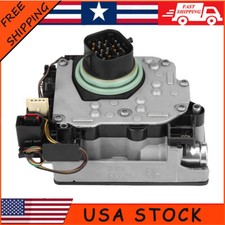
Shop the part for this fix: 62TE shift solenoid block pack
When the flash is current and line pressure or the pressure switches still read wrong, this CoreTransmissionParts solenoid block pack replaces the solenoid and pressure switch assembly on the Journey 62TE.
View the 62TE solenoid block pack at CoreTransmissionPartsLooking for something else? Browse 62TE parts at CoreTransmissionParts.
Need parts for this job?
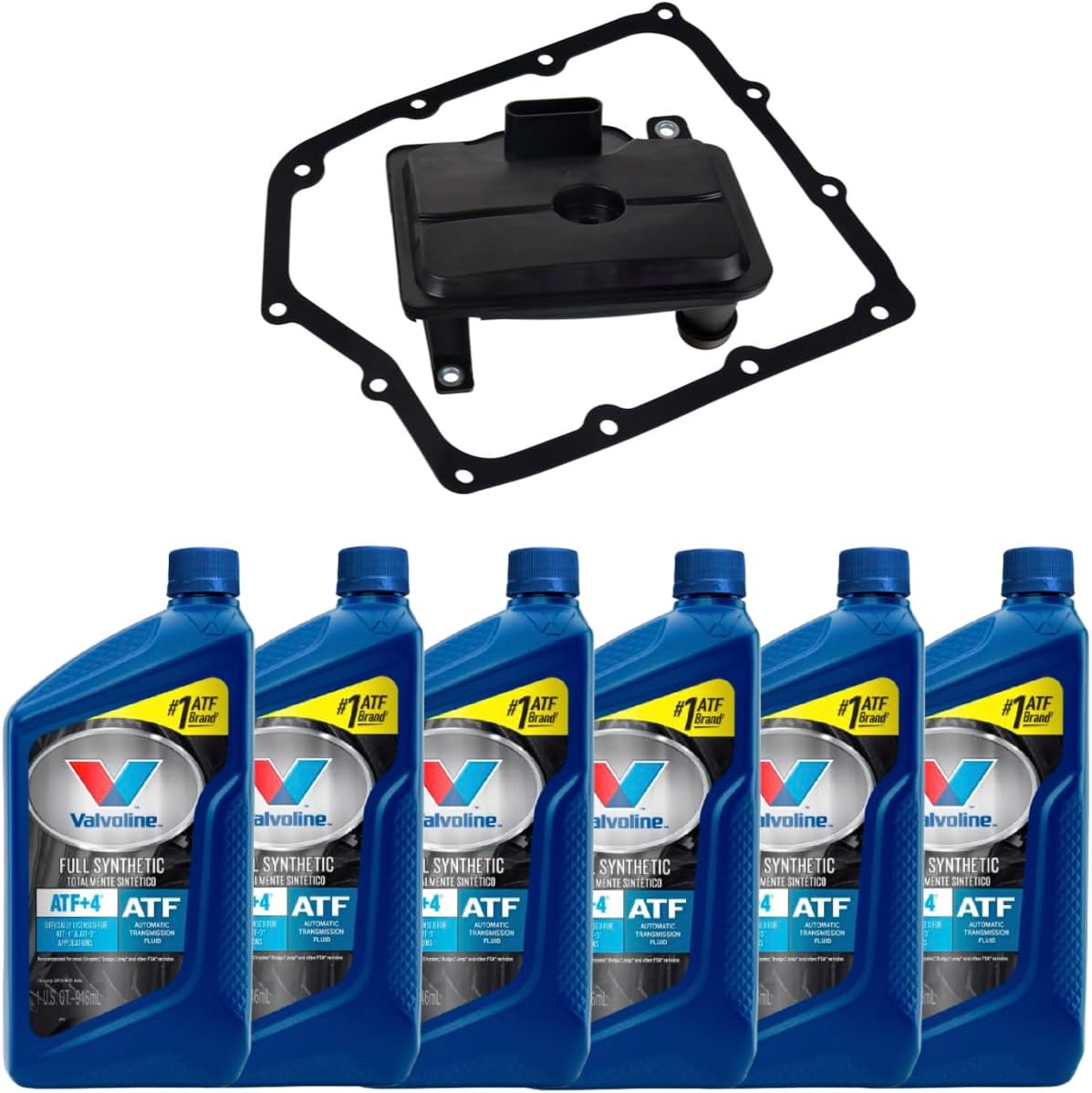
Our 62TE parts page has solenoid block packs, valve bodies, master rebuild kits and ATF+4 service kits that fit the Journey, all on our own checkout. Not sure which fluid goes where? See the transmission fluid spec chart.
FAQ
Why does my Dodge Journey transmission shift hard?
On a 2012-2014 V6 Journey the first thing to check is the PCM calibration, because FCA bulletins 18-066-15 and 18-069-15 cover upshift clunks, harsh downshifts and harsh garage shifts into Drive. After that, check the fluid level hot and confirm it is ATF+4, since low or wrong fluid makes the 62TE clutch-to-clutch shifts harsh. If one shift is still harsh after a flash and Quick Learn, read the clutch volume indexes to find which clutch is out of range.
Is there a software update for Journey transmission shift problems?
Yes. Bulletin 18-066-15 covers 2012-2013 Journeys with the 3.6L and some 2.4L six-speeds built before October 23, 2012, and lists 1-2, 3-4, 4-5, 5-6, 6-5 and 6-4 clunks plus cruise control jerking. Bulletin 18-069-15 covers 2014 3.6L Journeys built on or before September 11, 2013, for harsh garage shifts and harsh back-out upshifts. Both are PCM reflashes.
Why is my Journey stuck in third gear?
Third gear is Limp Home Mode on the six-speed Journey. The TCM holds third in every forward range when it detects a condition that could damage the transmission, while Park, Reverse and Neutral still work. The owner's manual reset is to stop, shift to Park, turn the ignition off for about 10 seconds and restart, but the code that caused it stays stored and should be read.
Can the wrong transmission fluid cause shift problems in a Journey?
Yes. The Journey owner's manual warns that using a fluid other than the recommended ATF+4 may cause deterioration in shift quality and torque converter shudder, and it advises against additives. If shifts turned rough after a fluid service, drain and refill with ATF+4, set the level hot at about 180 F, and run the Quick Learn.
Related guides
Sources
- FCA US LLC, 2019 Dodge Journey Owner's Manual. Backs Limp Home Mode holding third gear and the owner reset steps, the capped fill tube and hot (180 F / 82 C) level check, the ATF+4 caution about shift quality and additives, the hot-fluid shift schedule change, the -16 F (-27 C) third gear hold, and AutoStick behavior. vehicleinfo.mopar.com (PDF)
- FCA US LLC, Service Bulletin 18-066-15, "Flash: Diagnostic And System Improvements," September 25, 2015, 2012-2013 Dodge Journey (JC). Backs the 3.6L and 2.4L DG2 coverage, the full list of shift clunk, cruise jerk and delayed downshift symptoms, U0140, and the 0.2 hour flash time. static.nhtsa.gov (PDF)
- FCA US LLC, Service Bulletin 18-069-15, "Flash: 3.6L Powertrain Diagnostic and System Improvements," October 1, 2015, 2014 Journey, Grand Caravan and Town and Country. Backs the harsh garage shift after 10-30 minute shutdowns, harsh back-out upshifts, harsh shifts after stop-and-go maneuvers, P0606 and the oil change indicator fix. static.nhtsa.gov (PDF)
- Chrysler Group LLC, Service Bulletin 21-012-12 Rev. B, "Flash: Transmission Shift Quality Improvements," November 29, 2012, 2011-2013 RT Caravan and Town and Country. Backs the 62TE harsh 1-3, 2-3 and 1-2 clunk symptoms and the 13.2-13.5 V, VLP counter clear and Quick Learn procedure. static.nhtsa.gov (PDF)
- Mike Souza, ATRA, "62TE Update" technical webinar. Backs the compounder layout and two modes, the 40-70 ms double swap timing and the shudder versus double bump explanation, the 23-way solenoid and pressure switch assembly, line pressure VFS and sensor, transaxle range sensor, and the low clutch switch valve and blocker valve. atracom (PDF)
- ATRA, Chrysler "CVI (Clutch Volume Indexes)" technical bulletin, 2012. Backs how the TCM calculates gear ratio and clutch volumes, the preliminary 62TE CVI ranges and the update conditions for each clutch. atracom (PDF)