A 722.6 with 120,000 to 200,000 miles on it is not a lost cause. The Mercedes five-speed (and the Chrysler NAG1 version under Sprinters, Jeeps, Chargers and 300s) is a stout gear train, and most of the high-mileage units that come across our bench fail from the same short list: the wrong fluid or the wrong level, a leaking 13-pin connector, a tired conductor plate, and wear in the valve body casting that the pan drop never reveals. This checklist is the order we work through on a high-mileage 722.6 before we sign off on a service or tell the customer it needs more. Every spec below is tied to a source listed at the end.

1. Identify the Unit and the Correct Fluid
Start with the transmission number on the case tag, because the 722.6 was built in dozens of sub-variants (722.600 through 722.699) with different fill capacities, and because the fluid depends on who built the car. Sonnax notes that the unit went into production for 1996 model year cars and that Chrysler versions carry the W5A580, W5A380, W5A330 and W5J400 names, where the last three digits are the maximum input torque in newton meters. The same article points out that the Sprinter, Crossfire and Mercedes applications require a specific fluid for calibration reasons, while the other Chrysler applications use ATF+4 (Sonnax, "Mercedes 722.6, Daimler W5, Porsche W5, Jaguar 722.6").
For the Mercedes-fluid units, the rule is firm. Mercedes-Benz star bulletin S-B-00.40/89d (November 2013) says the 722.6 may only be filled with oils listed on specification sheet 236.14, the red ATF sold as part number A001 989 68 03 10. The bulletin requires separate filling equipment for 236.14, 236.15 and 236.16 oils because they must never be mixed, and it specifically states that a 722.6 may not be filled with FE-ATF 134, the blue fluid used in later 722.9 units. If the last shop topped it off with whatever was on the shelf, that is the first thing you are correcting.
Checklist: record the full 722.6xx number; confirm Mercedes 236.14 fluid or ATF+4 by application; note fluid color and smell on the first sample.
2. Scan It Before You Wrench It
Pull codes from the transmission control module and save freeze frame before anything is unplugged. Clearing codes or disconnecting the battery wipes the evidence and resets adaptations, and you lose the before-and-after comparison you need to prove the service helped.
On a high-mileage unit we always log converter clutch behavior on a warm highway drive. In a Gears Magazine case study on a NAG1 that set P0741, Rob Faucett explains that the converter clutch runs in controlled slip, and that the code sets when actual slip exceeds desired slip by more than 60 rpm in slip mode three times in one key cycle. He recommends graphing actual slip, desired slip, TCC status, commanded line pressure and engine load together; load should read roughly 10 to 20 percent at idle and climb to 90 to 100 percent at wide open throttle in gear (Gears Magazine, "Nag 1/722.6 P0741 TCC Slip"). Slip that drifts out of range only after the unit is hot is a classic high-mileage pattern and points to a leak in the converter apply circuit, not a bad solenoid.
Checklist: codes and freeze frame saved; transmission oil temperature PID working; TCC actual versus desired slip logged hot; shift quality noted on 1-2, 2-3 and 4-5.
3. Check the Level the Factory Way
There is no dipstick in the filler tube. Daimler workshop procedure AR27.00-P-0100AC has you break off the locking pin, remove the cap, and read the level with dipstick tool 140 589 15 21 00. The car must be level on its wheels or the reading is wrong. Range A on the stick is for a cold check at about 25 C (77 F). Range B is the precise check and is only valid with the fluid above 80 C (176 F), confirmed on the scan tool with the engine idling in Park after shifting through the ranges with the brake applied. A new locking pin goes in when you are done. The procedure warns, more than once, that both too little and too much oil cause malfunctions and transmission damage (Daimler AG, AR27.00-P-0100AC).
Over-fill is common on high-mileage cars that have been topped off cold by feel. The fluid gets churned by the rotating parts, foams, and vents out the breather, which looks like a leak and causes the same soft engagement as a low level.
Checklist: level at temperature in range B; correct before you judge any shift complaint; new locking pin on hand.
4. Hunt the Leaks: Connector First
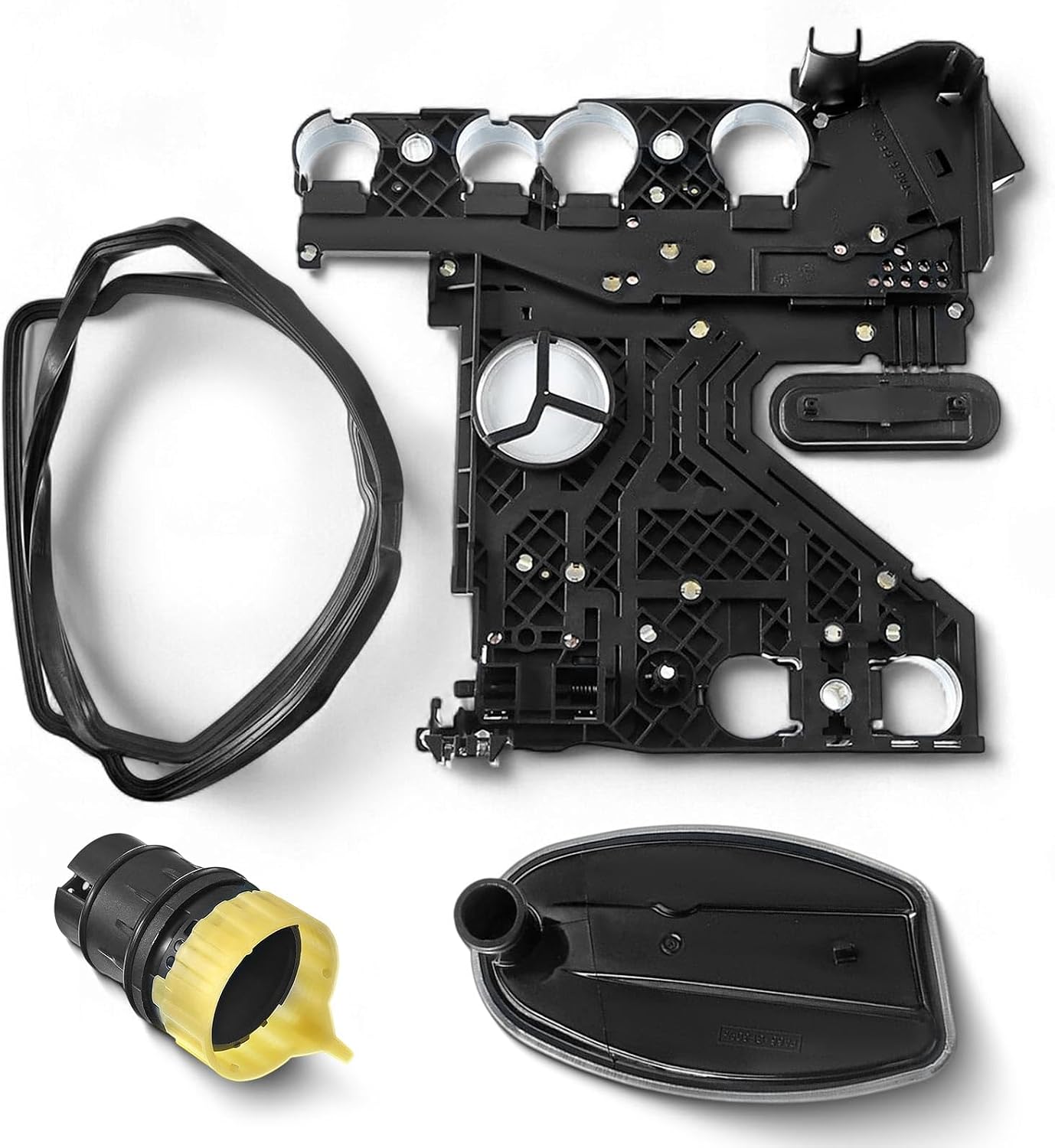
The number-one 722.6 leak we chase is the 13-pin electrical connector adapter on the driver's side of the case. Its O-rings harden, oil seeps around the plug, and on a bad one it wicks up the harness toward the control unit. A Mercedes procedure for a 2002 ML 500 with a 722.6, published by Underhood Service courtesy of ALLDATA, calls for cleaning the area and replacing the electrical connector and its O-rings. If there is oil in the wiring loom, wipe it dry, blow out the plugs at both the transmission and control unit ends, and clean the contacts. Two details matter: the connector should only be assembled or disassembled with the fluid below 50 C to avoid damaging the conductor plate, and the harness has to be routed with no tension on the connector (Underhood Service, "Mercedes-Benz A/T Fluid Leaks at the Electrical Connector").
After the connector, check the pan gasket, the cooler line fittings at the case and radiator, and the front pump seal. A wet bell housing on a high-mileage unit is usually the pump seal or bushing; a converter that walks on a worn pump bushing will eat a new seal quickly.
Checklist: connector adapter and O-rings replaced (plan on it whenever it comes out); harness plugs dry; pan, cooler lines and front seal inspected.
5. Drop the Pan, Read the Evidence, Replace the Filter
Before the filter comes out, look at what is on the magnet and in the pan. A fine gray paste is normal wear. Bronze-colored flakes suggest a bushing or thrust washer, bright steel suggests a planetary or bearing, and black friction material with a burnt smell means the clutches have been slipping. That reading decides whether this is a service or the start of an overhaul quote.
On a high-mileage 722.6 we treat the conductor plate as a wear item when the pan is already off. It carries the speed sensors (N2 and N3) and the connections to the solenoids, and intermittent speed-sensor codes, limp mode and erratic shifts on these units trace back to it often enough that our 722.6 conductor plate failure guide covers it on its own. A kit with the plate, filter, pan gasket and connector adapter handles items 4 and 5 in one job.
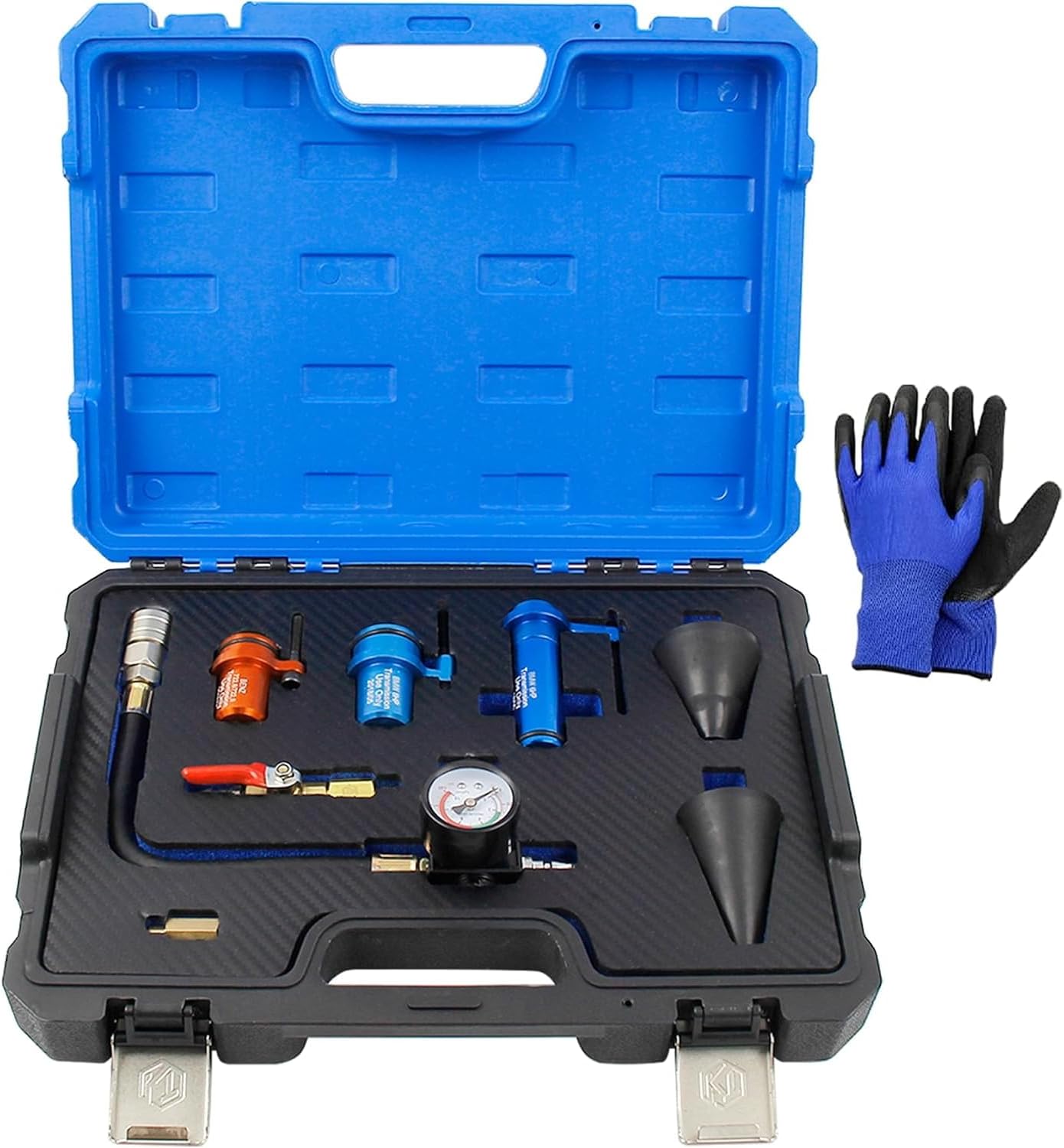
Refill follows the Daimler procedure: after a complete refill or fluid change, pour in about 5 liters before starting the engine, then start it, idle in Park, add the remainder, cycle through the ranges with the brake held, and set the level at temperature. Initial-charge capacity in AR27.00-P-0100AC ranges from 7.0 liters on some sub-variants to 9.2 liters on others, and the same document lists a fluid-change quantity of 5 liters for the 722.648 and 6.5 liters for the 722.649. A pan drop alone leaves a lot of old fluid in the converter and cooler. Many later converters have no drain plug, so on a high-mileage unit with unknown history we do two or three drain-and-fills a few hundred miles apart, or pull the old fluid out of the converter with a drain and fill rig. Our 722.6 flush vs drain-and-fill guide walks through both.
Checklist: magnet and filter inspected and photographed; filter, pan gasket and conductor plate (if due) replaced; fill started with about 5 liters, finished at temperature.
6. The Wear a Pan Drop Will Not Show You
This is where honest high-mileage advice matters. Fresh fluid does not fix worn aluminum. Sonnax's write-up on the 722.6 describes the working pressure regulator valve wearing its outer bore so pMod solenoid signal oil leaks past the boost end of the valve. Working pressure then fails to rise with engine load, and you get engine flare on the 2-3 and 4-5 upshifts or a neutral flare on 5-4 and 3-2 downshifts. The author, a Sonnax TASC Force member who repaired these under Mercedes warranty, says that in 1998 many of the high-mileage cars they saw had the same 2-3 flare driving the car into limp mode, and blames the soft valve body casting. The 1-2/4-5, 2-3 and 3-4 overlap sleeves sit in the same signal circuit and commonly wear on the inside and leak on the outside, which also drops working pressure (Sonnax, "Mercedes 722.6, Daimler W5, Porsche W5, Jaguar 722.6"). These bores can be vacuum tested on the bench before you buy anything.
The converter has its own age-related failure. Sonnax's Ed Lee wrote in Transmission Digest that TCC apply shudder and low or no cooler flow on the 722.6 both come from losing the seal between the input shaft and the aluminum sleeve in the converter cover; the factory interference fit stops sealing as the converter ages, apply oil leaks off, and clamping force drops (Transmission Digest, "The Importance of a Positive Seal: 722.6 Issues"). If your hot TCC slip log from step 2 drifts out of range, this is high on the list, and no amount of fluid service will correct it. Low cooler flow also cooks new fluid, so check cooler flow before you send the car out.
Checklist: any flare under load means valve body inspection or replacement; hot TCC slip out of range means converter and apply circuit; verify cooler flow.
Shop the part for this fix
If the road test still shows flare on the 2-3 or 4-5 after a correct service, the working pressure and overlap circuits are worn. A complete 722.6 valve body with solenoids restores them in one swap. Confirm your valve body part number before ordering.
722.6 valve body with solenoids at CoreTransmissionParts →Going further? Browse 722.6 rebuild kits.
7. Reset, Road Test, Recheck
After a conductor plate, valve body or battery disconnect, reset the transmission adaptations with a capable scan tool and drive through a full warm-up cycle with light, steady throttle so the control unit can relearn shift overlap. Then recheck the level in range B, look the connector and pan over for seepage, and repeat the hot TCC slip log. A high-mileage 722.6 that shifts cleanly, holds lockup slip in range hot, and stays dry at the connector after this checklist has a lot of life left.
The Short Version
- Fluid: 236.14 only on Mercedes-fluid units (A001 989 68 03 10), never FE-ATF 134 or 236.15; ATF+4 on most Chrysler NAG1 except Sprinter and Crossfire.
- Level: tool 140 589 15 21 00, vehicle level, range B above 80 C. Under-fill and over-fill both cause damage.
- Connector: replace adapter and O-rings, unplug below 50 C, no harness tension, dry the loom.
- Pan: read the magnet, new filter and gasket, conductor plate if due, roughly 5 liters in before first start.
- Scan: log TCC actual versus desired slip hot; P0741 sets above 60 rpm excess slip three times per key cycle.
- Wear: flare under load means worn working pressure and overlap bores; hot shudder means the converter sleeve seal.
Need parts for this job?
Conductor plate kits, filters, valve bodies, pumps and rebuild kits for the 722.6 and NAG1, all on our own secure checkout.
Shop 722.6 parts →Frequently Asked Questions
How often should a 722.6 transmission fluid be changed?
Service schedules for the 722.6 varied by model year and market, so do not rely on a lifetime-fill claim. In practice we service a 722.6 with fluid and filter every 40,000 to 60,000 miles, and sooner if it tows or sees heavy heat. On a high-mileage unit with no service history, a pan drop with a new filter and the correct 236.14 fluid is the first step, not a risk.
What fluid does a high-mileage 722.6 need?
Mercedes-Benz star bulletin S-B-00.40/89d says the 722.6 may only be filled with oils approved under specification sheet 236.14, which is the red ATF sold as MB part number A001 989 68 03 10, and it must never be mixed with other oils. Do not use the later FE-ATF 134 or the blue 236.15 fluid in a 722.6. Most Chrysler NAG1 applications use ATF+4 instead, except the Sprinter and Crossfire, which take the Mercedes fluid.
Is it safe to change the fluid in a 722.6 with over 150,000 miles?
Yes, provided the unit shifts correctly before you start. The 722.6 does not rely on worn, dirty fluid to grip; it relies on correct working pressure. Check the level and codes first, drop the pan, read the magnet and filter, and refill with 236.14 fluid. If it already flares or slips, a fluid change will not cure worn valve body bores, and you should plan for a valve body or overhaul.
Why does my 722.6 leak at the electrical connector?
The 13-pin connector adapter in the case uses O-rings that harden with age and heat, and oil can wick up the harness toward the transmission control unit. The ALLDATA procedure is to clean the area, replace the connector and its O-rings, dry and blow out any oil in the harness plugs, and route the harness so there is no tension on the connector. Only unplug or install it with the fluid below 50 C to avoid damaging the conductor plate.
Sources
- Mercedes-Benz USA — Star Bulletin S-B-00.40/89d, "Operating Fluid Specification Changes for Automatic Transmission" (Nov. 6, 2013), via NHTSA. Backs the 236.14-only fluid rule for the 722.6, part number A001 989 68 03 10, red color, separate filling units because the oils must never be mixed, and the note that a 722.6 may not be filled with FE-ATF 134. static.nhtsa.gov (PDF)
- Daimler AG — AR27.00-P-0100AC, "Check oil level in automatic transmission and correct if necessary," Transmission 722.6. Backs the dipstick tool 140 589 15 21 00, level-vehicle requirement, range A at 25 C and range B above 80 C, the approx. 5 liter pre-start fill, initial-charge capacities of 7.0 to 9.2 liters, the 5 and 6.5 liter change quantities for 722.648 and 722.649, and the warning on under- and over-fill. mbclub.ru (PDF)
- Sonnax — Mio Cundl, "Mercedes 722.6, Daimler W5, Porsche W5, Jaguar 722.6." Backs the 1996 introduction, the W5A580/W5A380/W5A330/W5J400 naming, Sprinter/Crossfire/Mercedes-specific fluid versus ATF+4 in other Chrysler units, working pressure regulator bore wear causing 2-3/4-5 flare and limp mode on high-mileage cars, and overlap sleeve wear. sonnax.com
- Gears Magazine (ATRA) — Rob Faucett, "Nag 1/722.6 P0741 TCC Slip" (Dec. 2020). Backs the P0741 set condition (more than 60 rpm excess slip in slip mode, three times per key cycle), the PIDs to graph, and the engine load ranges at idle and wide open throttle. gearsmagazine.com
- Underhood Service — "Tech Tip: Mercedes-Benz A/T Fluid Leaks at the Electrical Connector" (courtesy of ALLDATA, Oct. 2008). Backs the connector and O-ring replacement, cleaning oil from the wiring loom, the below-50 C rule to protect the conductor plate, and tension-free harness routing. underhoodservice.com
- Transmission Digest — Ed Lee (Sonnax), "The Importance of a Positive Seal: 722.6 Issues." Backs TCC apply shudder and low cooler flow caused by the lost seal between the input shaft and the converter cover sleeve as the converter ages. transmissiondigest.com