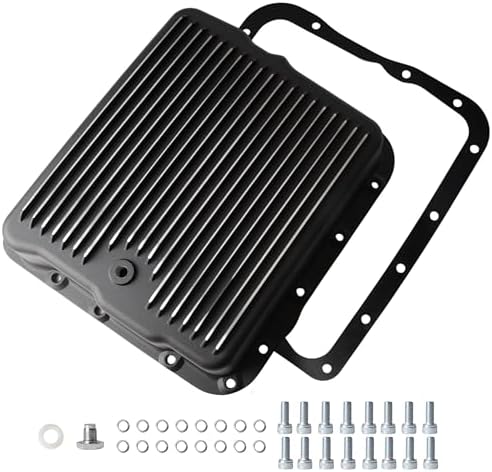
If your 700R4 or 4L60E pan is bent, weeping at the gasket, or you are tired of hot ATF running down your sleeve every time you service it, this is the pan people search for. It is a finned, cast aluminum replacement for the stamped steel stock-depth pan (OE style SP8594BK) on GM 700R4, 4L60 and 4L60E units: C/K trucks, S10 and Blazer, Camaro and Firebird, G-body cars and the many swaps built around these transmissions. Depth is 2-5/8 inches, the same as the factory standard pan, and the box includes a pan gasket, the mounting bolts and a drain plug already installed.
What the pan does in a 700R4 or 4L60E
The pan is the sump the filter pickup sits in, so it sets how much fluid the transmission carries and whether the pickup stays submerged. These transmissions use a square, 16-bolt pan, and GM ran two depths. Sonnax documents that in 1998 the C/K/G trucks and vans got a deeper 4L60-E pan for more capacity, with a longer dipstick, tube and stop bracket to match, while cars and earlier units kept the standard pan. This finned pan is the standard depth. On a 700R4, an early 4L60E or a car application it is a direct swap; it is not a capacity upgrade for a 1998-later truck that came with the deep sump.
The fins are there for heat. Cast aluminum walls with ribs give the fluid more surface to shed heat to passing air than a thin steel panel, and in the 700R4 family heat is what cooks the 3-4 clutch pack. That is a small helping hand, not a substitute for a working cooler and correct line pressure.
Symptoms that point to the pan
- ATF drips from the pan rail even after a fresh gasket and careful retorque, because the old steel flange has bowed between bolts
- A dent or crease from a rock, curb or jack point that pushes the pan floor up toward the filter
- Rust pitting along the flange on an older truck or car
- Low fluid that keeps coming back, followed by slipping or delayed engagement when hot
How to confirm before you buy
Look closely at where the wet spot starts. Fluid running down from above the pan usually means the cooler line fittings, the shift shaft seal or a converter seal, and a new pan will not cure those. If it really is the pan, inspect the debris when you drop it: heavy clutch material or metal means internal damage. Our 4L60E common problems guide explains what burned 3-4 clutches and a failed sun shell leave behind, and the Camaro 4L60E guide covers the car side of this family.
Fitment
Listed for GM 700R4, 4L60 and 4L60E transmissions that use the 16-bolt standard-depth pan. Before ordering, count your pan bolts and measure the depth of the pan you are removing. If your truck came from the factory with the deep pan, or a previous owner already fitted one, this pan will reduce fluid capacity and needs the matching shorter filter, and the dipstick must be read against the correct stop bracket. Not sure what you have? Send us your year and VIN, or browse all 4L60E parts.
Install notes
- Clean every trace of the old gasket off the case rail; the rail must be dry and flat.
- Fit a new filter and seal that match a standard-depth pan before the pan goes up.
- Snug the bolts by hand, then torque in a crossing pattern to about 11 lb-ft. More torque does not seal an aluminum pan better.
- Refill with Dexron VI and check the level hot, engine running, in park.
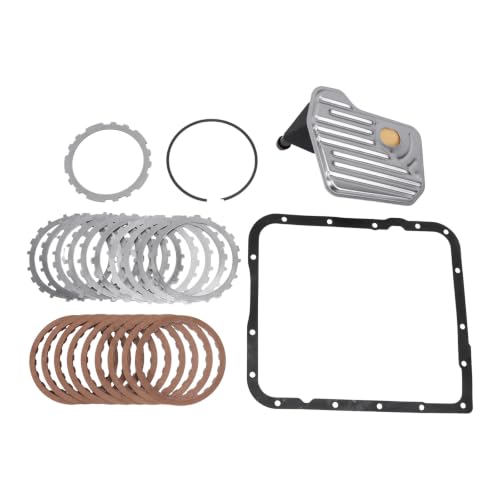
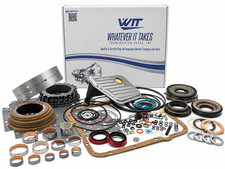
If the old pan held a lot of friction material, the clutches are already worn. A heavy duty 3-4 clutch pack kit with filter and pan gasket addresses the most common burn-up, and on a high-mileage unit a 4L60E master rebuild kit is the complete answer.