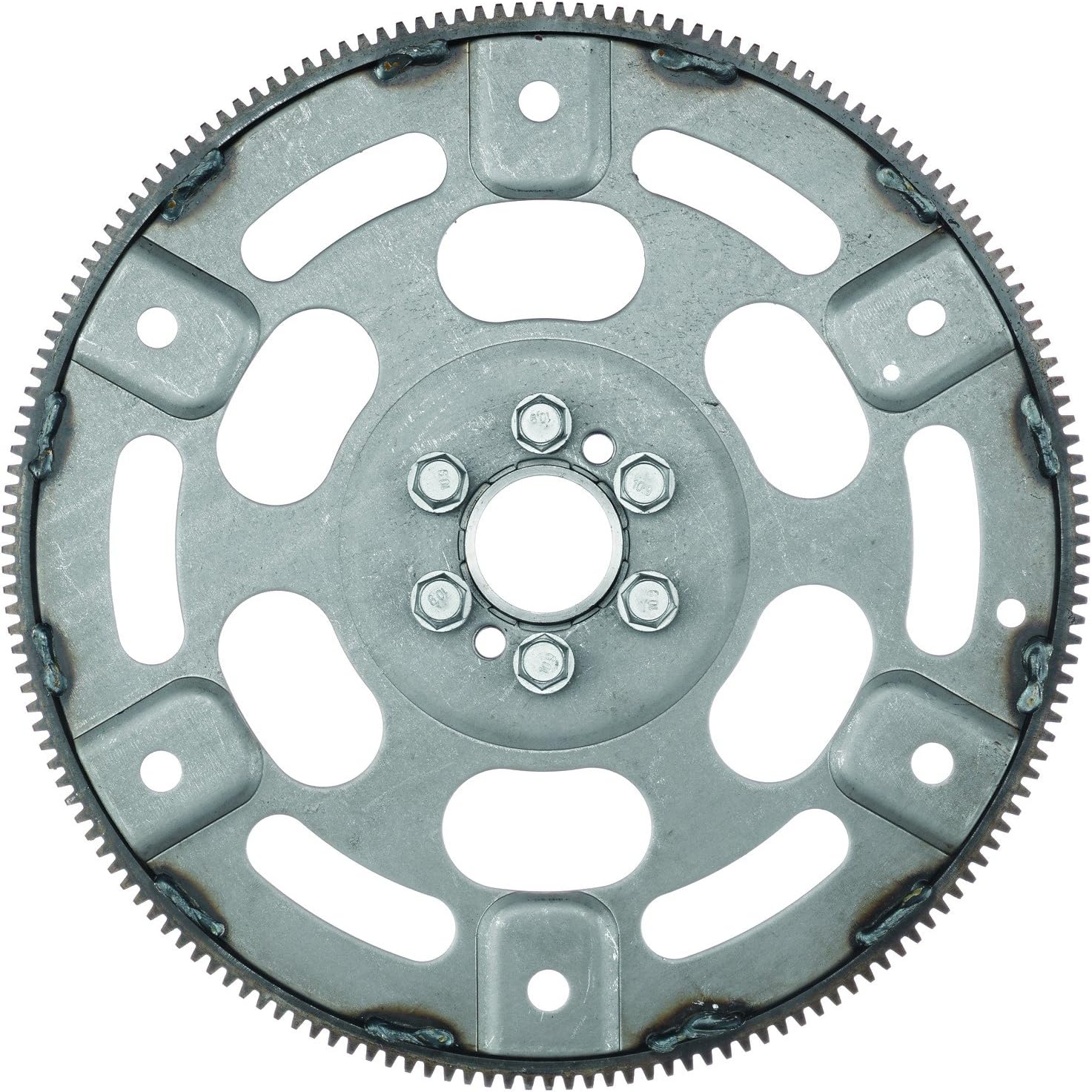
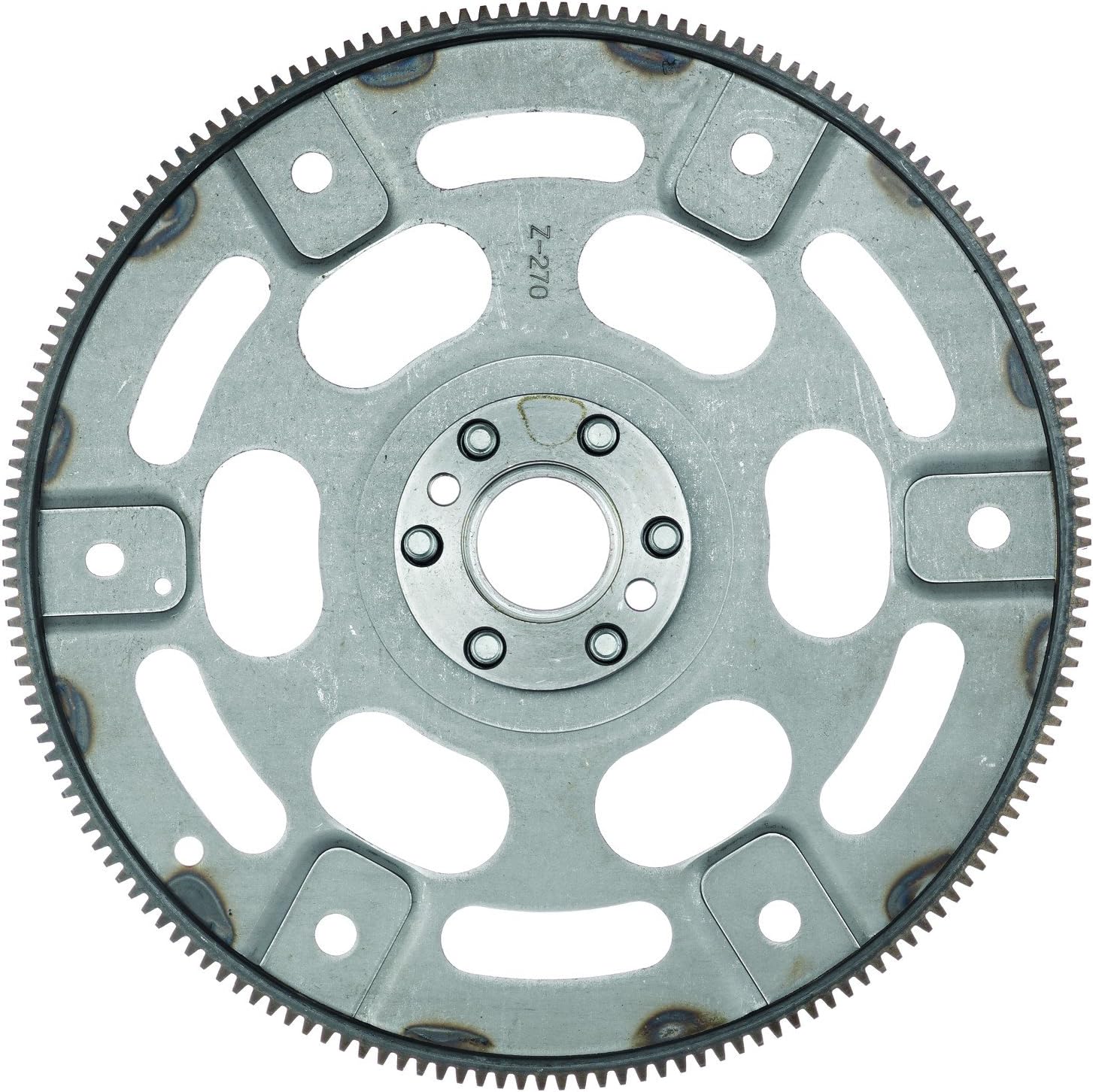
Upgrading a Silverado, Sierra, Tahoe or Suburban from a 4L60E to a 4L80E, or dropping an LS or Vortec engine in front of a 4L80E, and the old flexplate will not line up with the converter? Or hearing a rattle at startup and a vibration under load from the bellhousing? This is the ATP Z-270 flexplate, made to the 6-bolt torque converter pattern the 4L80E uses. It is alloy steel, balanced to factory spec, with a welded ring gear for the starter.
What the flexplate does with a 4L80E
The flexplate bolts to the back of the crankshaft and carries the torque converter, and its outer ring gear is what the starter drive engages. It has to match two patterns at once: the crank flange on the engine side and the converter lugs on the transmission side. The 4L80E was developed from the TH400 and uses a larger converter than a 4L60E; Novak lists it at 310 mm, and ICT Billet groups 4L80E converters with the 11.5-inch bolt circle, many with six bolts instead of three. That is why a 4L60E flexplate, drilled for a three-lug converter on a smaller circle, will not work after the upgrade. The 4L80E is also 26-1/4 inches long and rated for about 440 lb-ft of input torque, which is why it is the common answer for trucks that keep burning up a 4L60E.
Symptoms of a cracked or wrong flexplate
- Rattle or tinny clatter from the bellhousing at idle or when the engine shuts off
- Vibration that changes with engine speed rather than road speed
- Starter grinding or failing to engage on part of the ring gear
- Converter bolts that will not line up, or a converter that has to be forced back to reach the plate
- Cracks radiating from the crank bolt holes or around the converter lugs when inspected through the inspection cover
A cracked plate cannot be welded or straightened. Replace it, and replace the converter bolts with it.
How to confirm before you buy
Pull the bellhousing inspection cover and turn the engine by hand while you look at the plate with a light. Check for cracks, missing or loose converter bolts and damaged ring gear teeth. If you are planning the swap, count the converter lugs on the 4L80E converter you will run and measure the bolt circle. If the reason for the upgrade is a failing 4L60E, our 4L60E common problems guide explains the 3-4 clutch and sun shell failures that push owners to the bigger transmission.
Fitment
This plate is listed for GM trucks and cars running a 4L80E behind 4.8L, 5.3L, 5.7L, 6.0L and 6.2L V8s, and for 4L60E-to-4L80E and LS or Vortec swap builds. The crank side matters as much as the converter side. ICT Billet notes that most Gen 3 and Gen 4 LS engines use a 6-bolt dished crank flange, while the 1999-2000 6.0L uses a flat flange with a longer crankshaft. A Gen I style small block such as the older 5.7L uses a different crank pattern again, so compare your old plate, or send us your engine, year and VIN and we will confirm. See the full 4L80E parts collection for the rest of the swap.
Install notes
- With the transmission out, remove the old plate from the crank and clean the flange and bolt threads.
- Bolt the new plate on and tighten the crank bolts in a crisscross pattern to the factory spec for your engine.
- Fully seat the converter in the pump, confirm the converter-to-plate gap, and never pull the converter forward with the bolts.
- Use new converter bolts; a 6-piece 2307304 converter bolt set covers the 4L80E.
- Fill with Dexron VI and check the level hot.
Staying with the 4L60E instead? The heavy-duty reaction sun shell and a 2004-up master rebuild kit address the most common reasons the smaller unit fails.