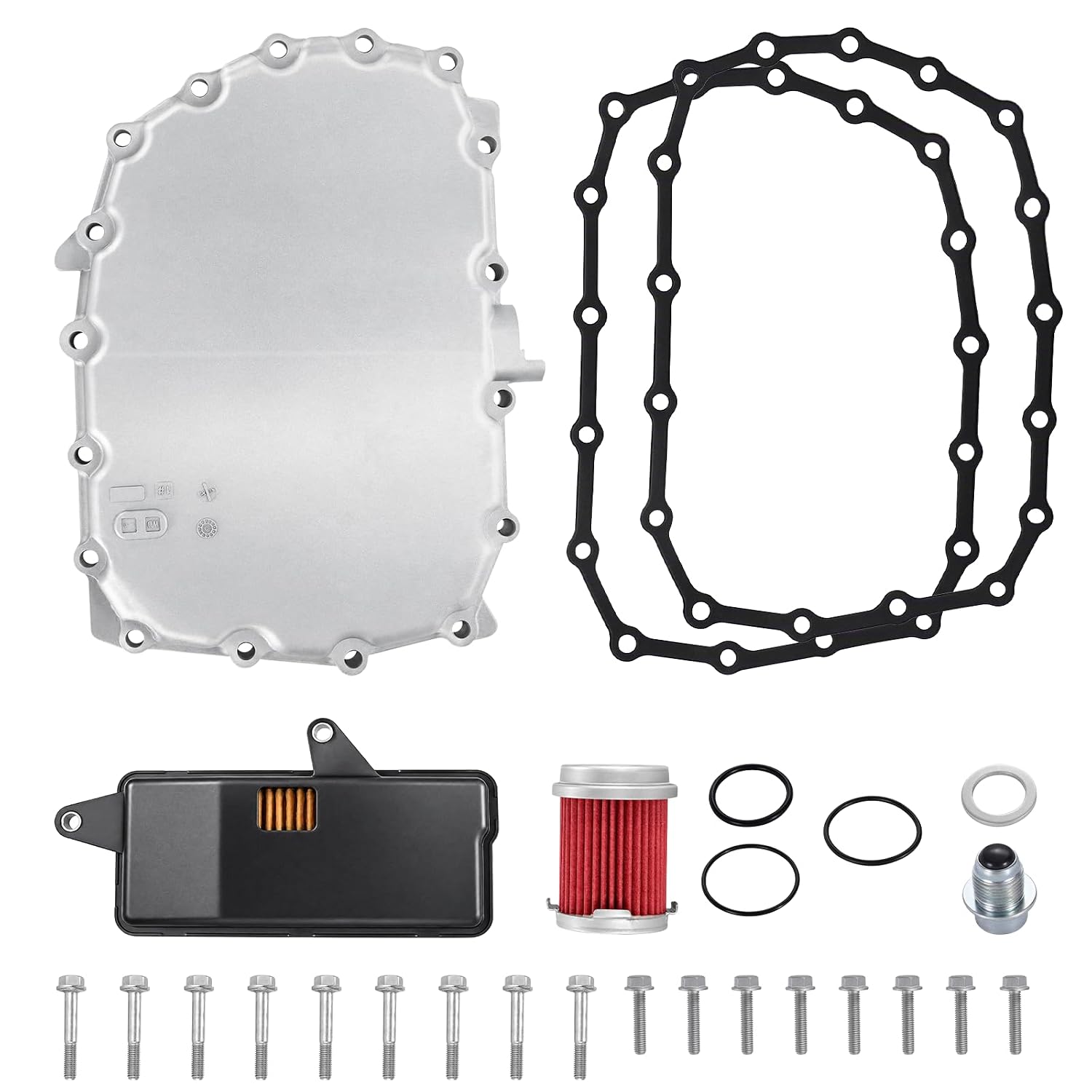
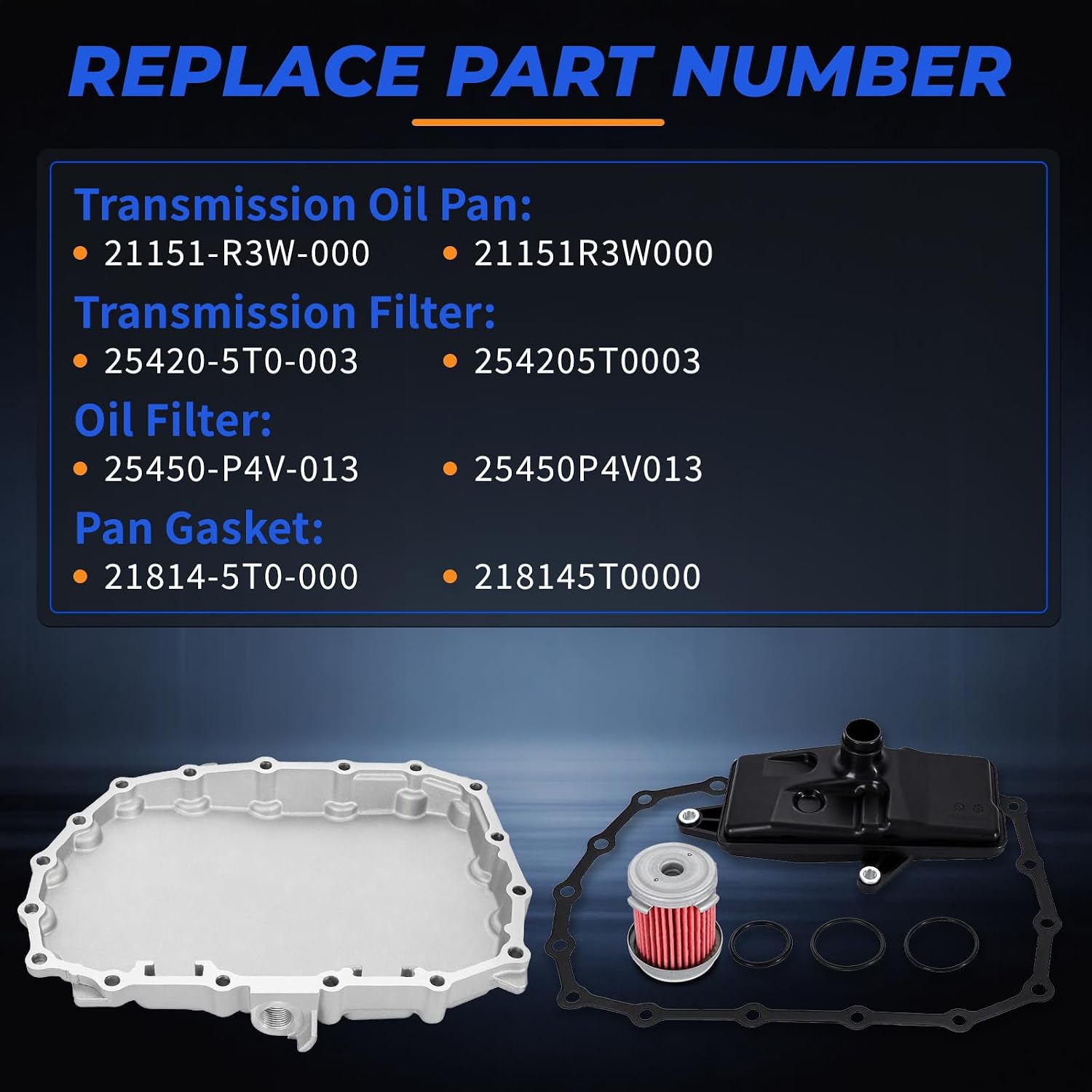
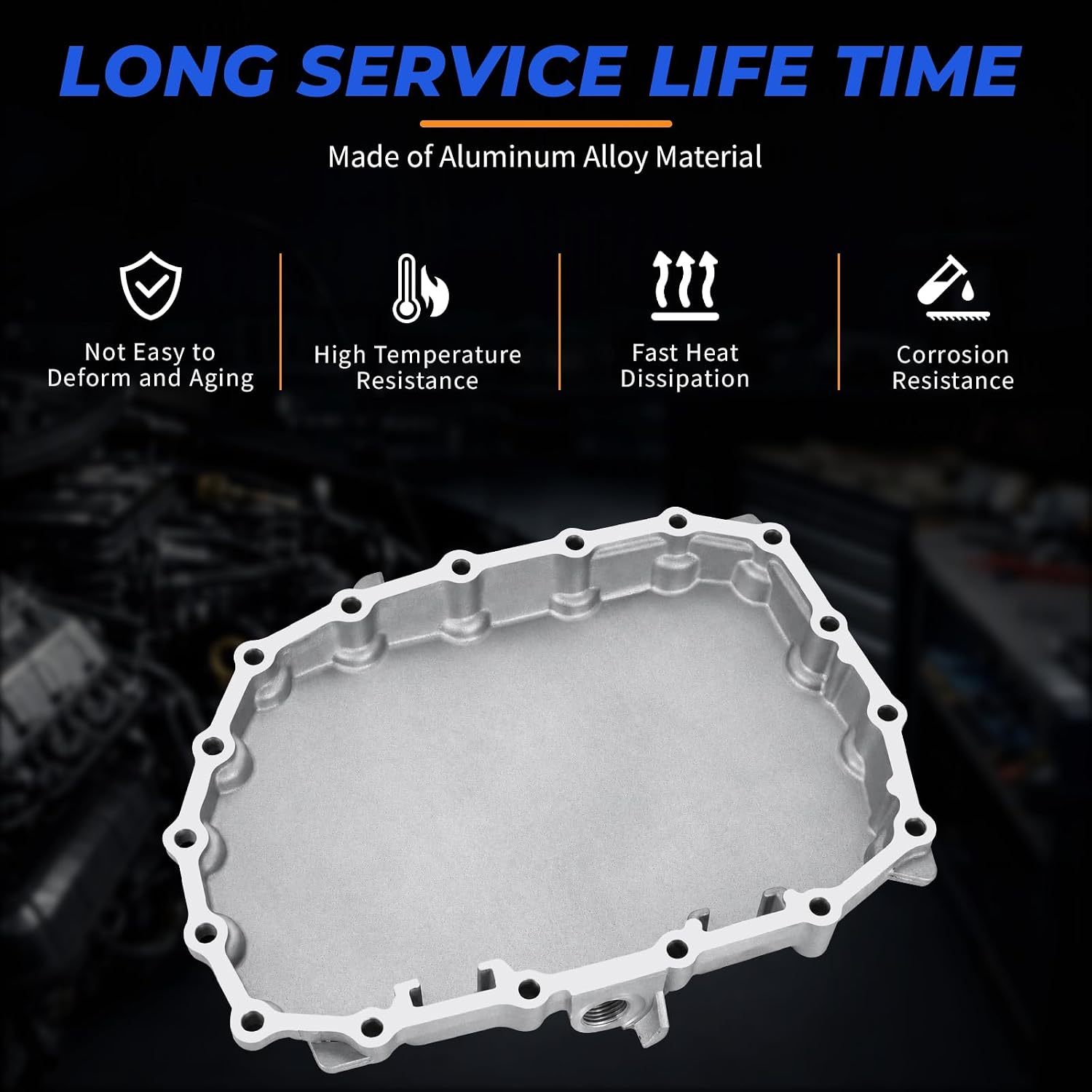
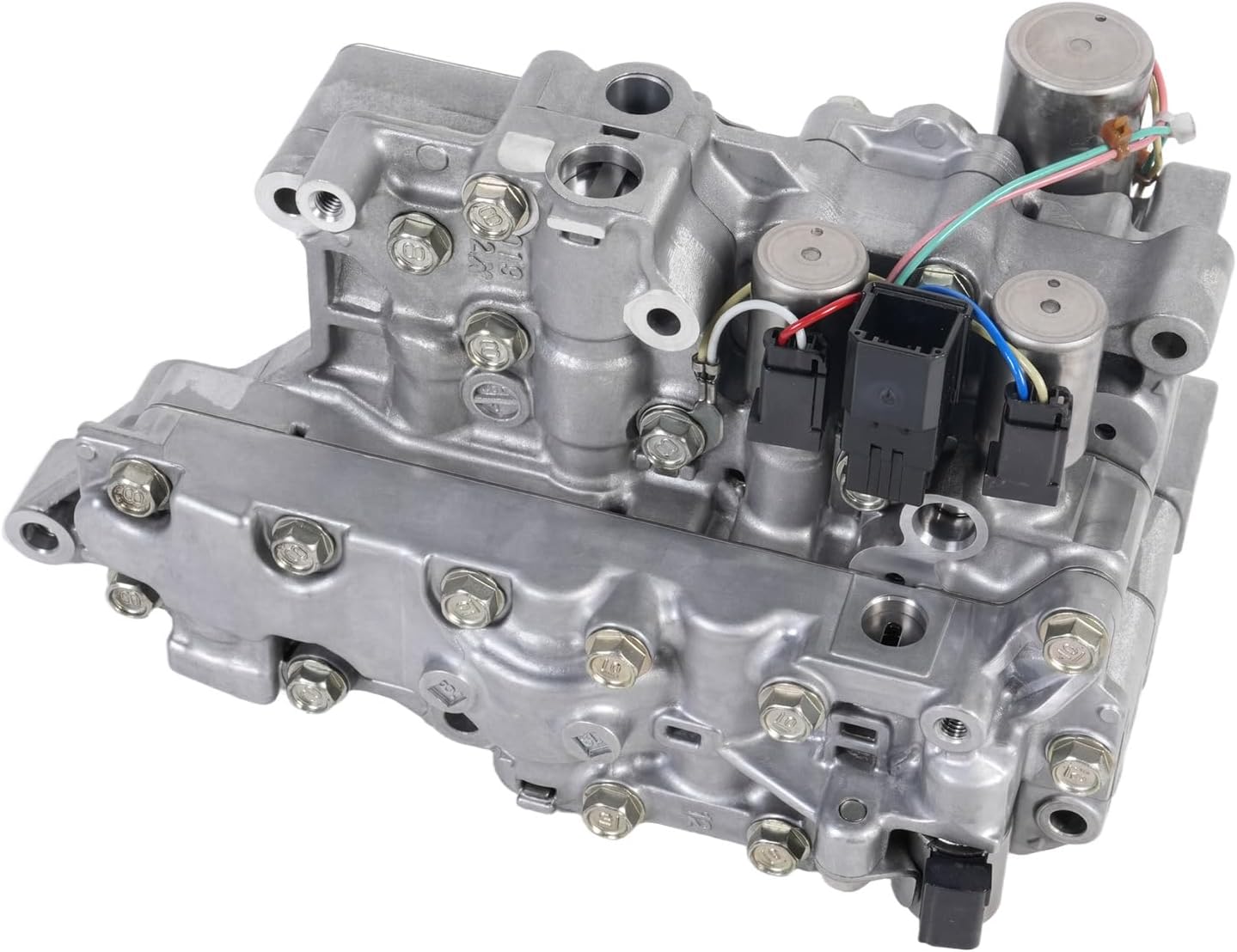
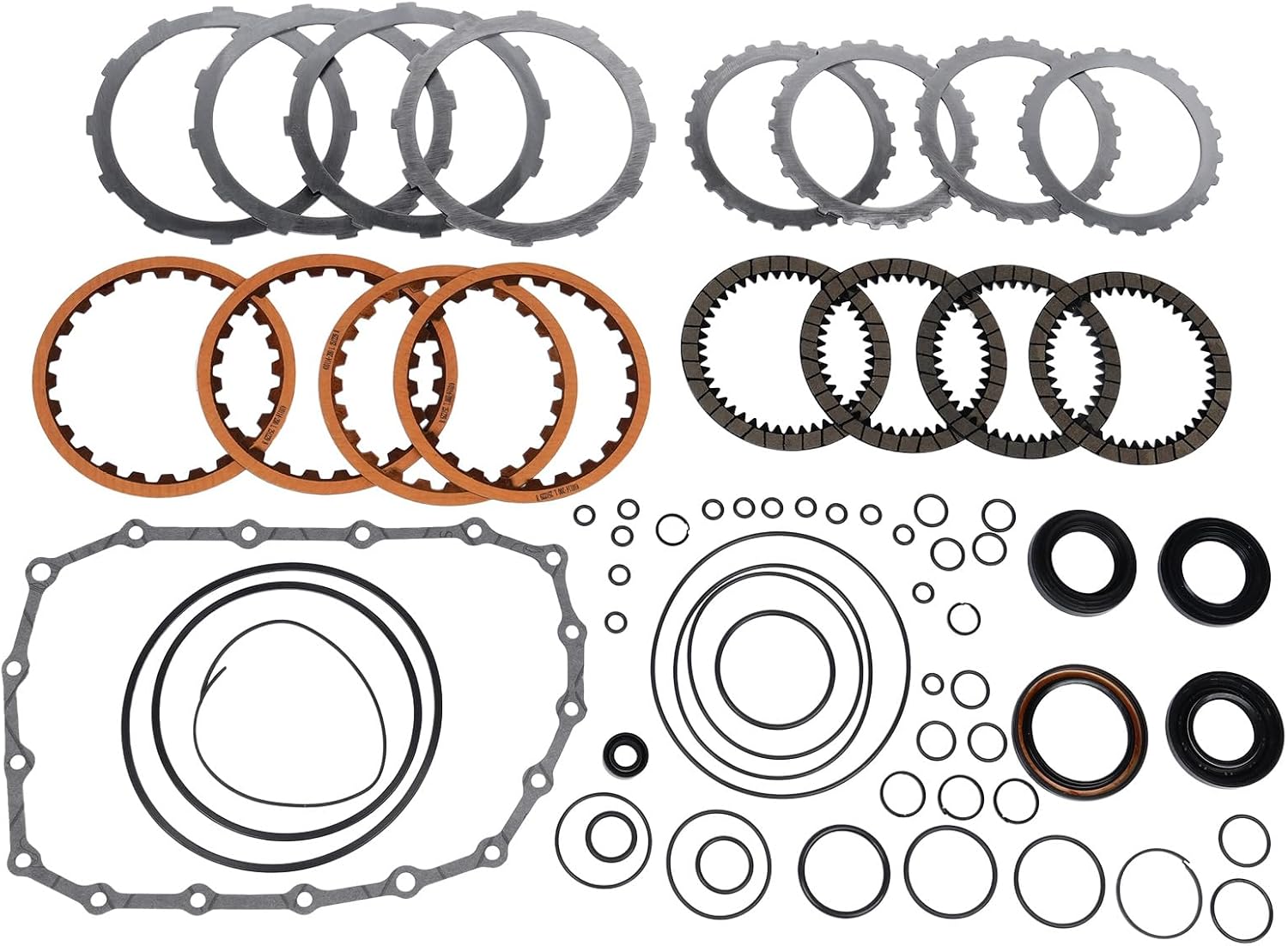
A Honda Civic CVT pan usually gets replaced for one of two reasons: it hit something, or the owner finally wants a real service instead of another partial drain and fill. If your 2014-2015 Civic 1.8L or 2016-2019 Civic 1.5L turbo or 2.0L is dripping fluid from a dented or cracked pan, or the CVT has started to shudder and whine after years on factory fluid, this kit puts every service part for the bottom of the transmission in one box: a cast aluminum pan (replaces 21151-R3W-000), the internal strainer (replaces 25420-5T0-003), the external CVT filter (replaces 25450-P4V-013), two pan gaskets (replace 21814-5T0-000), a magnetic drain plug and 17 pan bolts.
What the pan, strainer and filter do in a Civic CVT
A belt-and-pulley CVT clamps a steel belt between two variable pulleys with hydraulic pressure, so the pump has to deliver steady, clean fluid every second the engine runs. The pan is the reservoir. The strainer inside it is the pump inlet, and anything it cannot hold back goes straight into the pump and the linear solenoids that set pulley pressure. The external filter cleans fluid on the return side. A clogged strainer or a pan that has been pushed up into the strainer by a curb strike starves the pump, and low or unstable pressure is exactly what lets the belt slip on the pulleys.
Symptoms
- Fluid dripping from the pan rail or a crack in the pan casting
- Whine that rises with engine speed, from a pump pulling through a restricted strainer
- Shudder or judder on light acceleration from a stop
- Slow, soft takeoff or a delay going into Drive
- Fine metal or dark sludge on the drain plug magnet
How to confirm before you buy
Put the car on a lift and look at the pan itself: a dent near the strainer area, a crack at a bolt boss, or wet fluid at the gasket line are all visible. Pull the drain plug and inspect the magnet. Fine gray paste is normal; bright flakes or chunks mean internal damage that a pan service will not fix. If the complaint is shudder or harsh engagement rather than a leak, work through our CVT harsh or delayed shift walkthrough first. Our Honda CVT maintenance guide covers why skipped fluid changes cause most of these complaints.
Fitment
The listing covers the Honda Civic 1.8L with CVT for 2014-2015, and the Civic 1.5L turbo and 2.0L with CVT for 2016-2019. It does not fit manual-transmission Civics or other Honda models. Honda revised parts across these years, so compare the bolt pattern and part number on your old pan to 21151-R3W-000 before you drain anything, or send us your year and VIN. See every CVT part we carry in the CVT collection.
Install notes
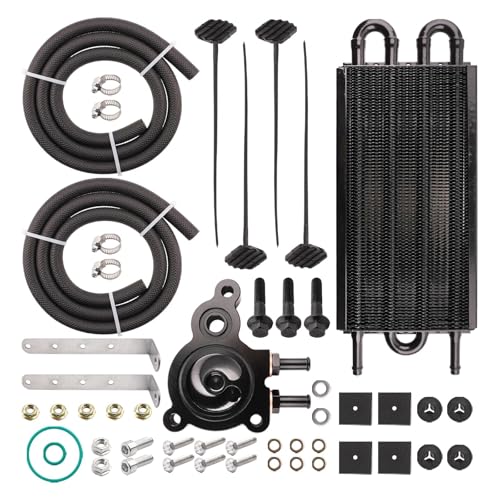
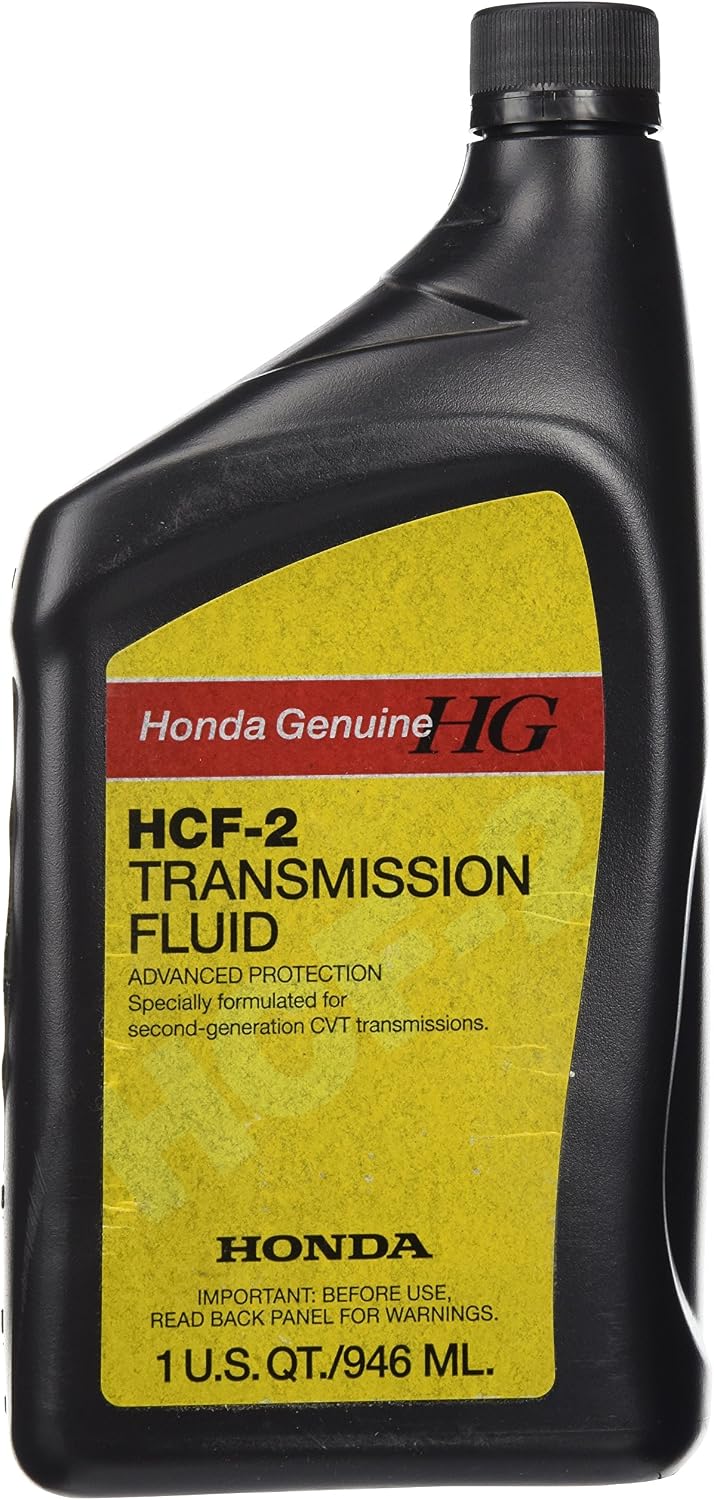
Drain the fluid, remove the pan bolts evenly and drop the pan. Replace the strainer and its seal, clean both sealing surfaces until they are dry and free of old gasket, and fit the new pan with one of the new gaskets. Tighten the bolts in a crisscross pattern to the factory torque; an aluminum pan rail warps if one side is pulled down first. Replace the external filter, install the magnetic drain plug with a new washer, and refill with Honda HCF-2 only. Honda specifies HCF-2 for these units and warns that other fluids can affect operation; it ships seven quarts of HCF-2 with its own Civic valve body bulletin. Check the level at operating temperature using the procedure for your model year. A 1.5L turbo that sees towing, mountain roads or heavy traffic runs hot, and an add-on CVT cooler kit is worth installing while the car is up. If the magnet showed heavy debris, look at the replacement CVT valve body rather than just new fluid.