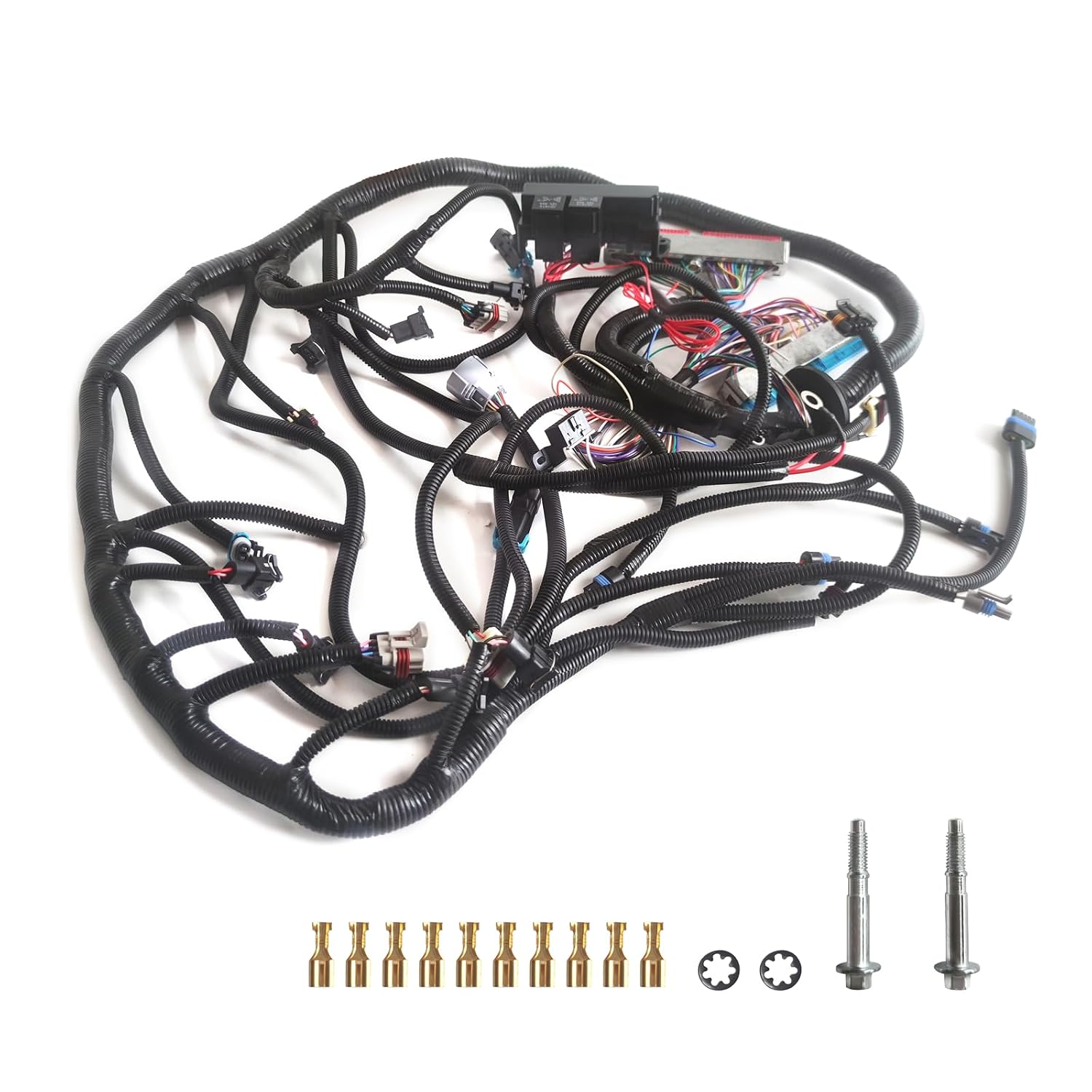
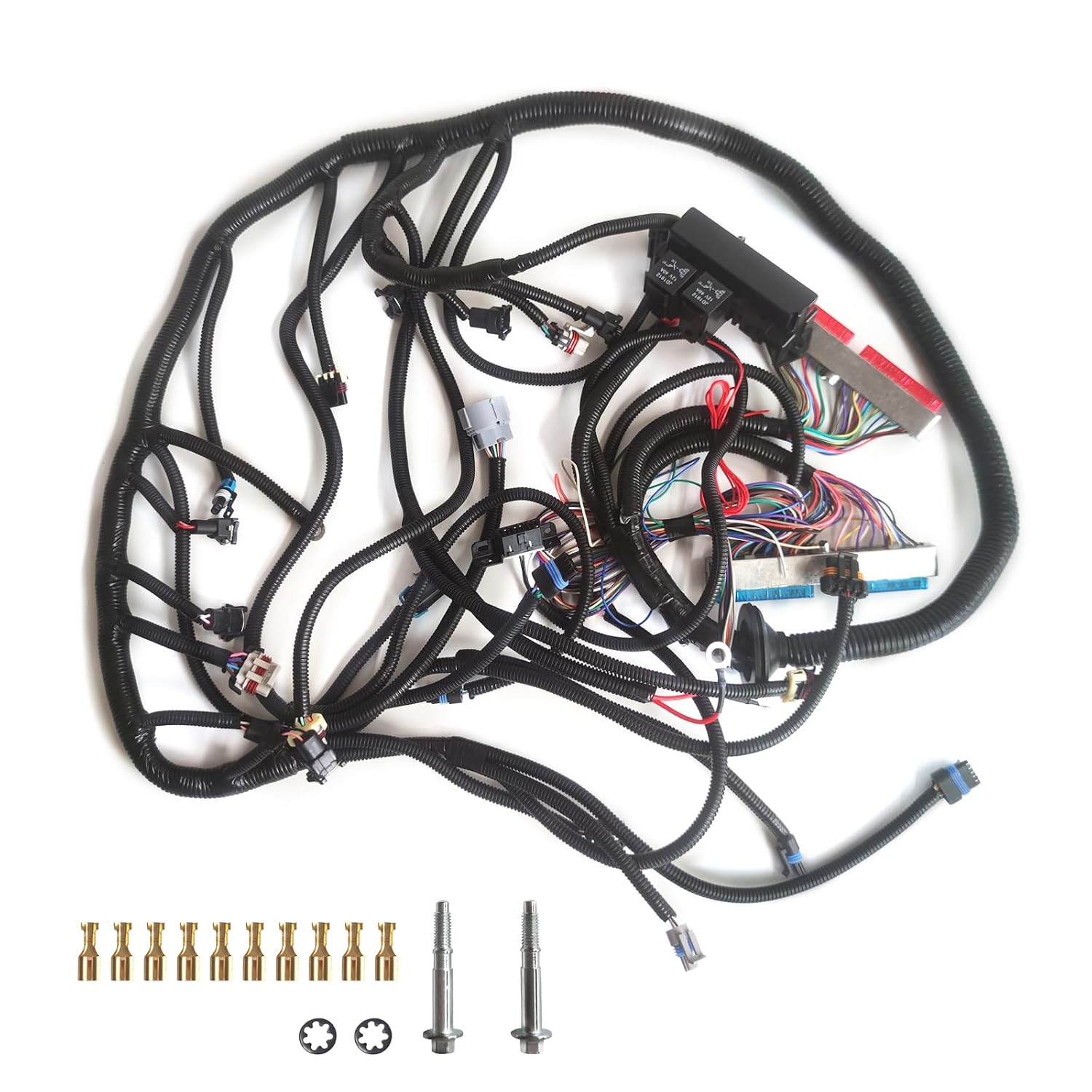
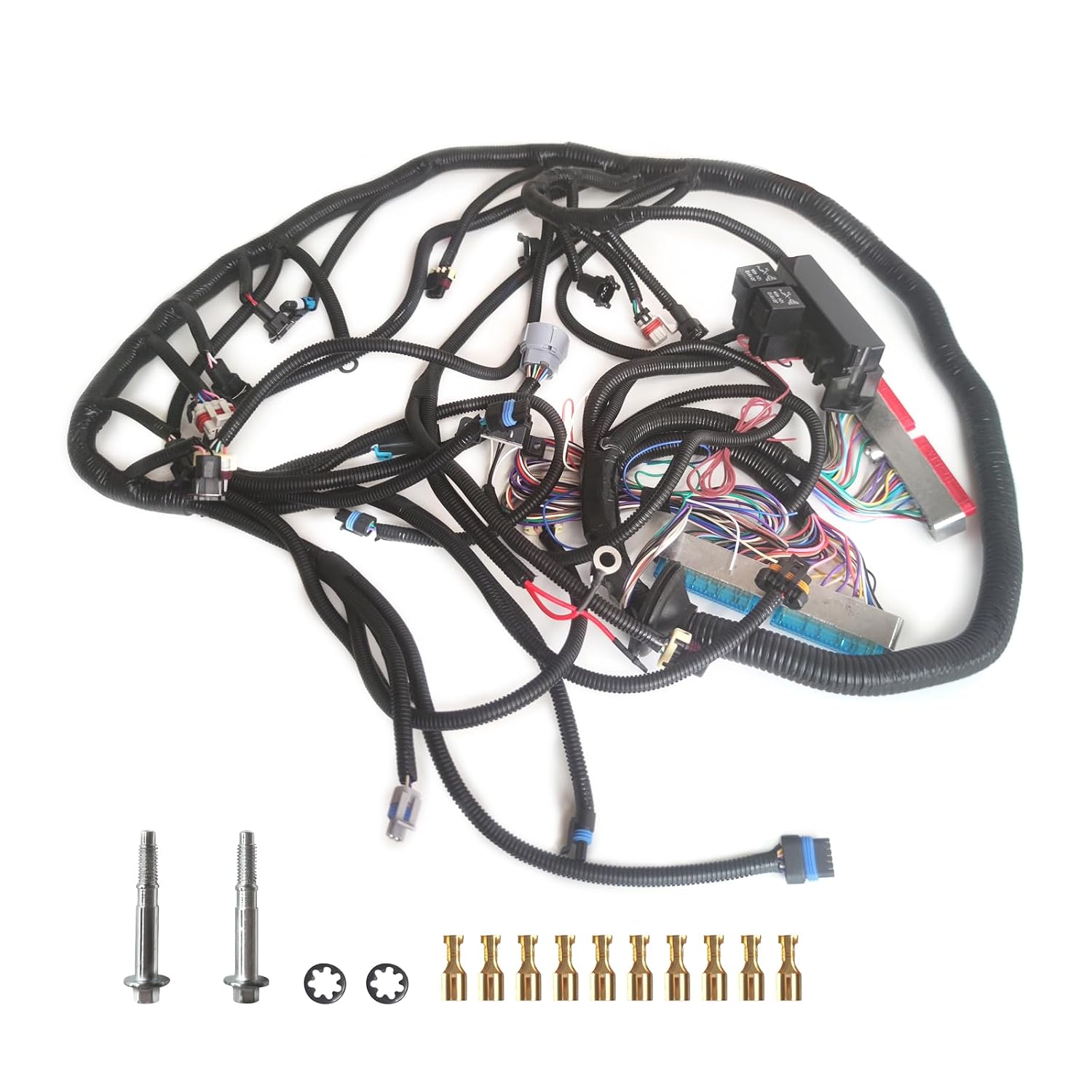
Dropping a junkyard 4.8, 5.3 or 6.0 and a 4L60E into a classic truck, a muscle car or a street rod usually stalls at one point: the wiring. The donor vehicle's harness is tied into its body, dash and lighting, and cutting it down takes days. This standalone harness is built for exactly that swap, for 1997-2006 Gen III LS engines with a cable-operated throttle body (drive-by-cable, DBC) and the electronically shifted 4L60E, all run from one PCM.
What the harness does for the 4L60E
A 4L60E has no hydraulic governor or throttle valve cable to tell it when to shift. The PCM reads the output speed sensor and throttle position, then fires the shift solenoids, the pressure control (EPC) solenoid and the converter clutch solenoid through the case connector. Novak describes the vehicle speed sensor as the primary feedback the computer uses to make shift decisions. So the harness is the transmission's control system as much as the engine's: if the trans branch is wrong, the engine can run perfectly while the 4L60E misbehaves. Because the wiring follows GM color codes, a factory wiring diagram still applies when you trace a circuit.
Symptoms of a bad or wrong swap harness
- Truck starts in third and never shifts: with both shift solenoids off the 4L60E sits in third, so a dead trans connector looks exactly like that
- Harsh engagements and slam shifts, because an EPC solenoid with no command defaults to maximum line pressure
- Converter clutch never locks or sets TCC codes such as P0741
- Engine cranks, starts and dies, which is usually anti-theft (VATS) programming in the PCM, not the harness
- Dead speedometer or tach from missing VSS or tach output connections
How to confirm the harness is the fix
On a swap that already runs, connect a scan tool to the DLC and watch commanded gear, solenoid states, EPC current and output speed while you drive. If the PCM commands a shift and nothing happens, check power and grounds at the transmission connector before blaming the valve body. Our 4L60E shift problems guide explains the solenoid on/off pattern for each gear so you can tell an electrical fault from a mechanical one, and the 4L60E common problems guide covers the internal failures that wiring cannot fix.
Fitment
This harness is for 1997-2006 Gen III LS 4.8L, 5.3L and 6.0L engines with a drive-by-cable throttle body, paired with a 4L60E. It is not the version for electronic throttle (drive-by-wire) engines, so look at your throttle body: a cable linkage means DBC. The PCM leg is 36 inches longer than stock so the computer can live under the dash, and the firewall grommet slides to wherever your pass-through hole ends up. The dash side has speedometer, tachometer, park/neutral, TCC, check engine light and DLC connections. Match your PCM and sensor connectors to the photos, and see our 4L60E parts collection for the transmission side of the build.
Install notes
- Have the PCM programmed for your engine, the 4L60E, your gear ratio and tire size, with VATS turned off, before first start.
- Use the reinforced ring terminals on clean, bare metal at the block and body; poor grounds cause erratic shifts that look like a bad solenoid.
- Keep the fiberglass-braided sections where they sit near the exhaust and do not reroute other branches across the headers.
- Wire park/neutral so the engine only cranks in P or N.
- Fill the 4L60E with Dexron VI and set the level hot.
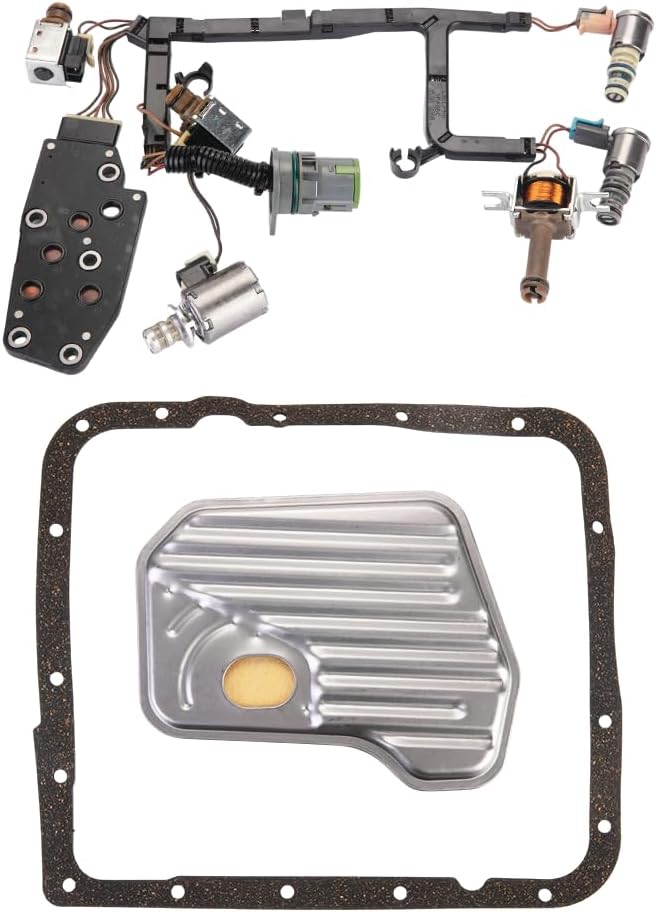
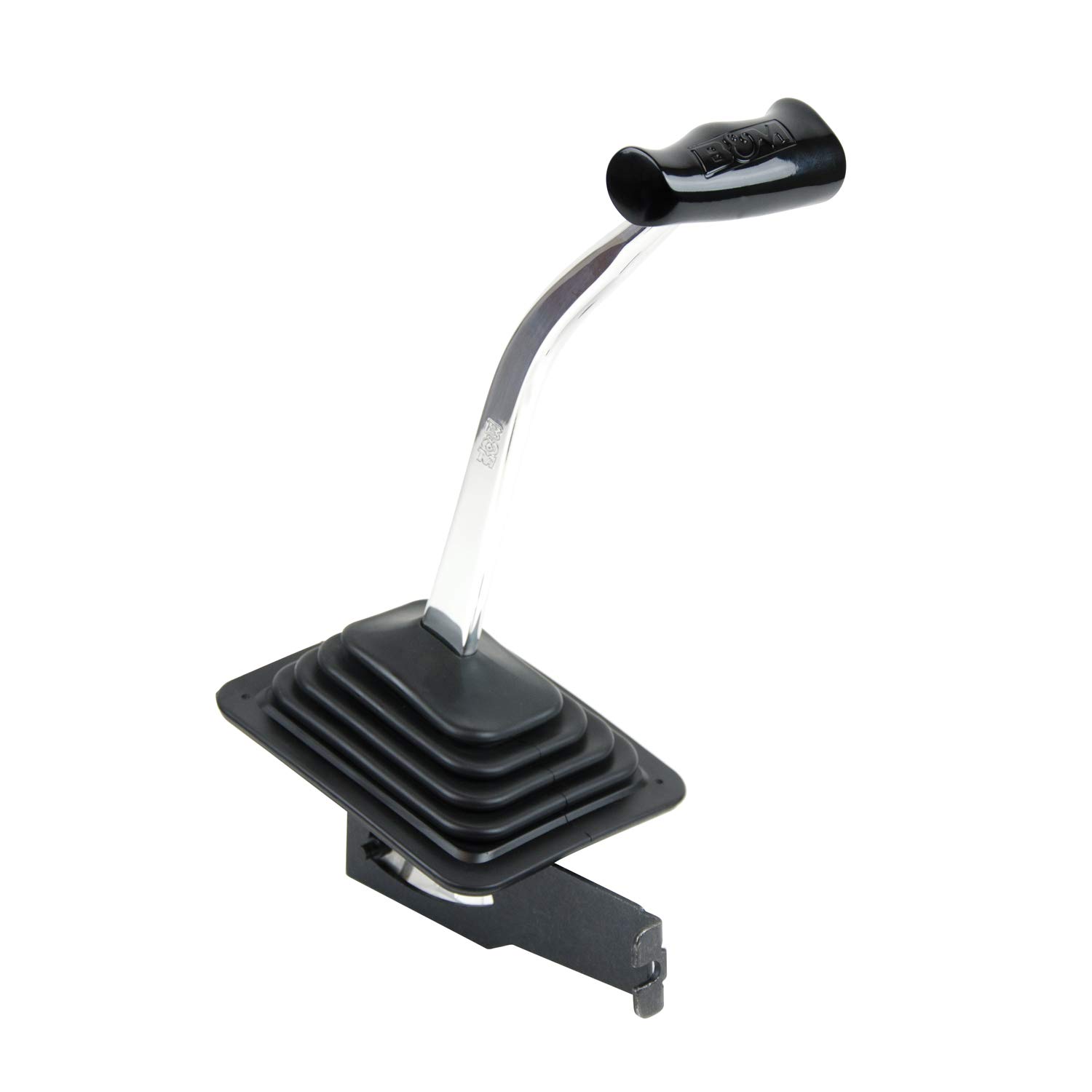
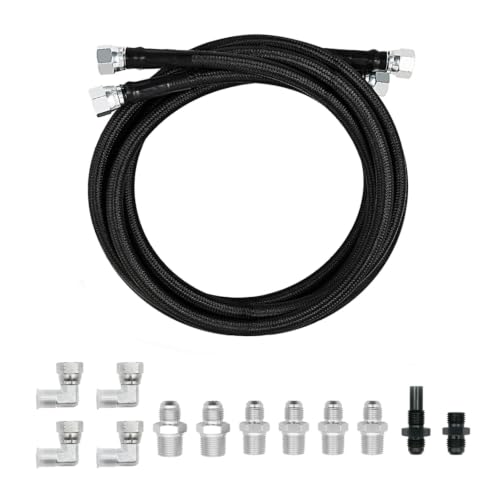
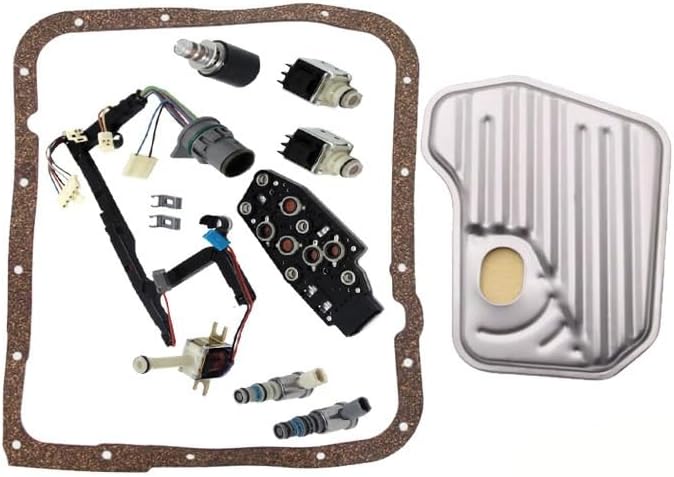
Most swaps also need a shifter and cooling: the B&M Unimatic shifter handles the gear selection, and a braided 6AN cooler line kit plumbs the transmission to your radiator or an external cooler. If the swap transmission came from a junkyard, a fresh 4L60E solenoid kit with internal harness is cheap insurance.