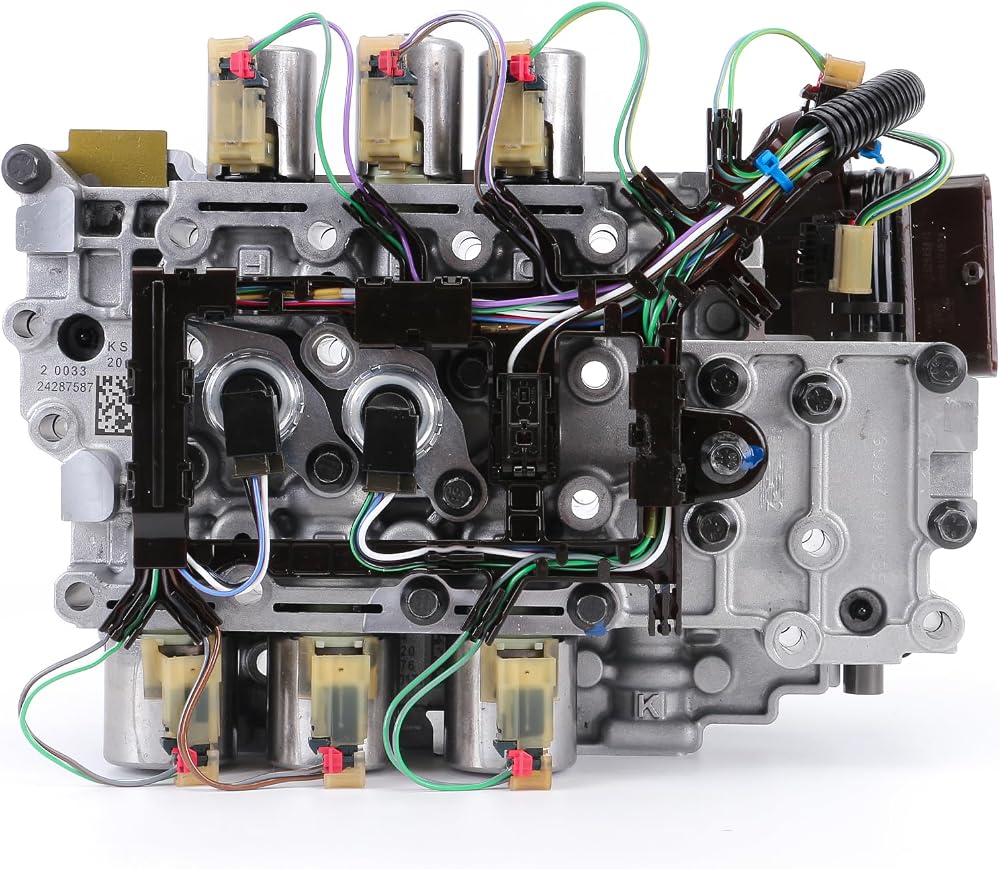
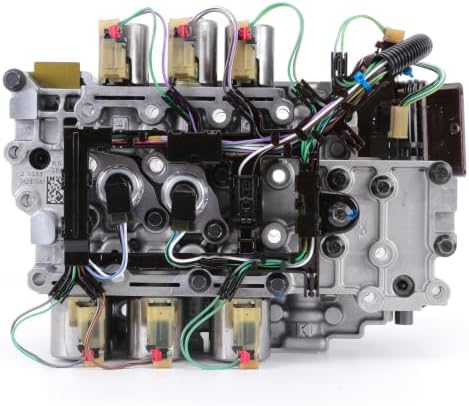
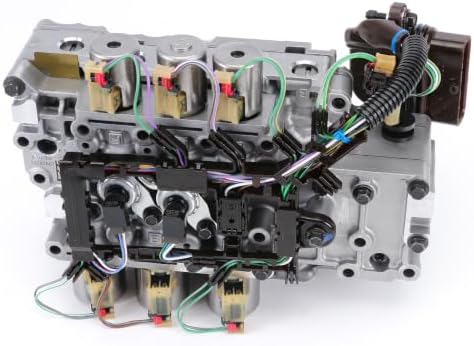
A launch shudder that feels like a bad torque converter, a flare in ratio under light throttle, or an engine that revs while the car barely picks up speed - on the GM VT40 CVT behind the Malibu's 1.5L turbo, those complaints almost always point to the valve body losing its grip on pulley clamp pressure. This is a complete VT40 valve body assembly that bolts in place of the original without modification, with the same solenoid connector and hydraulic circuit layout as stock.
What the Valve Body Does in a VT40 CVT
The VT40 is a belt-and-pulley CVT, and it lives or dies on how precisely the valve body can control clamp pressure at the primary and secondary pulleys. Instead of shifting between fixed gears, the transmission continuously squeezes the pulleys tighter or looser against the belt to change the effective ratio, and the valve body's pressure regulator and clutch regulator valves are what set that clamp force moment to moment. GM's own service information identifies a sticking pressure regulator valve as the leading cause of VT40 complaints - when that valve hangs up, the hydraulic circuit cannot hold the commanded clamp load, the belt starts to slip against the pulley sheaves, and the symptoms below follow. A separate, related failure mode involves the clutch regulator valve sticking and damaging the forward clutch piston, which is a deeper repair than a valve body swap alone.
Symptoms of a Failing VT40 Valve Body
- Launch shudder that feels like a worn torque converter
- Ratio flare under light throttle - engine RPM rises without a matching increase in road speed
- Codes P0846, P0776 or P0841 for pulley pressure and solenoid performance
- Intermittent symptoms that are hard to reproduce on a short test drive, which GM's own bulletin notes as typical of this fault
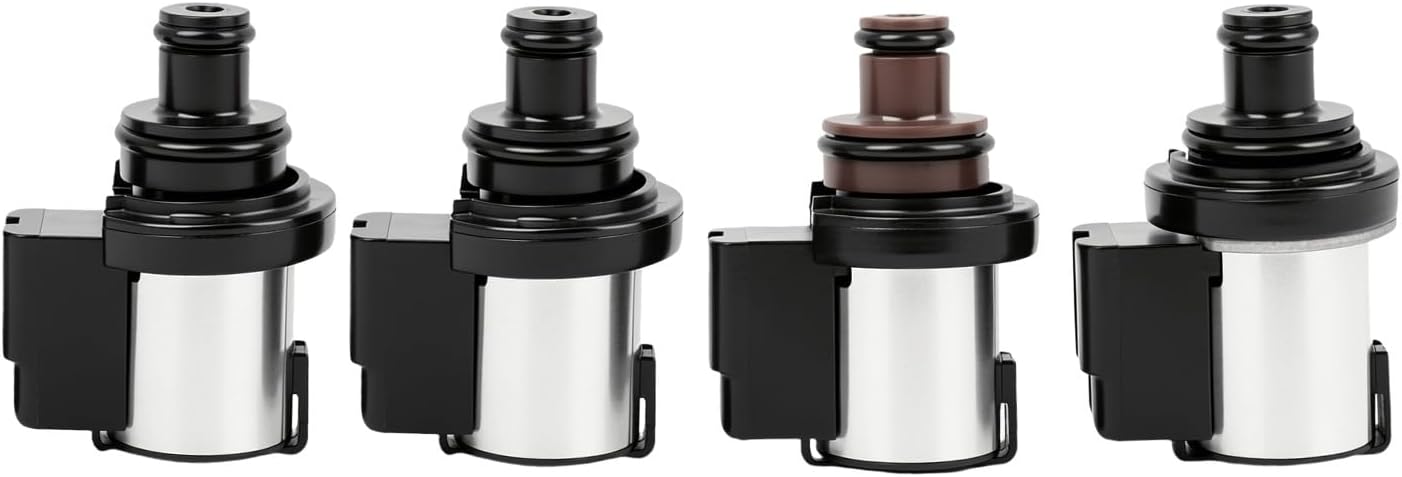
These codes and symptoms are well documented for this exact transmission, not generic CVT complaints - see our sources below for the GM technical bulletin and trade-press coverage. Once the regulator bore has worn, cleaning the valve body or swapping solenoids will not bring clamp pressure back; the body itself has to be replaced. If you want a wider look at how CVTs fail in general before you commit to parts, our guides on CVT slipping under load and CVT failure patterns across every brand are a good starting point.
Fitment
This valve body fits the Chevrolet Malibu 2019-2023 with the 1.5L turbo, the Chevrolet Cruze second generation 2018-2020, and the Buick Encore GX 2019-and-up, all built on the GM VT40 CVT (casting reference VT40). Confirm the VT40 casting on your own unit before ordering - GM also used the 9T45/9T50 nine-speed automatic in overlapping model years on some of these same platforms, and that is a completely different transmission with a different valve body. If you need parts for another CVT, see our full CVT transmission parts collection.
Install Notes
Drop the pan, pull the filter, and unplug the internal harness at the solenoid block before removing the valve body bolts in the factory sequence, keeping the check balls in order as they come out - they are not interchangeable between bores. Set the new body on dry, torque the bolts from the center outward, reconnect the harness, and install a new filter and pan gasket while the pan is down. Refill with GM DEXRON-VI CVT fluid to the specified level and temperature - this spec is specific to the VT40 and is not included with this part. The repair is not finished until you clear the transmission's adaptive values and run a relearn drive cycle, including a few wide-open-throttle accelerations once warmed up, so the TCM rebuilds its clamp pressure tables from scratch; skipping that step leaves the shudder in place even with a good valve body under the car. A GM-capable bidirectional scan tool such as the GM bidirectional scan tool with transmission relearn handles the adaptation reset properly instead of guessing at a drive cycle.