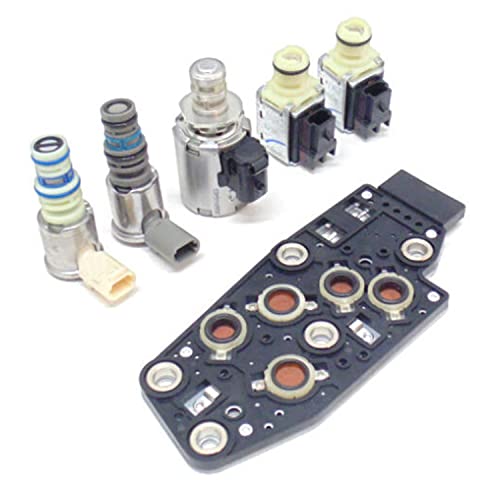
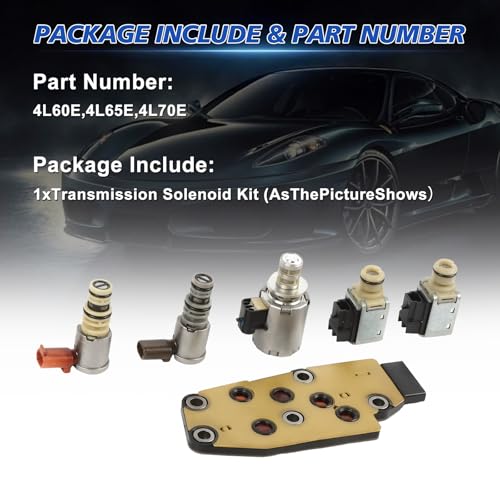
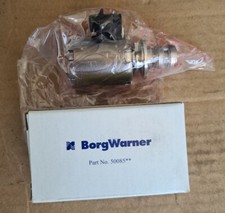
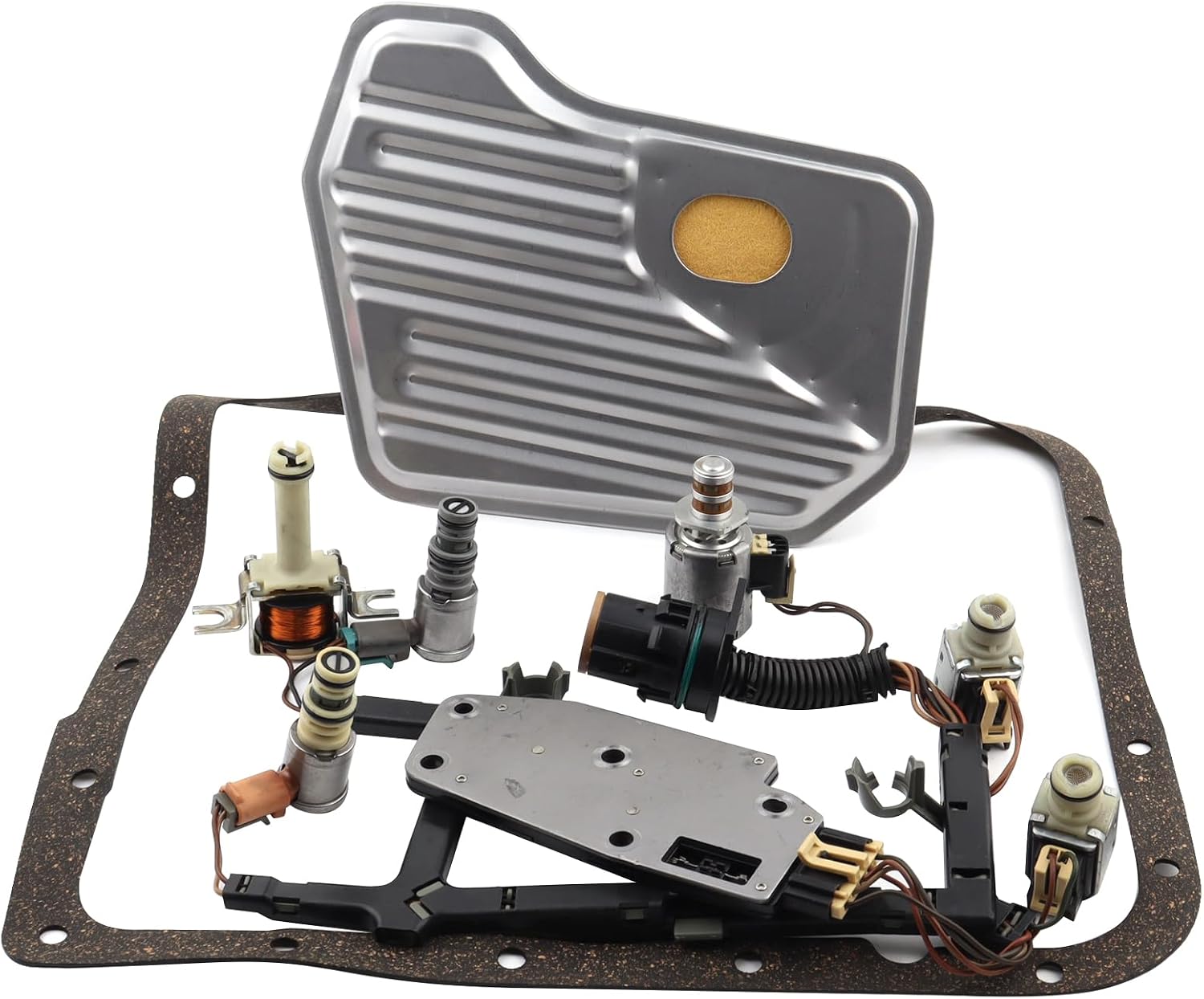
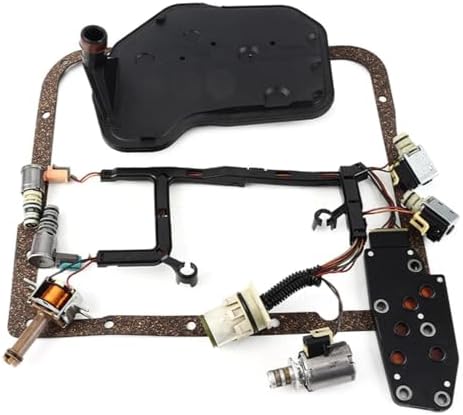
If your 2003-or-newer Silverado, Sierra, Tahoe, Yukon, Suburban, Avalanche or other 4L60E-equipped GM truck is holding second gear, slamming into drive, or never locking the converter on the highway, the trouble is very often on the electrical side of the valve body. This kit puts five brand-new aftermarket solenoids in one box for late-style 4L60E, 4L65E and 4L70E units: shift solenoid A, shift solenoid B, the 3-2 downshift control solenoid, the EPC (pressure control) solenoid and the TCC PWM solenoid.
What the solenoid kit does in a 4L60E
The 4L60E has no shift linkage to the valve body beyond the manual valve. Every upshift and downshift is a decision the computer makes and then carries out by switching two on/off shift solenoids. ATRA's solenoid charts list the 4L60E as a two-solenoid unit: A and B both on for first, A off and B on for second, both off for third, and A on with B off for fourth. Line pressure is a separate job handled by the EPC solenoid, which the computer varies by current to raise or lower pressure for shift feel. The 3-2 solenoid times the release of the 3-4 clutch against the apply of the 2-4 band on downshifts, and the TCC PWM solenoid ramps converter clutch apply instead of banging it on. All of them are fed from the actuator feed limit (AFL) circuit, which Sonnax puts at roughly 115 psi in this family.
Symptoms that point to this kit
- Stuck in one gear or starting out in second, with P0751, P0753, P0756 or P0758 stored for shift solenoid A or B
- Harsh, flared or soft shifts that come and go with temperature, with P0748 or a P0960-series pressure control code on later trucks
- No converter lockup at cruise, or lockup shudder, with P0740 or P0741
- A thump or bind on 3-2 kickdown, or P0785 for the 3-2 circuit
- Limp mode with several solenoid codes at once on a high-mileage unit
Keep in mind that P0741 on a 4L60E is frequently valve body bore wear rather than the TCC solenoid itself, so a new solenoid alone may not cure it.
How to confirm before you buy
Check the electrical path first. Unplug the case connector and measure each solenoid through the pins; ATRA lists shift solenoid A and B at 20-40 ohms and the pressure control solenoid at 3.5-8.0 ohms, while a Transmission Digest case study used the GM chart figure of 19-31 ohms for the shift solenoids. A reading in range does not prove a solenoid is healthy, because a sticky plunger can still respond slowly, which is exactly what that article tracked down on an S-10. Also inspect the harness and terminals, since ATRA has documented poor crimps setting the same codes as a dead solenoid. Our shift solenoid A and B code guide walks through the full test sequence.
Fitment
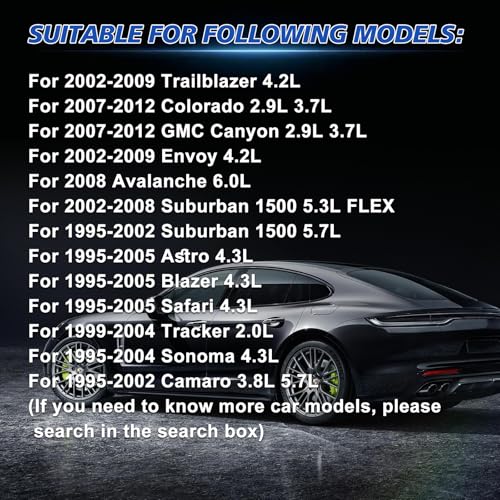
This set is listed for GM 4L60E, 4L65E and 4L70E transmissions from 2003 and later with DIN-style connectors. GM changed the connectors and pressure switch arrangement around the 2003 model year, and mid-year changeover trucks exist, so pull the pan and compare your old solenoids with the photos before ordering, or send us your year and VIN and we will confirm it. Trucks built 1993-2002 need an early-style set such as the 4L60E solenoid kit for 1993-2002. Browse every part for this transmission on our 4L60E parts page.
Install notes
- Drain and drop the pan, pull the filter and unplug the internal harness at each solenoid.
- Shift A and B come out after removing their retaining clips; the EPC, 3-2 and TCC PWM solenoids are held by bolts or clips on the valve body.
- Wet each new O-ring with clean ATF and push the solenoids in straight so the seals do not roll.
- Look hard at the internal harness while it is exposed. If the insulation is brittle or a connector latch is broken, skip this kit and order the 2003-2006 master solenoid kit with harness instead so the wiring is renewed at the same time.
- Fit a new filter and pan gasket and refill with Dexron VI, checking the level hot with the engine running.
- Clear codes, run a shift adapt relearn if your scan tool supports it, and road test through every gear and into lockup.
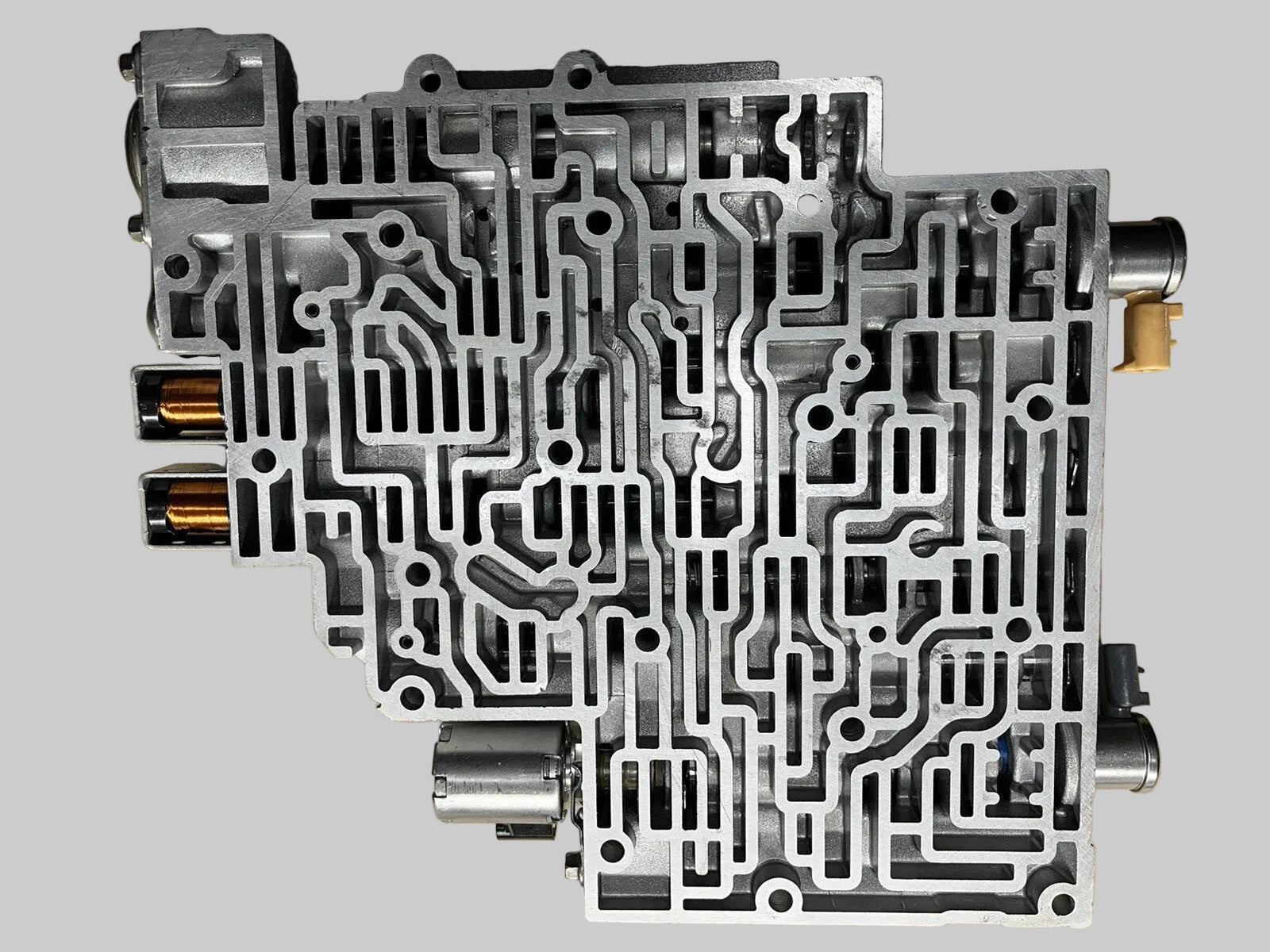
If codes return with good solenoids and good wiring, the valve body itself is the next suspect; a vacuum test of the bores will tell you whether worn bores are bleeding off the pressure these solenoids control. If they are, a remanufactured 2003-2006 valve body is usually the faster fix than reaming bores at home.