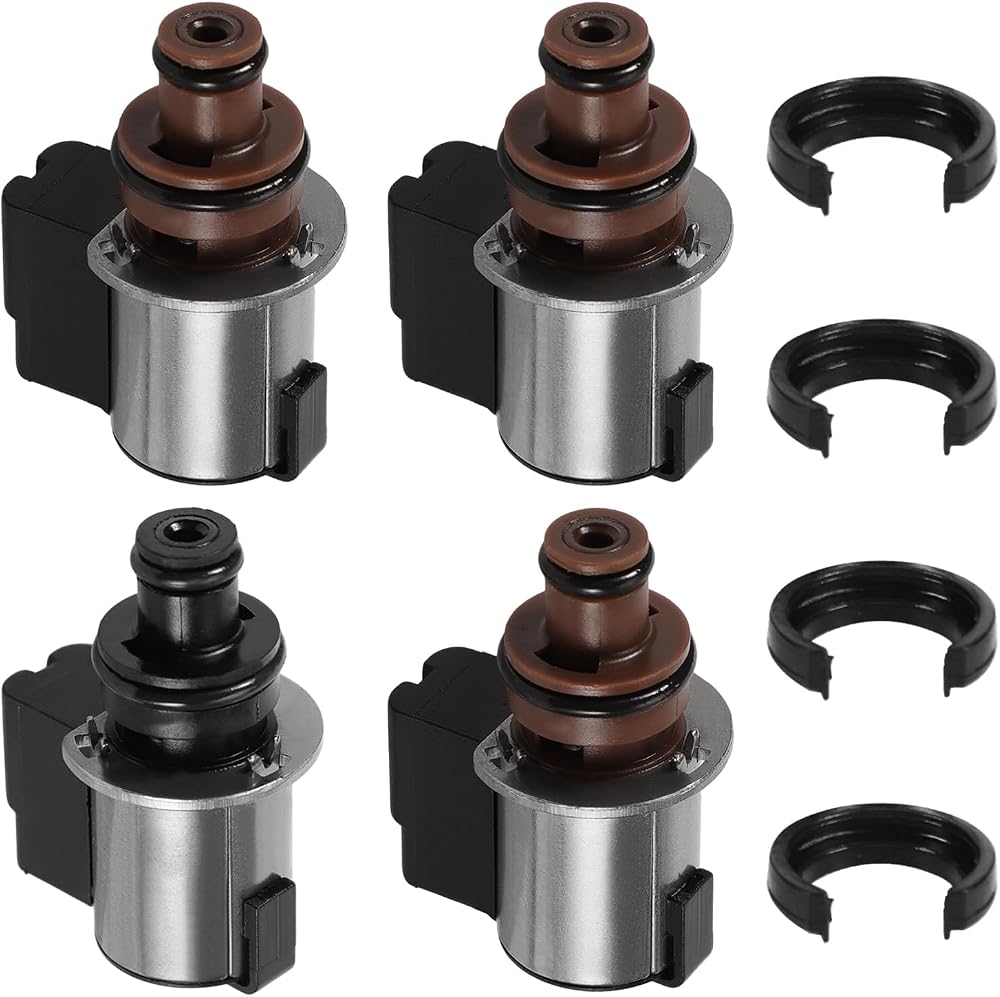
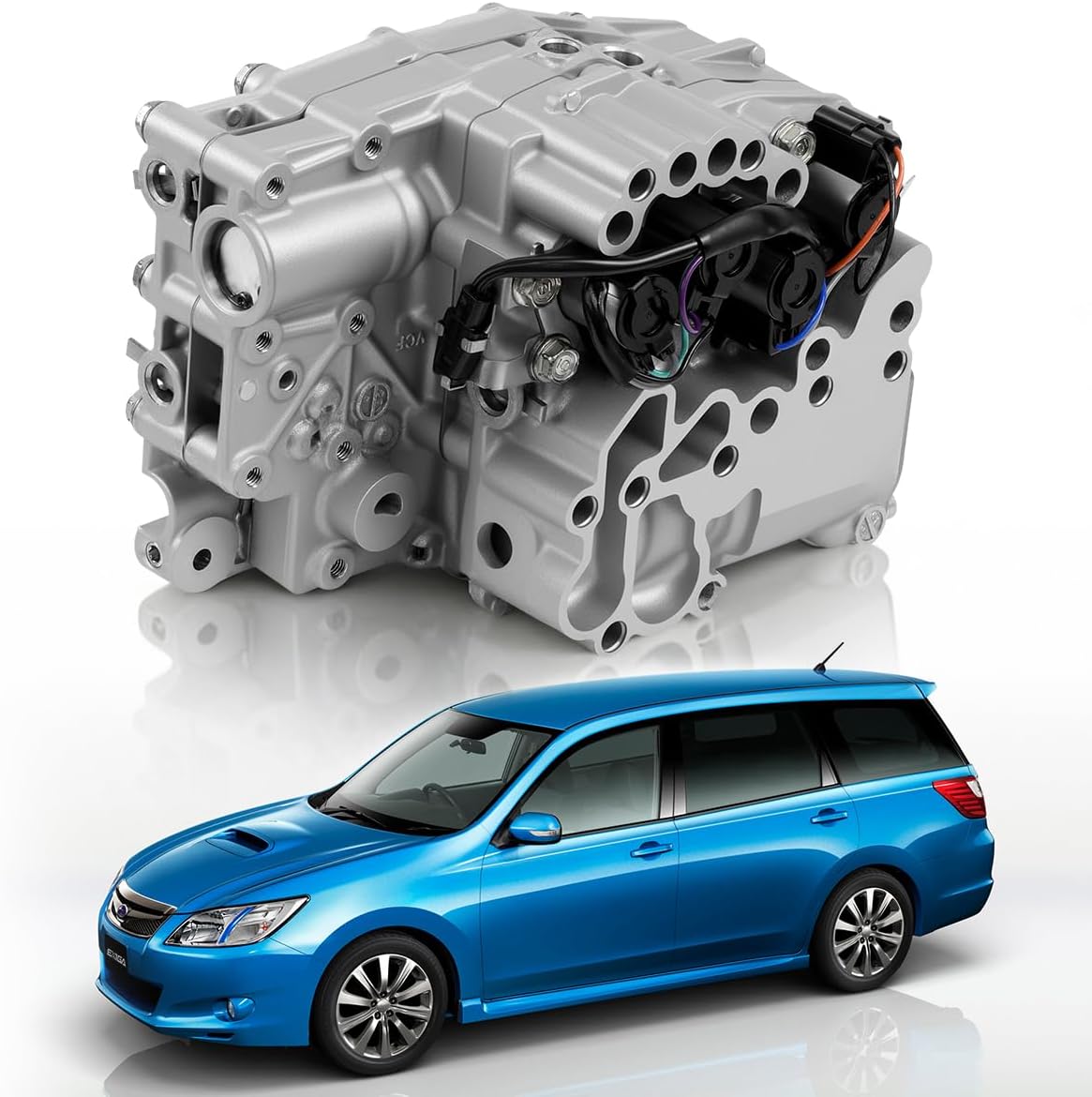
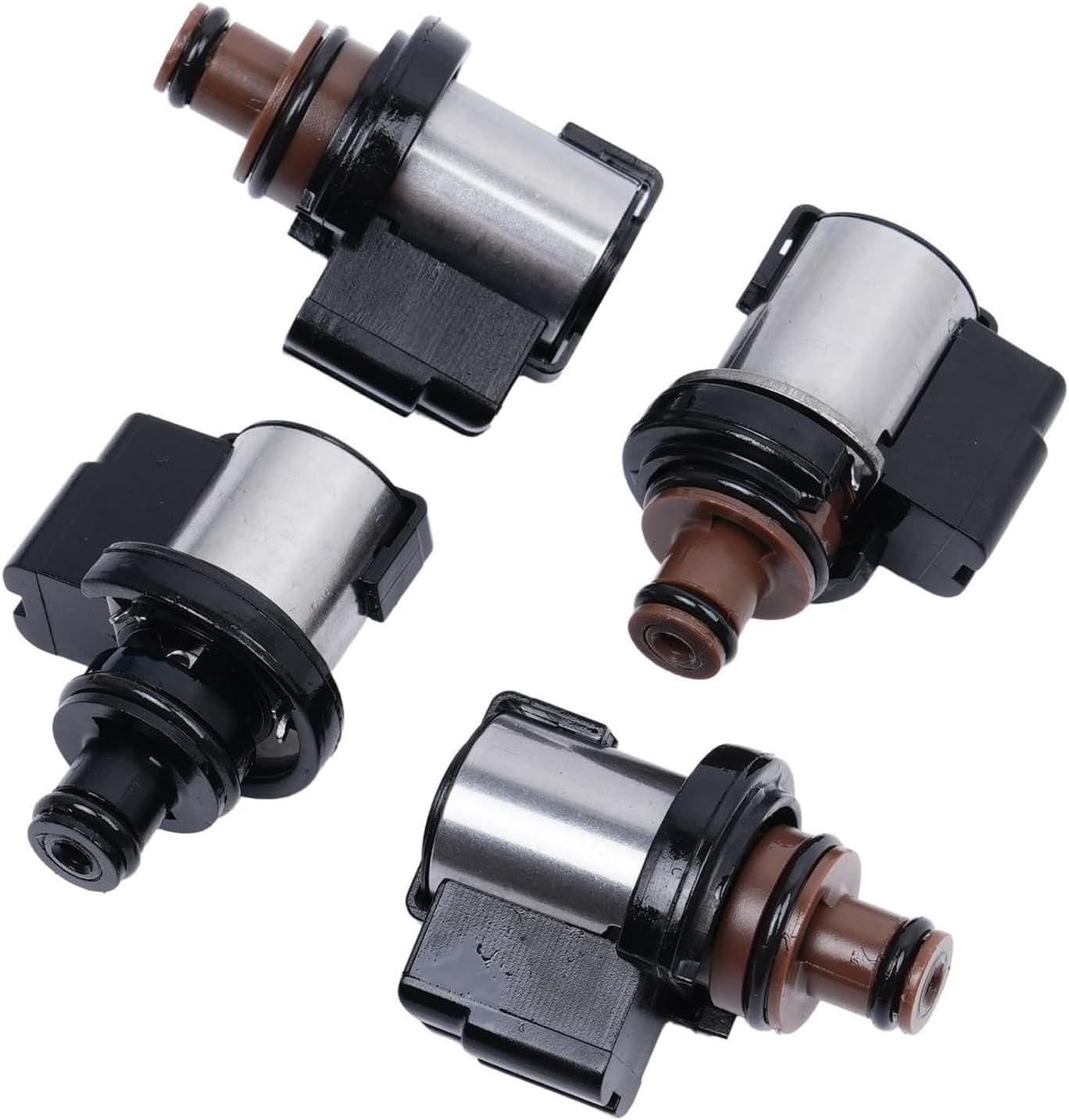
A Subaru Outback, Forester, Impreza, Legacy, Crosstrek or WRX with the Lineartronic CVT that shudders pulling away, hesitates in the 20 to 40 mph range, lights the AT temperature lamp, or keeps setting a lock-up solenoid code like P2763 is very often suffering from one tired solenoid on the valve body. This kit replaces four of them, with four new isolator rings, for the TR690 and the smaller TR580, so you can fix a solenoid fault without buying a complete valve body.
What these solenoids do in a Lineartronic CVT
Subaru's chain-type CVT is controlled entirely by solenoids on the valve body. ATRA's GEARS coverage describes seven of them: secondary linear, primary-up, primary-down, AWD transfer clutch, lock-up duty, lock-up on/off and forward/reverse linear. The primary-up and primary-down solenoids move the pulley ratio, the transfer clutch solenoid sets how much torque goes to the rear axle, and the lock-up duty solenoid controls torque converter clutch apply. ATRA Technical Bulletin 1922 notes that the lock-up duty, primary-up, primary-down and transfer clutch solenoids are all normally closed and interchangeable between Gen 1 and Gen 2 valve bodies, and that the lock-up duty solenoid is the one that fails: it goes open circuit when hot and sets P2763. That bulletin also notes Subaru does not sell the solenoids separately, which is why a kit like this saves a valve body.
Symptoms of a failing solenoid
- Shudder or judder at light throttle, worst from a stop or around 20 to 40 mph
- Converter that will not lock, or locks and unlocks, with higher cruise rpm
- A P2763 or other lock-up duty solenoid code that appears once the fluid is hot
- Sluggish response or a ratio that will not change, which can follow a primary-up or primary-down fault
How to confirm it before you buy
Measure resistance first. The listing gives 12-13 ohms for the three lock-up style solenoids and 3-3.5 ohms for the pressure-control unit, and Transmission Digest gives 10 to 13.5 ohms for the TCC solenoid; check at the transmission connector with the harness unplugged, then again hot if the fault only appears warm. Our Subaru Lineartronic CVT service guide covers the fluid level check and the chain-slip test using graphed pulley speed sensors, which rules out mechanical damage. For codes that point at pressure rather than a solenoid circuit, start with the CVT harsh or delayed shift walkthrough.
Fitment
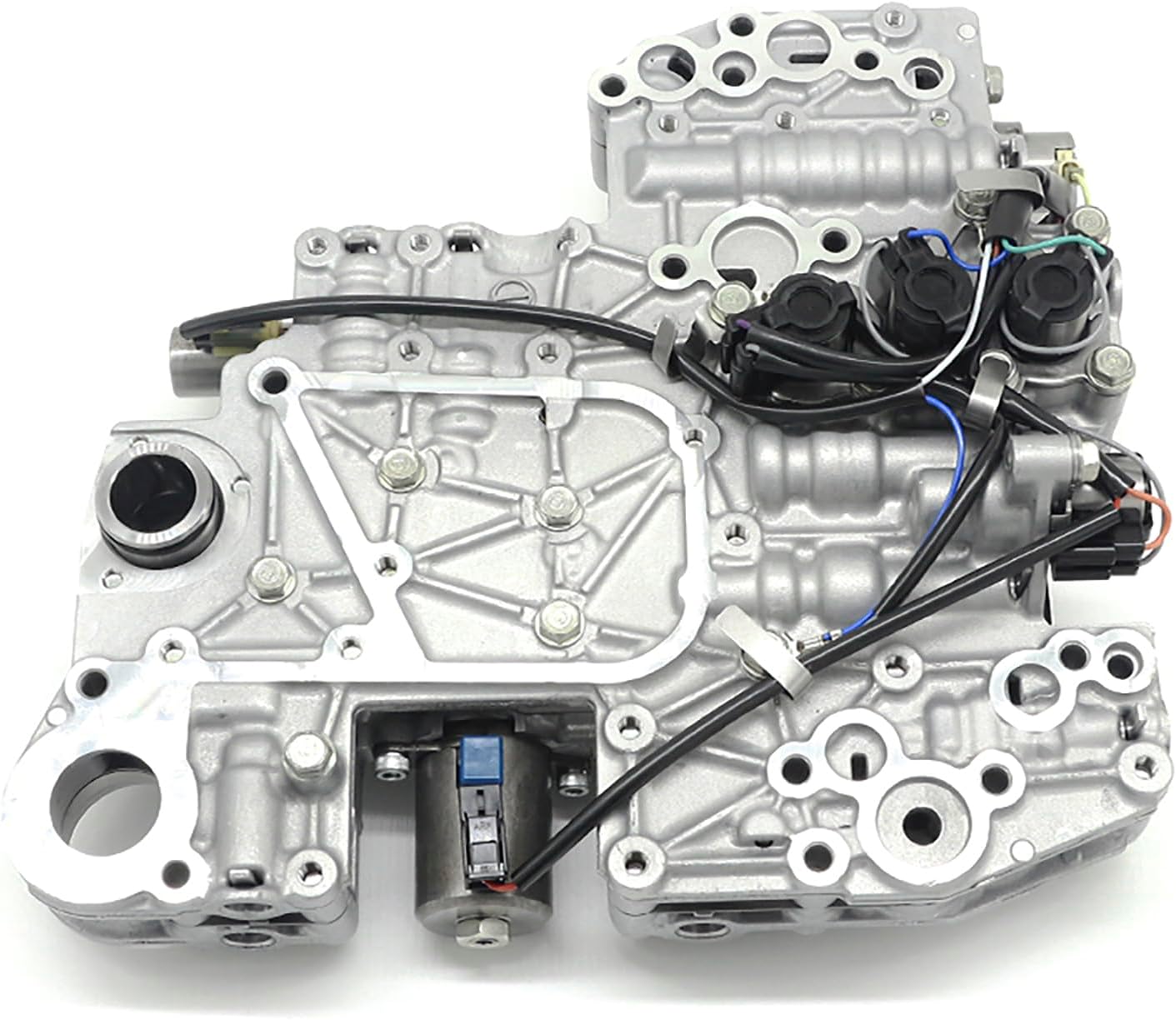
The listing covers the TR690 and TR580 in the 2012-2023 Impreza, 2014-2023 Forester, 2016-2019 Crosstrek, 2013-2019 Legacy and Outback and 2015-2020 WRX. It references the valve body assemblies 31825AA050, 31825AA051, 31825AA052 and 31706AA030 through 31706AA033, which are the units these solenoids mount to. Subaru revised these valve bodies more than once, so compare connector style and solenoid shape with the photos, and note ATRA's point that a Gen 1 to Gen 2 swap of the lock-up duty solenoid may need the wires cut and soldered. Send us your year and VIN and we will confirm. More parts are in our CVT collection.
Install notes
- Drain the fluid, drop the pan and unbolt the old solenoids from the valve body. Mark each position so the right solenoid goes back in the right bore.
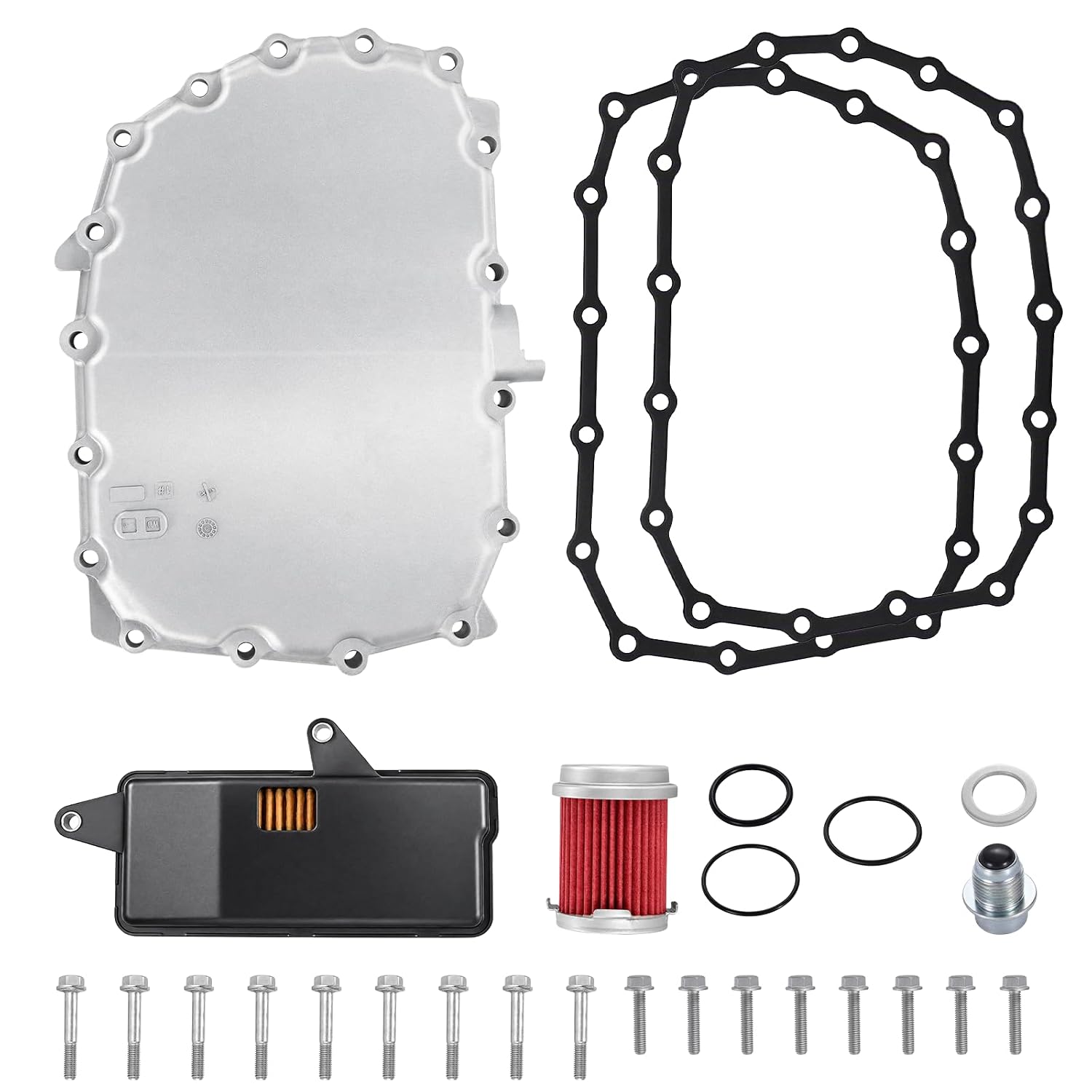
- Fit the supplied isolator rings, inspect the internal harness, and clean the pan magnet.
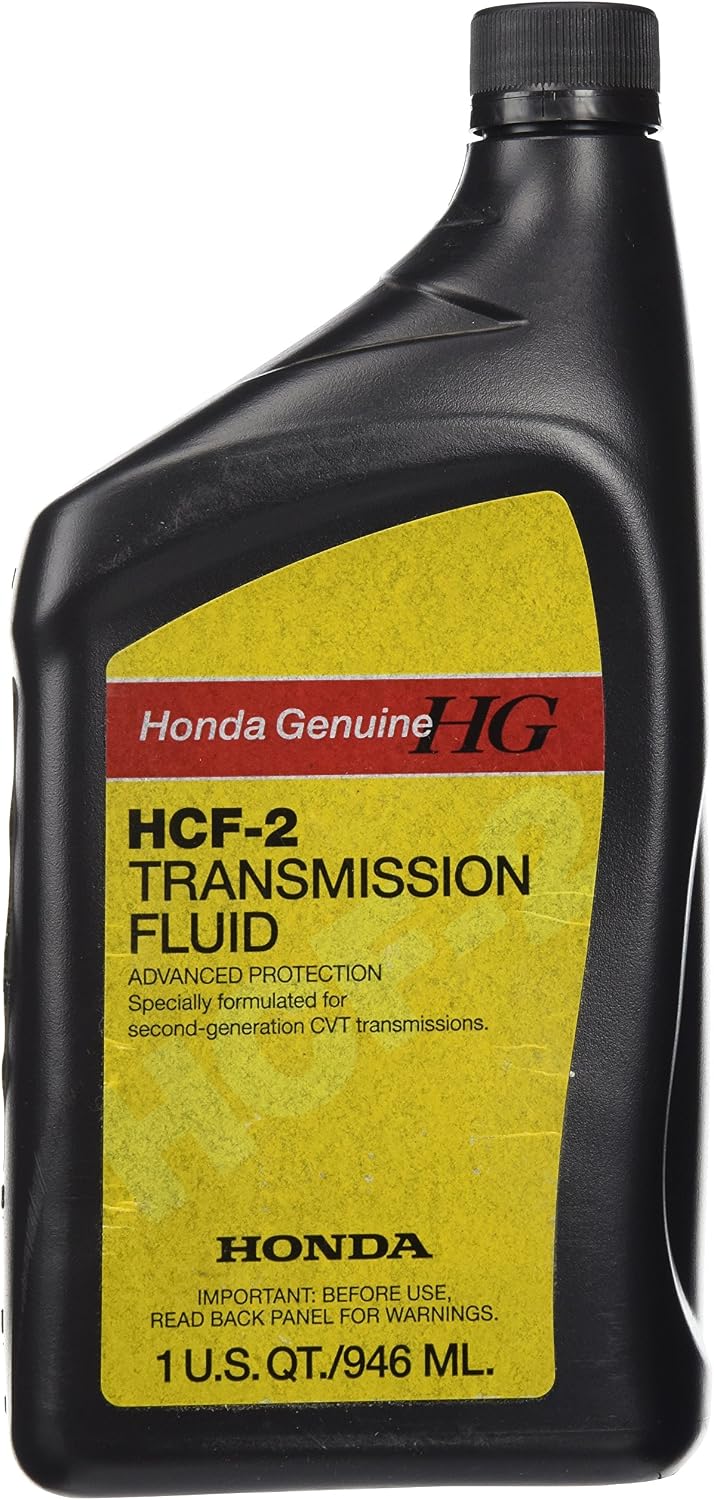
- Refill only with the Subaru CVT fluid specified for your model year, such as genuine Subaru CVTF-II where that is the correct call; never Nissan NS-2/NS-3 or a universal CVT fluid.
- Set the level at the fill plug at 95 to 113 F, clear codes and let the TCM relearn.
If the valve body bores are worn or the fault is not electrical, a complete TR690 valve body assembly is the next step.