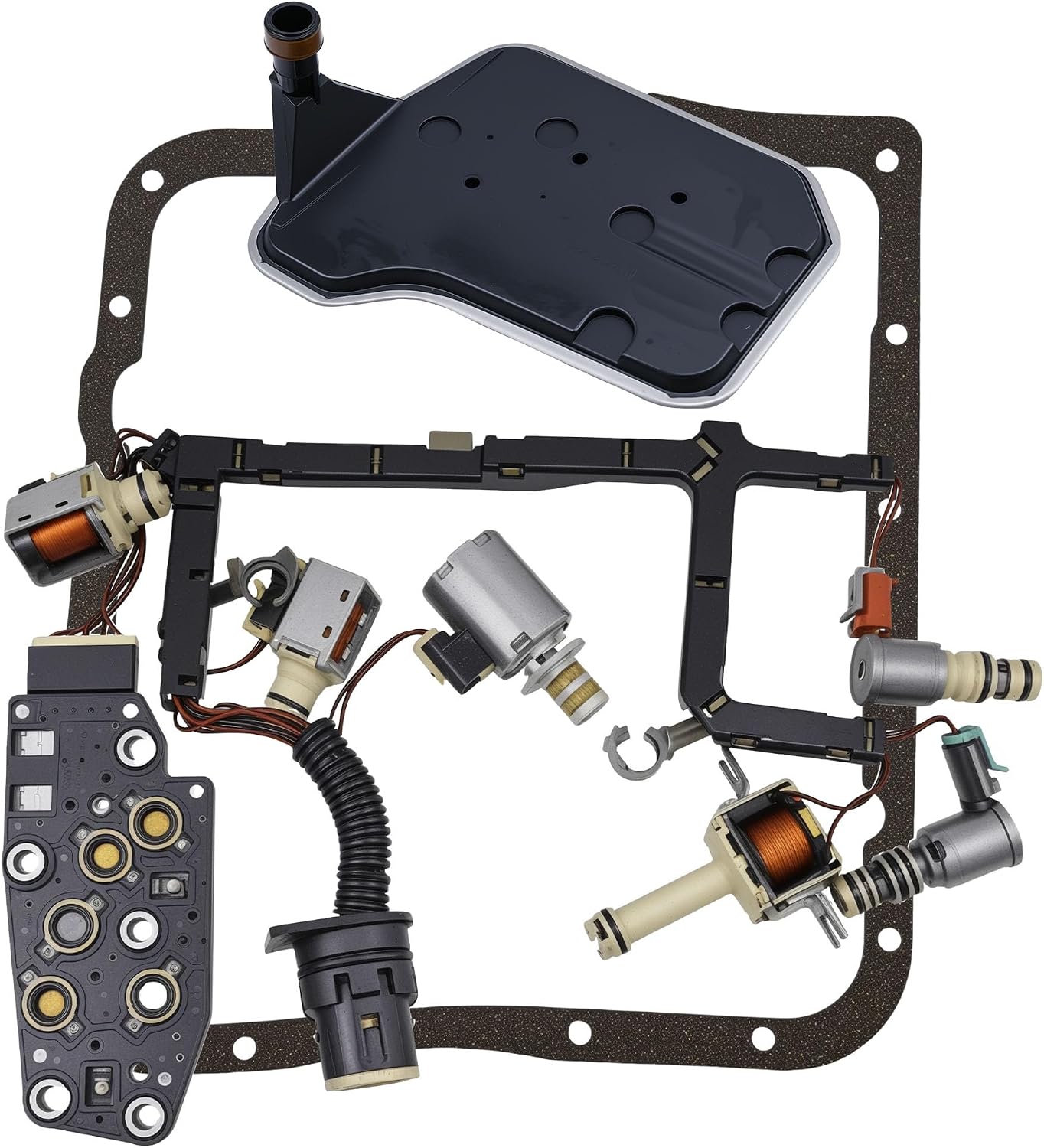
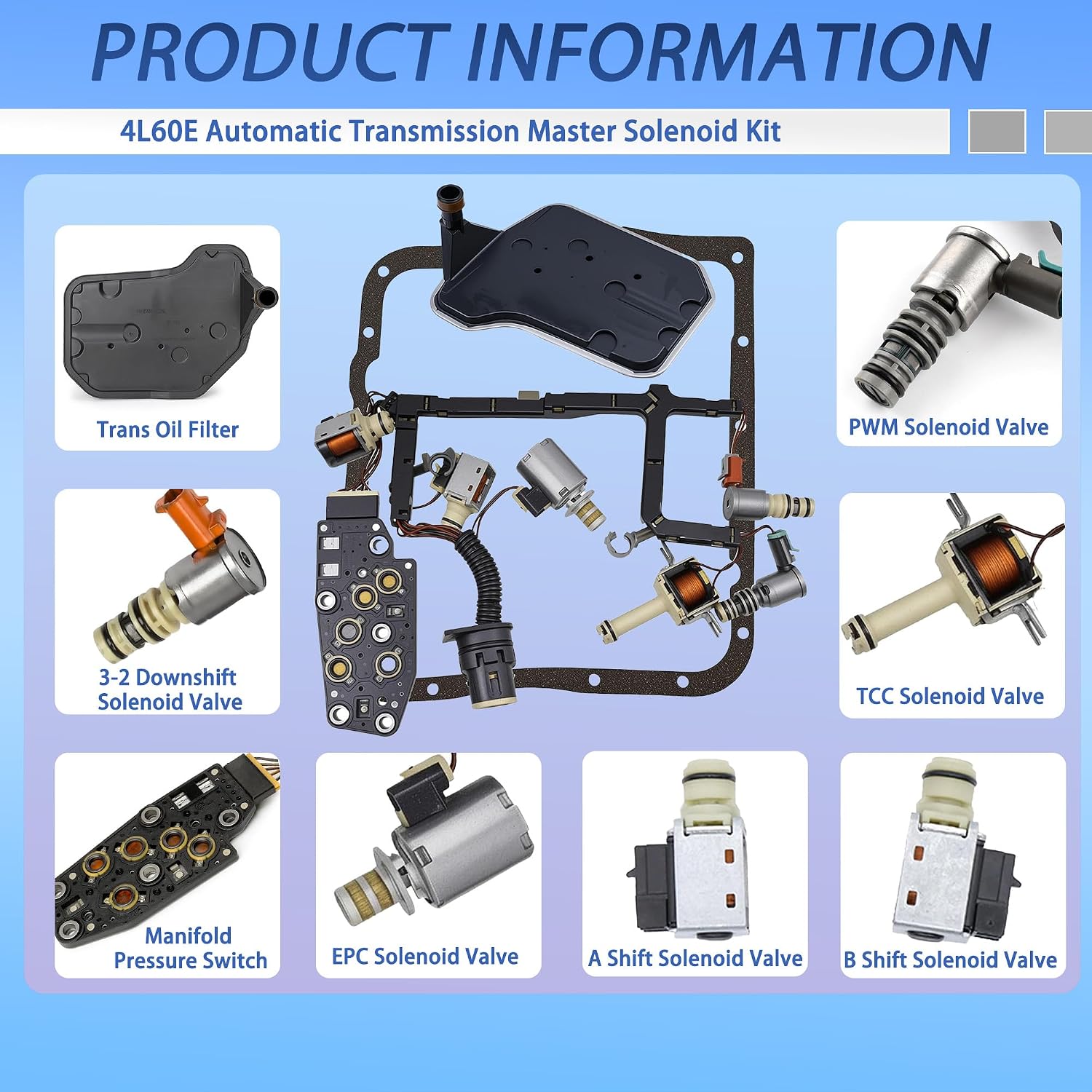
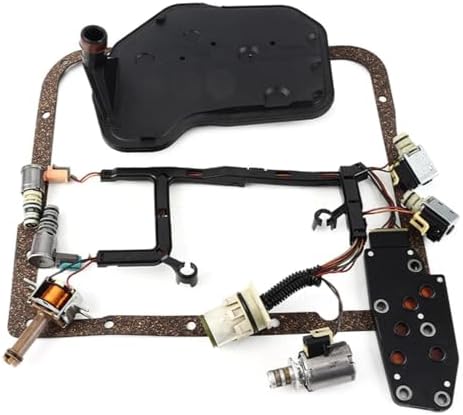
If your 2003-2005 Silverado 1500, Sierra 1500, Tahoe, Yukon, Suburban, Avalanche or other 4L60E or 4L65E truck has started throwing shift solenoid codes, refuses to upshift, or shifts fine one day and wanders the next, the problem is usually on the electrical side of the valve body rather than in the clutches. This kit replaces that whole electrical side at once: the solenoid set, the internal wire harness, the pressure switch manifold (PSM) and a new transmission filter, all for the 2003-2005 M30 and M32 units.
What the solenoids, harness and PSM do in a 4L60E
The 4L60E is a two-shift-solenoid design. The PCM switches the 1-2 (A) and 2-3 (B) solenoids on and off in four combinations to pick a gear, pulses the pressure control (EPC) solenoid to set line pressure, and runs the TCC solenoids to apply and release the converter clutch. The internal harness carries every one of those signals from the case connector to the valve body, and on these units it also carries the transmission fluid temperature sensor. The PSM sits on the valve body and reports which range the manual valve is actually in, so the PCM knows whether it is in Park, Reverse, Drive or a manual range when it calculates pressure and lockup. Those three pieces live in the same hot fluid for the same number of miles, which is why a failure in one usually means the others are close behind.
Symptoms that point at this kit
- Shift solenoid codes such as P0751 or P0756, or circuit codes P0753 and P0758
- No upshift, stuck in one gear, or a default-gear limp mode that clears after a key cycle
- Pressure control trouble: harsh or soft shifts and code P0748
- Converter lockup that will not engage, or TCC circuit codes
- Range-switch codes such as P1810, or fluid temperature codes in the P0711-P0713 range
- Intermittent shifting that changes when the truck hits a bump or the harness heats up
A leaking or cracked PSM is easy to miss. It can send the wrong range signal and produce harsh engagements and lockup complaints that look exactly like a bad solenoid.
How to confirm it before you buy
Start at the case connector. With the key off, unplug it and measure the solenoid circuits through the pins; a reading far outside the resistance range in the ATRA bulletin, or a dead short to the case, confirms an electrical fault inside the pan. Wiggle the outside harness while watching live data too, because a poor terminal crimp can set several solenoid codes at once. Our 4L60E shift solenoid testing guide walks through the pin map, and the P0748 pressure control guide covers EPC-specific faults. If the fluid is black and full of friction material, fix the mechanical damage first; new solenoids will not cure burned clutches.
Fitment
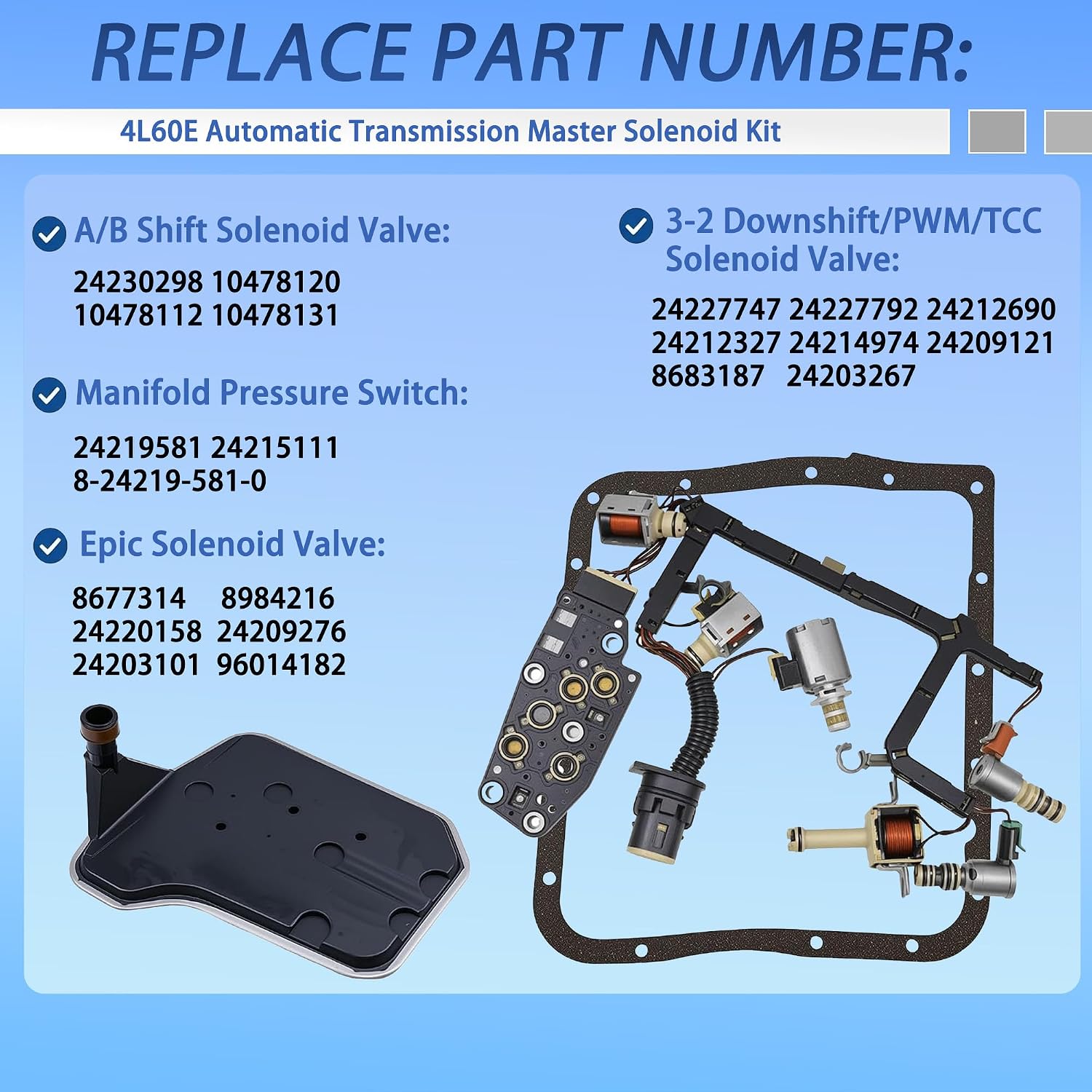
This kit is built for 2003-2005 GM 4L60E and 4L65E transmissions (RPO M30 and M32). It cross-references OEM numbers 24230298, 24208576, 24215111, 24227747, 8677314 and 8683187. The 1993-2002 units use a different EPC solenoid, harness routing and PSM, so they will not accept these parts. GM also made running changes around the 2005-2006 model change, so check your solenoid connector shapes and PSM against the photos, or send us your year and VIN and we will confirm before it ships. You can browse every part for this transmission on our 4L60E parts page.
Install notes
- Drain the pan, pull the old filter and make sure its seal comes out of the pump bore with it.
- Unplug the case connector, then remove the solenoids, PSM and harness. Lay the valve body bolts out in order, because they are different lengths.
- Inspect the separator plate gaskets while you are in there. If they are torn, a GM separator plate with gaskets is cheap insurance; match its number to your unit first.
- Fit the new parts with fresh O-rings, torque the valve body bolts to factory spec in sequence, and seat the new filter seal fully.
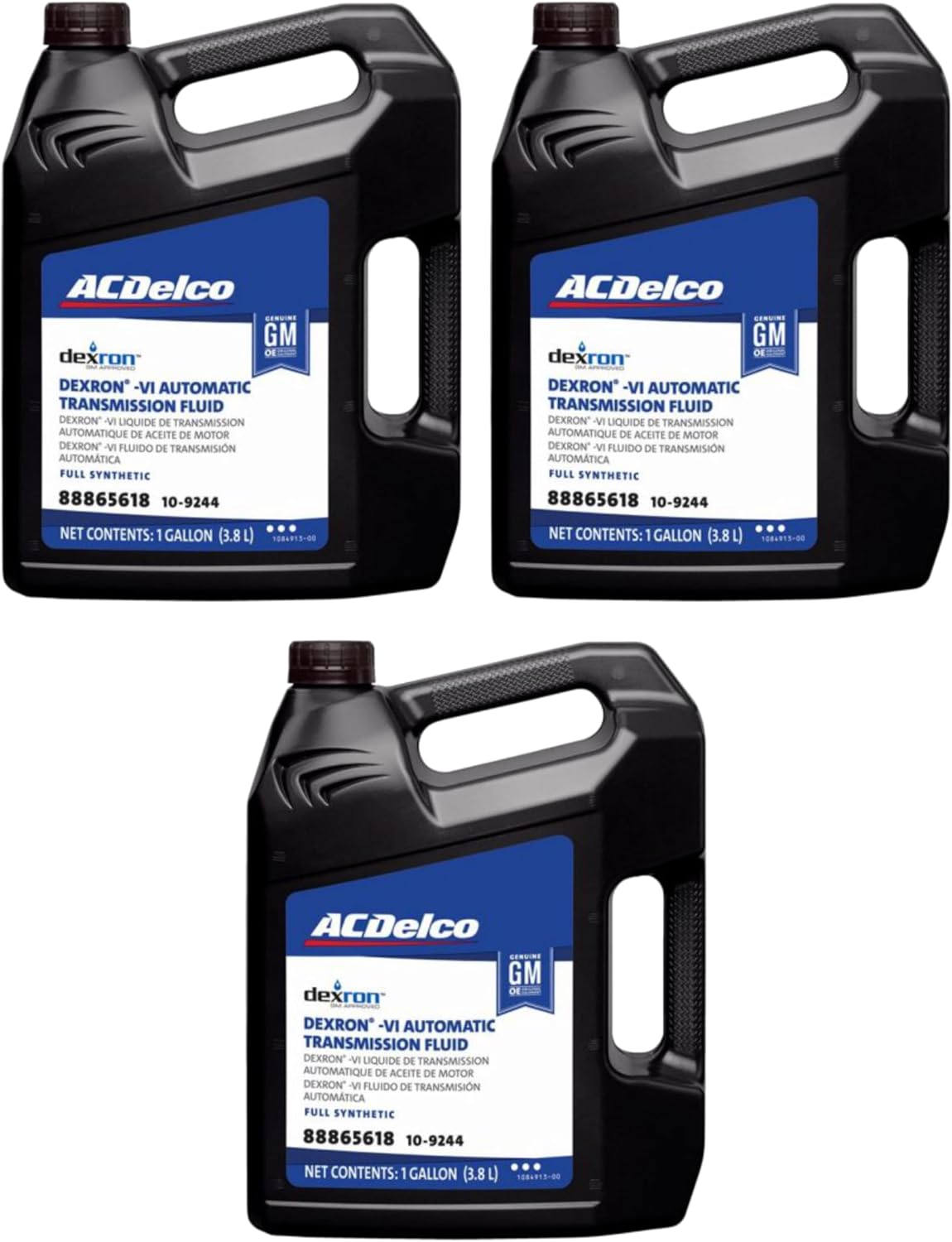
- Refill with Dexron VI such as ACDelco Dexron VI full synthetic, check the level hot with the engine running, clear codes and reset adapts if your scan tool supports it.
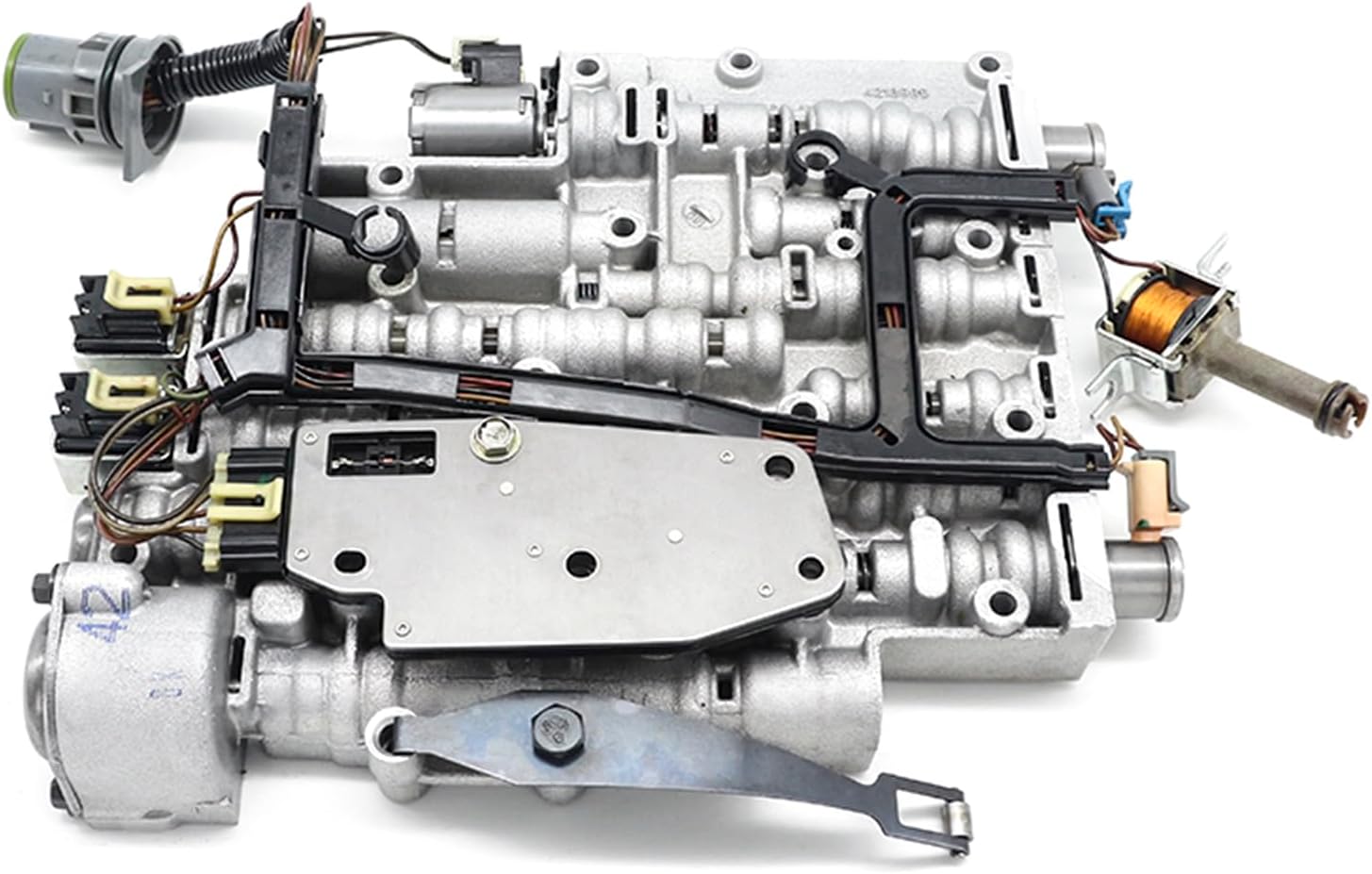
If the pan was full of metal or the shifts are still wrong after the electrical side is fresh, the valve body bores are the next suspect; a vacuum test will tell you whether a complete valve body with solenoids is the better repair.