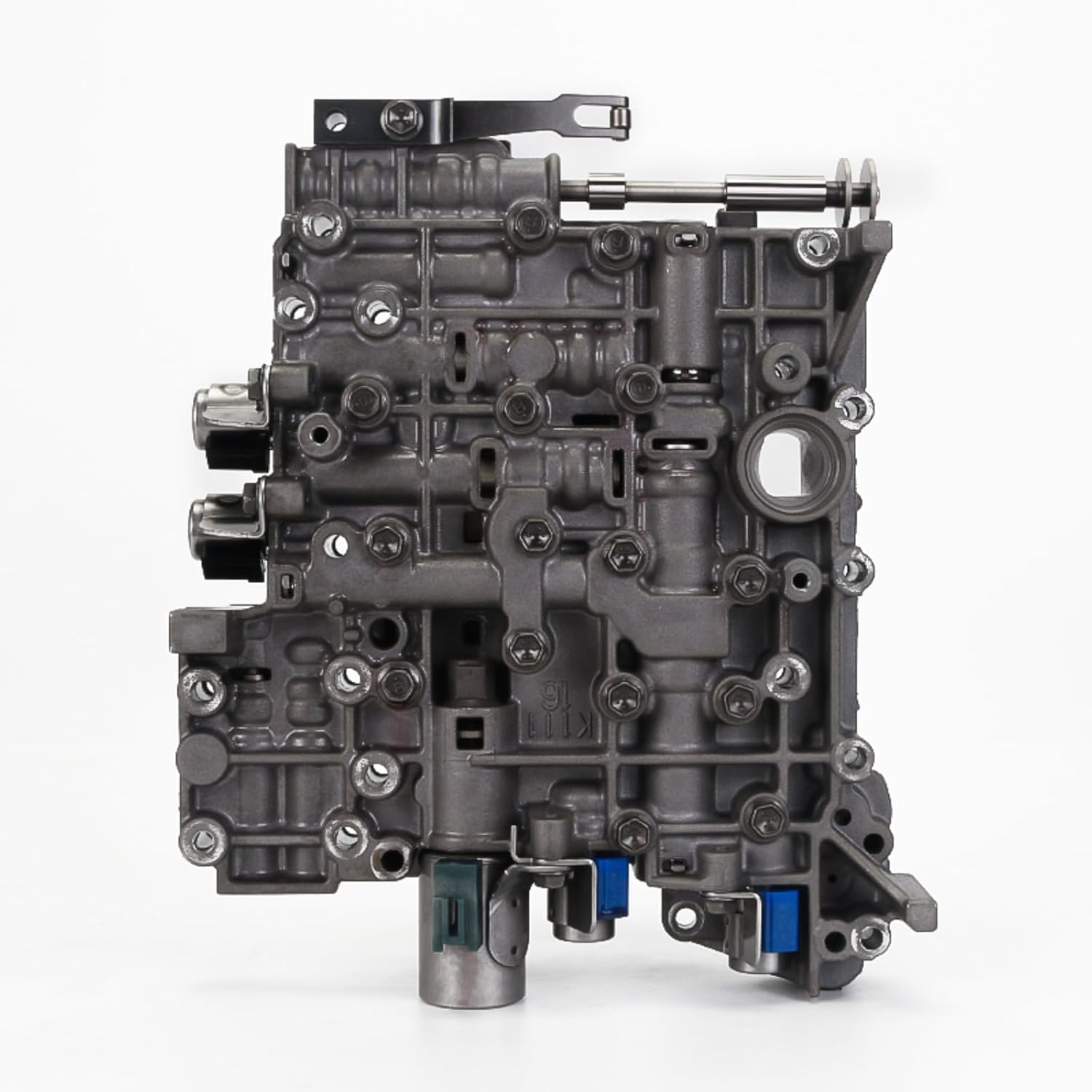
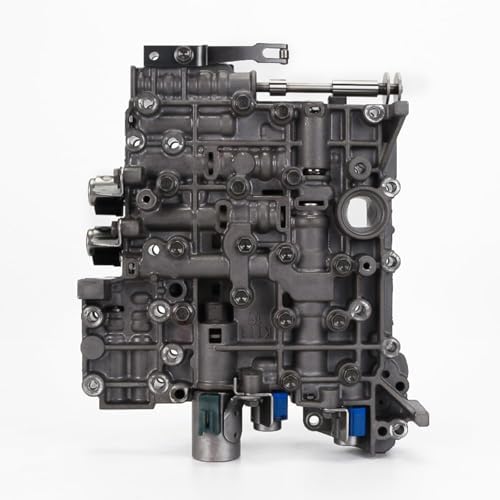
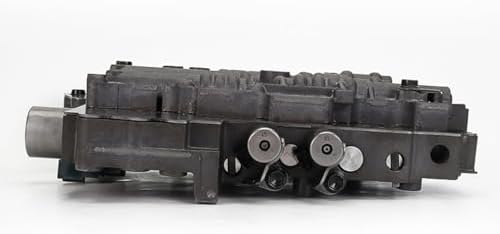
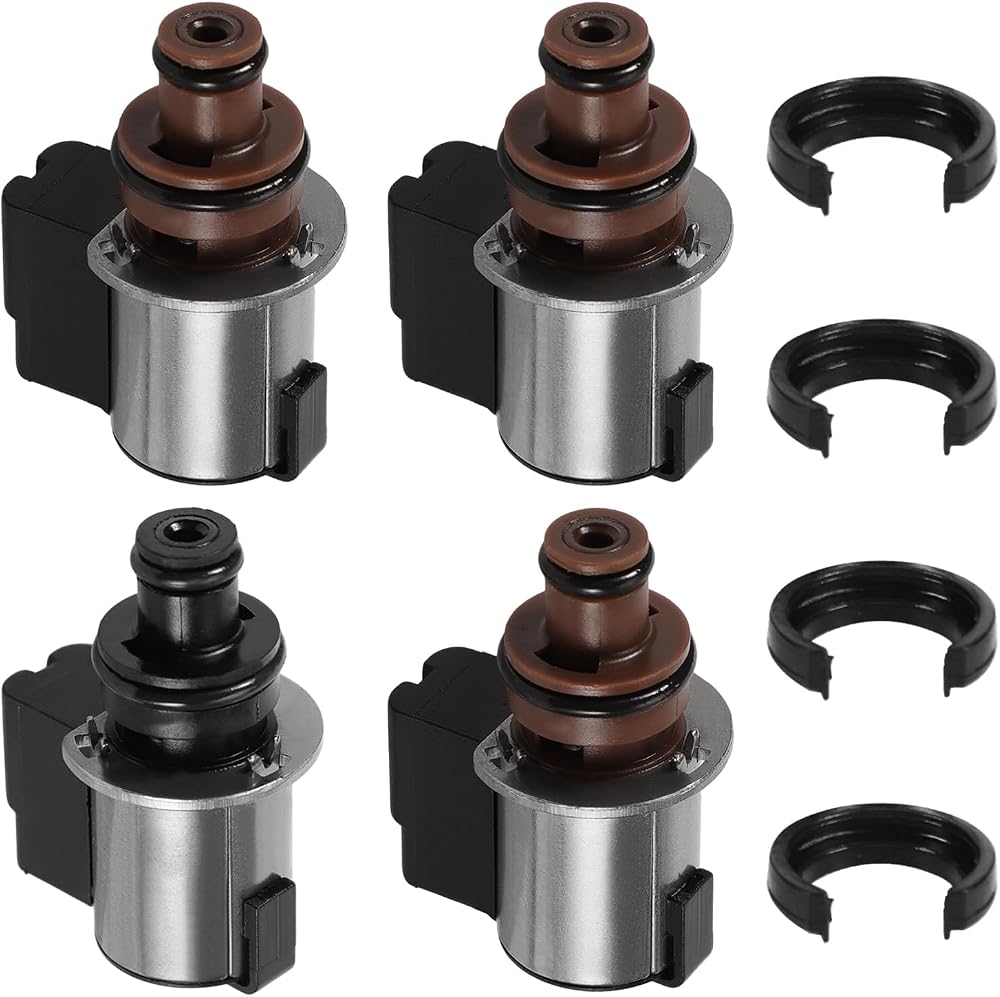
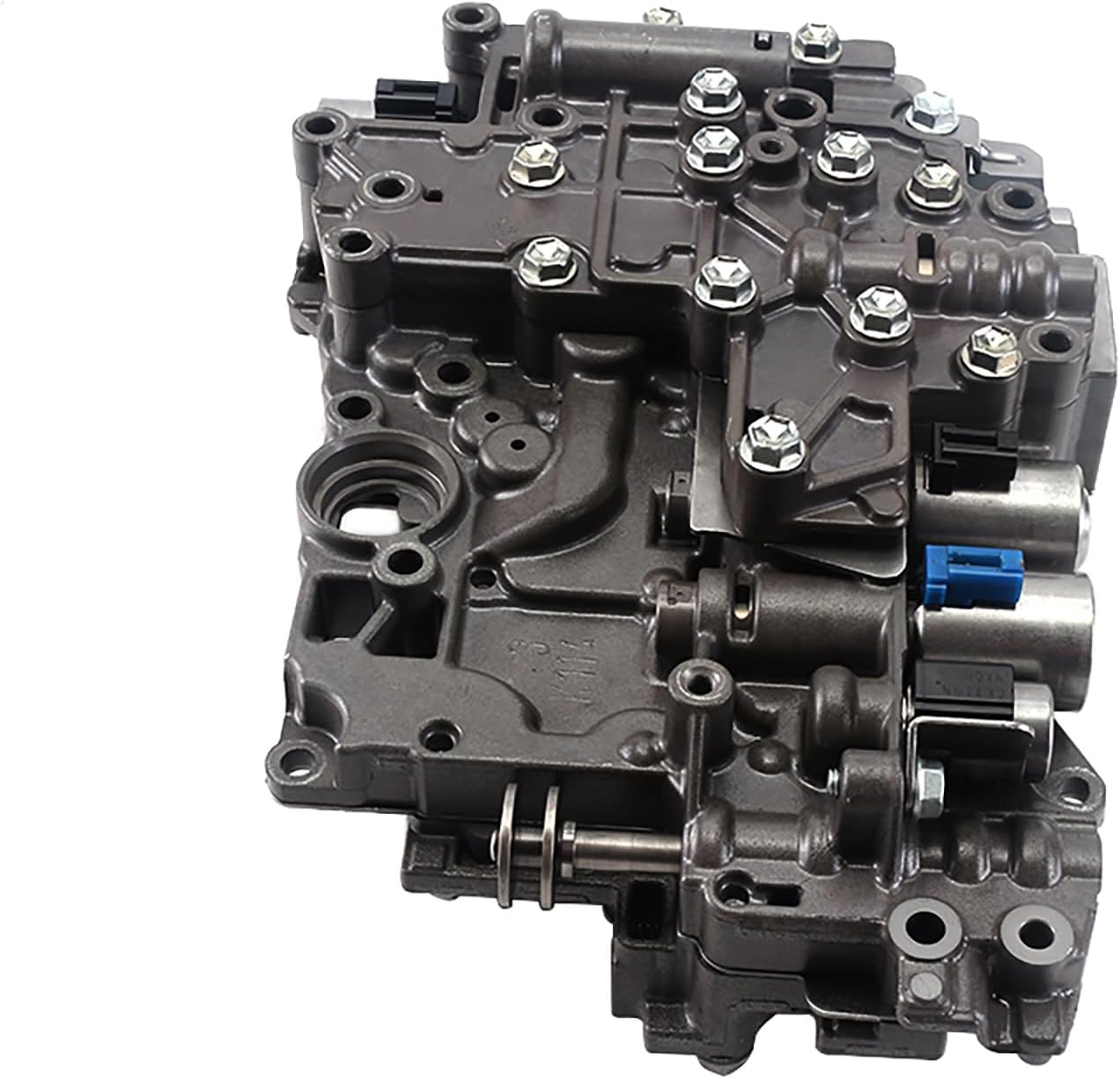
If your Toyota CVT flares or hangs when you pull away from a stop, feels like it's thinking too long before it engages Drive, or has dropped into limp mode and won't let the engine past a few thousand RPM, the valve body is the most common place that starts. This is a complete K111/K112 valve body assembly with the shift and lockup solenoids already mounted and wired in, so it goes in as one unit instead of a pile of individual parts.
What the Valve Body Does in a K111/K112 CVT
Toyota's K-series CVT, built by Aisin, uses two pulleys connected by a steel belt instead of a fixed set of gears. There is no "2nd gear" or "3rd gear" to slip into - the transmission continuously changes the pulley ratio to match road speed and throttle input. The valve body is what makes that possible. It is a cast aluminum block full of precision-machined bores and spool valves that route pressurized fluid to the primary pulley, the secondary pulley, and the torque converter lockup clutch, all on commands from the transmission computer. The shift and lockup solenoids mounted on the valve body are the electrical interface - they open and close in response to TCM commands, and the valve body translates that into actual hydraulic pressure at each pulley. When the aluminum bores wear from years of fluid cycling through them, or a solenoid's coil weakens, the pressure commanded by the computer and the pressure actually delivered start to disagree, and that disagreement shows up as the symptoms below.
Symptoms of a Failing K111/K112 Valve Body
- Flare or hesitation when pulling away from a stop, like the engine revs before the car actually moves
- A noticeable delay before the transmission engages after shifting into Drive or Reverse
- Shudder or surge at a steady cruise speed, often mistaken for a bad torque converter
- The transmission dropping into limp mode and capping engine RPM, usually with a shift solenoid or ratio-related code stored
None of these symptoms are unique to the valve body - low or badly degraded fluid can cause nearly identical complaints in any CVT - so it is worth ruling that out first. Our guide on diagnosing harsh or delayed CVT shifts walks through checking fluid condition and level before you start replacing hard parts, and if the car has already gone into a protective mode, what actually triggers CVT limp mode covers the difference between a fluid problem, a solenoid problem, and a worn valve body.
Fitment
Toyota reused the K111 and K112 designations across more than one production run and more than one platform, and the internal casting changed more than once within that span. The only reliable way to confirm this matches your transmission is to pull the pan and compare the casting marks and part number stamped into your original valve body against this one before you order, or send us your vehicle's year and VIN and we'll confirm the match for you. Do not rely on the model name alone. If you are shopping for parts for a different Toyota CVT, our full CVT transmission parts collection covers the other Toyota, Nissan, Honda and Subaru CVTs we stock.
Install Notes
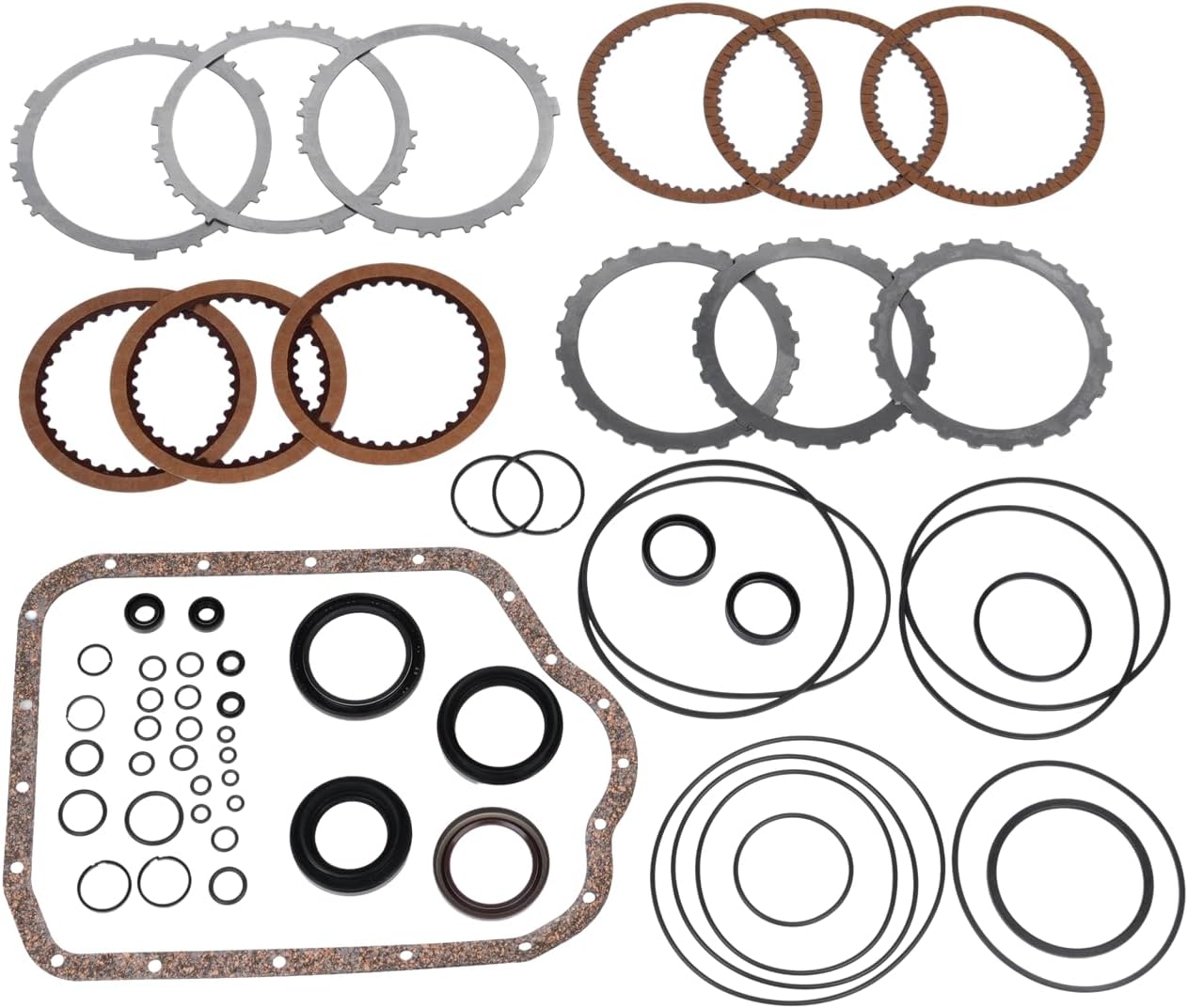
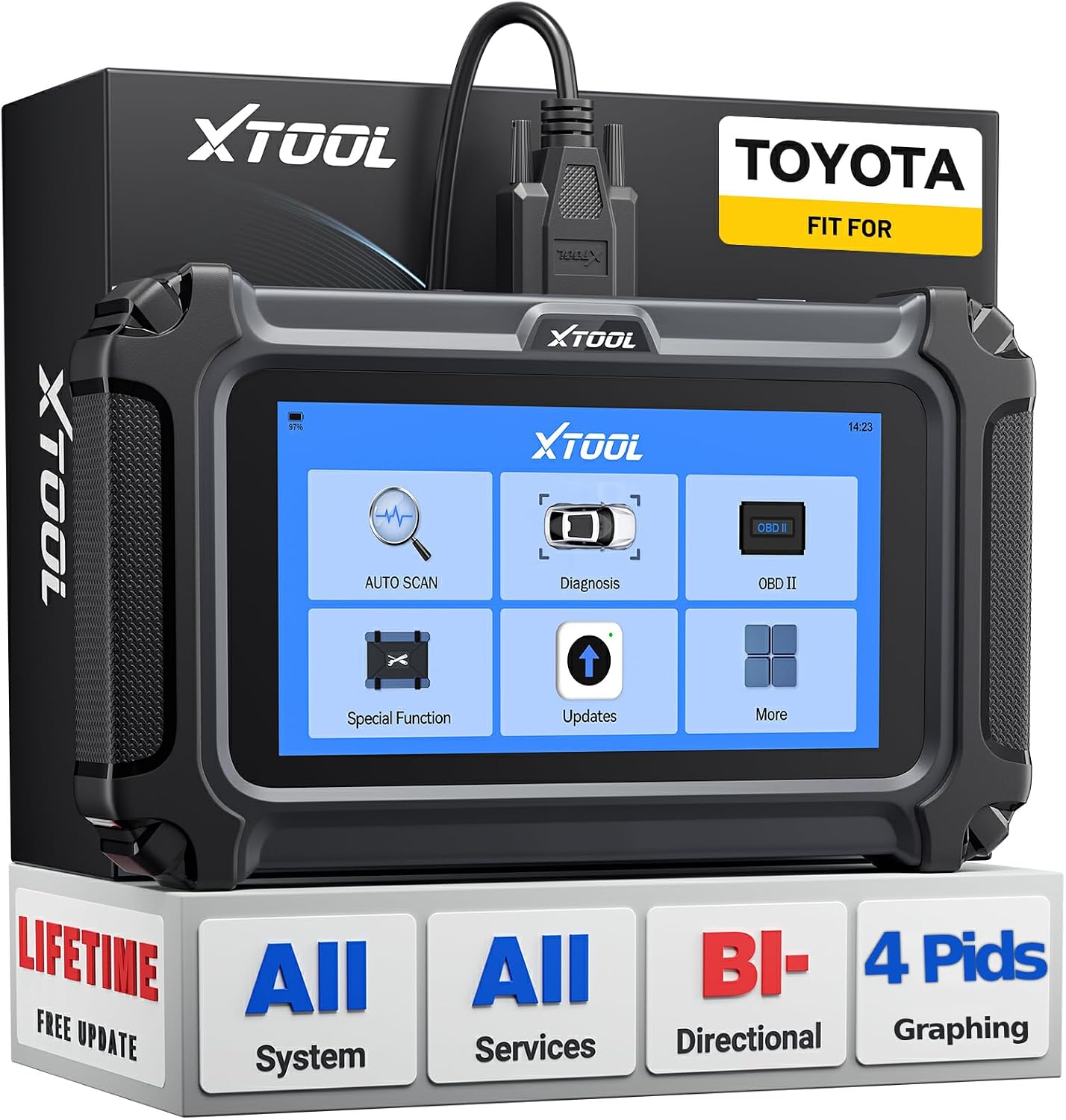
Drop the pan and pull the filter first so you can see what's actually in the bottom of the pan - metal flake or heavy clutch material is a sign the problem is bigger than the valve body. Unplug the internal wiring harness at the case connector, then remove the valve body bolts in the pattern the service manual specifies rather than a straight line, so the separator plate underneath doesn't warp as the clamping pressure comes off unevenly. Keep any check balls and springs in order as they come out - they are not interchangeable between bores. Set the new valve body down on a fresh gasket, torque the bolts in the reverse of the removal sequence, reconnect the harness, and install a new filter and pan gasket while everything is open. Refill with the CVT fluid your Toyota's owner's manual specifies - these units are sensitive to using the wrong spec, and it is not included with this part. Before you road test, clear the transmission's adaptive values and cycle the shifter through every position with the engine running at operating temperature, then drive it through a few full warm-up cycles so the TCM relearns its shift and pressure tables from a clean slate. A bidirectional scan tool that supports Toyota transmission functions, like the XTOOL IP500 Toyota scan tool, makes that relearn step straightforward instead of guesswork.