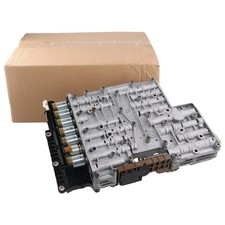
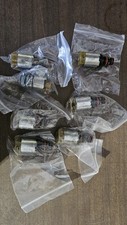
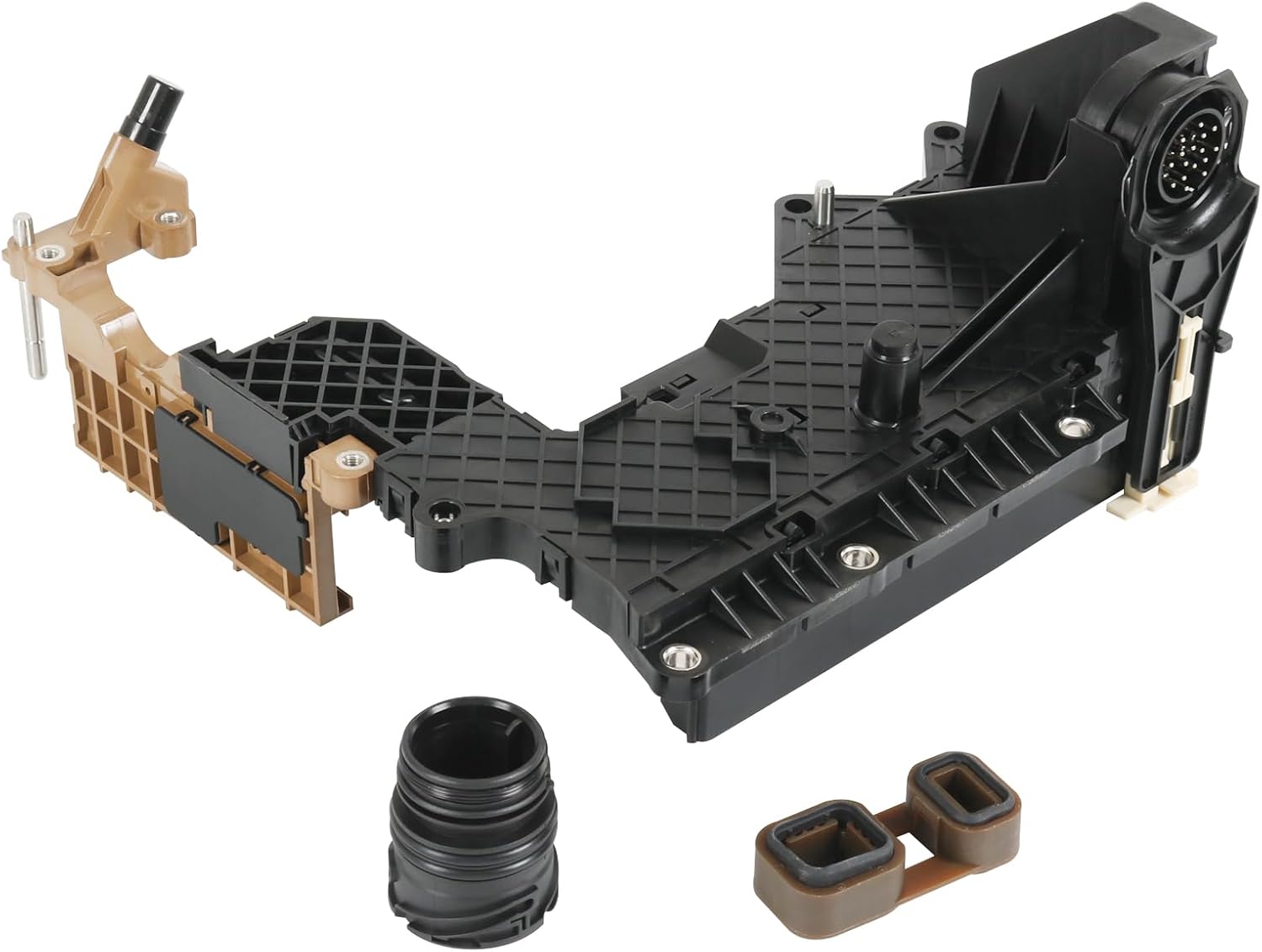
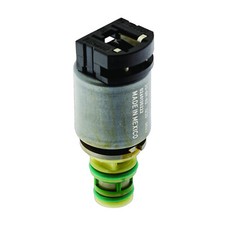
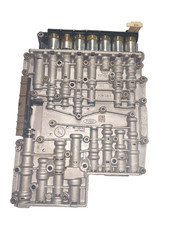
Later 6R80s are the ones most of our customers drive: the 2011-and-up F-150 with the 5.0L, 3.5L EcoBoost or 3.7L, the 2011-on Mustang, and the Expedition and Navigator. When one of these starts shuddering under light throttle at 40-60 mph, holds higher RPM at cruise, or sets P0741 or P0742, converter lockup control is the suspect. This remanufactured TCC solenoid listing covers the 6R80 for 2011-2018, and the photo shows a complete solenoid body with the TCC solenoid, the remaining solenoids and the lead frame in place, shipped boxed.
What the TCC solenoid does in a later 6R80
Ford's 6R80 has no separate transmission computer; the PCM drives seven solenoids on the solenoid body and reads the turbine, output, range and temperature sensors built into the same assembly. The TCC solenoid sets how hard the torque converter clutch is applied. Rather than snapping lockup on, the PCM ramps the current so the clutch engages progressively, and it watches turbine speed against engine speed to judge slip. That strategy only works if the solenoid delivers exactly the pressure commanded. Wear, debris or a drifting coil turns controlled slip into a cycle of slip and grab, and the converter clutch overheats the fluid as it chatters.
Symptoms
- Shudder that feels like rumble strips at steady 40-60 mph, worst with a trailer or uphill
- Tach needle hunting at constant highway speed
- Drop in fuel economy and rising transmission temperature
- P0741 (TCC slip or stuck off) or P0742 (TCC stuck on)
- Lockup not releasing as you stop, so the engine lugs or stalls
Confirm the cause first
Check the Mercon LV level and condition before anything else. Then compare commanded TCC pressure to actual converter slip on a scan tool; if slip stays high with full apply commanded and the solenoid checks good electrically, the converter clutch is worn and a solenoid will not cure it. Codes are not always what they seem on this unit either: ATRA documented a 2014 F-150 and a 2015 Transit setting a solenoid code when the real fault was mechanical, so verify before swapping parts. Our 6R80 common problems guide and the Mustang 6R80 guide cover the checks in detail.
Fitment: 2011-2018
Transmissions built after November 3, 2010 use the 18 ohm, gray-snout version of shift solenoid E, and that part does not interchange with the early design. This unit belongs to that later family, so it is the wrong choice for a 2009-2010 truck; those owners need the 2007-2010 6R80 TCC solenoid. Within 2011-2018 the 6R80 was revised again for 2015 and later, and Sonnax publishes separate service parts for 2015-later units, so a 2012 and a 2016 truck may not share a solenoid body. Match the 13-digit strategy stamped on your solenoid body casing and the case identification tag to the replacement, and if your year falls near a change point, send us the year and VIN and we will check it. Browse everything else for this transmission on the 6R80 parts page.
Install notes
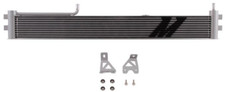
Drain the fluid, drop the pan and filter, unplug the case connector and remove the solenoid body. Sonnax lists 8 Nm (71 in-lb) for the valve body bolts and 14 Nm (10 ft-lb) for a metal pan on 2015-later units; follow the torque in your service manual. Install a new filter and pan gasket from our 6R80 filter and pan gasket kit and refill with Mercon LV. If the old fluid was dark from converter slip, flush the cooler or fit a new 6R80 transmission cooler so debris does not return to the new solenoids. Place the replacement tag over the original, program the 12-digit ID and 13-digit strategy into the PCM, and reset adaptive learning. Ford notes in TSB 20-2060 that after an adaptive reset, shifts can feel firmer than normal for several days while the PCM relearns.